Venus of BoticeLilli. Boticelli by Lilli

We loved learning about Athena, and we drew lots of Athena images. I did not share with you, my Athena paper doll. I have a bad excuse. It was imperfect… I get it, it is not a good trait to teach my daughters, to be a perfectionist, so, I will show you on my next post. I will re-create my Athena paper doll until it is perfect. Those are opposing statements, but I will show you the imperfect job, then I will recreate and perfect.

But this is not about me, or my perfectionism.

This is about Lilli.

I sent Lilli to the computer to work on her Duolingo lesson. But I got distracted by a funny picture of one of the Duolingo characters “dressed” as the Venus of Boticelli. I had been meaning to show Lilli because of how funny it looks and the fact that Lilli knows about Venus and that painting (I am a bit obsessed with the goddess).

Since we learned about Athena, the next goddess we were going to learn about was Aphrodite. Of course, Venus is the Roman name for Aphrodite. Lilli likes Aphrodite even more than Athena, she said. I realized that we must not forget Artemis….

I started with Athena on purpose. I intended to initiate the ancient goddess club with the wise one. Obviously.

About Lilli’s Boticelli inspired Venus:

I was making fun of this hilarious Venus inspired character when I started talking to Lilli of the famous painting which she already knows and considers sus(picious), because, well, Venus is undressed in the painting and covering up with her fabulous hair, just like this hilarious character is covering up with his beard.

The painting is of her birth. According to myth, she was born fully grown like Athena, with one difference, Athena was born in full armor, Venus, was born fully grown and without clothes. Int he very gorgeous Boticelli painting, Venus is being offered a gorgeous cloth to cover herself up.
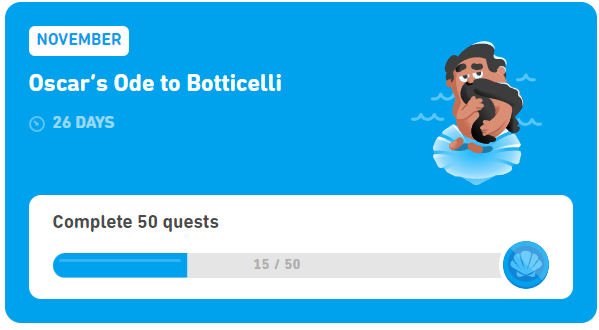
Duolingo’s Oscar as Venus (Inspired by the famous Boticelli painting)

Between one joke and the next, we were looking up the famous Boticelli picture. We saw that there were countless pictures of it for sale and Lilli was amazed at how expensive they were, and I told her that is really nothing for a copy of one of the most famous paintings in the world. One of the most reproduced paintings ever.

I realized that the original painting is so old that it precedes copyright laws and thus it is completely free to be copied and used in any way and even to sell. I immediately told Lilli that she should draw her, not thinking anything of it. I opened Duolingo and went to work with Lizzie on her story, I will write about that story as soon as she is ready, but it is a marvelous project.

While I was sitting with Lizzie at her computer, Lilli calls me, and she shows me this incredible Venus art! I was speechless.
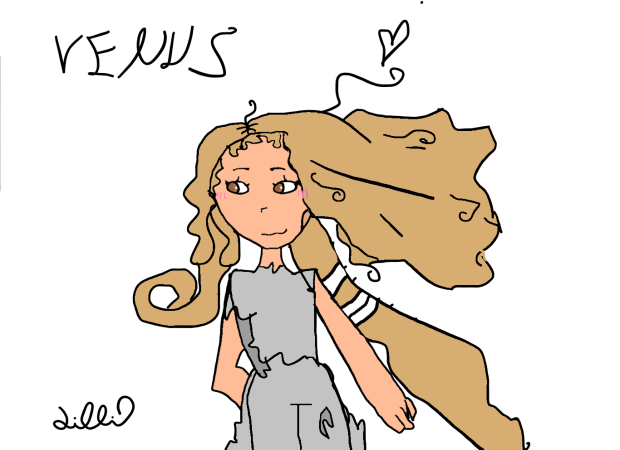
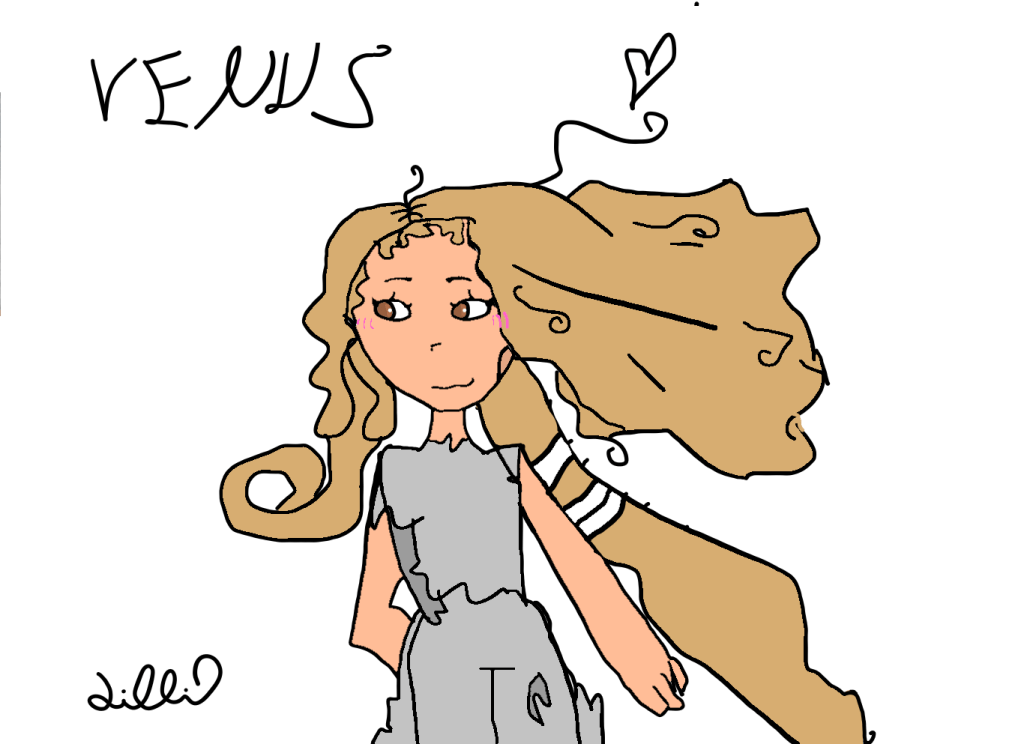
Venus of Boticelli by Lilli

Lilli dressed her Venus! That was sweet. Something about her wearing rags, though, she said since the Greeks tied their clothes. But I am not certain why she dressed Venus in rags but for a child, it is much better than in her birth suit. So, I take her creativity, and I loved it.

I am simply in love with that hair, and you bet I will spend the better of the next 5 years drawing my Venus of Boticelli. That was a joke….

Boticelli and his birth of Venus painting

Take advantage and learn some art history through the links below:

https://www.britannica.com/topic/Birth-of-Venus

https://en.wikipedia.org/wiki/Sandro_Botticelli Learn everything about Boticelli, the painter.

https://en.wikipedia.org/wiki/The_Birth_of_Venus Learn everything about the painting.

(How are the kids’ language learning going? Lizzie did her first ever Duolingo class today, that was a huge success, and she noticed what she didn’t know, of course, but I noticed how much she actually knew. Perspectives.). Lilli and Vivi both do Duolingo Spanish. I have to remind them, but they understand so much. I am getting Alex (4) to understand what it means that other language Spanish, huh, he doesn’t fully get it yet, but he likes papas fritas (fried potatoes)….

Meanwhile, I am learning three languages. I will have to go back to the drawing board with my initiative for teaching the children languages. However, the children have learned Spanish, they simply are not language “nerds” like me. The thing is I love language learning. They love art and games. To me language is art and fun.

NOTE: I used the word nerd full of love and with no judgement. I think language nerds are some of the coolest people ever. Perspectives.

Let us talk again soon,

Eve
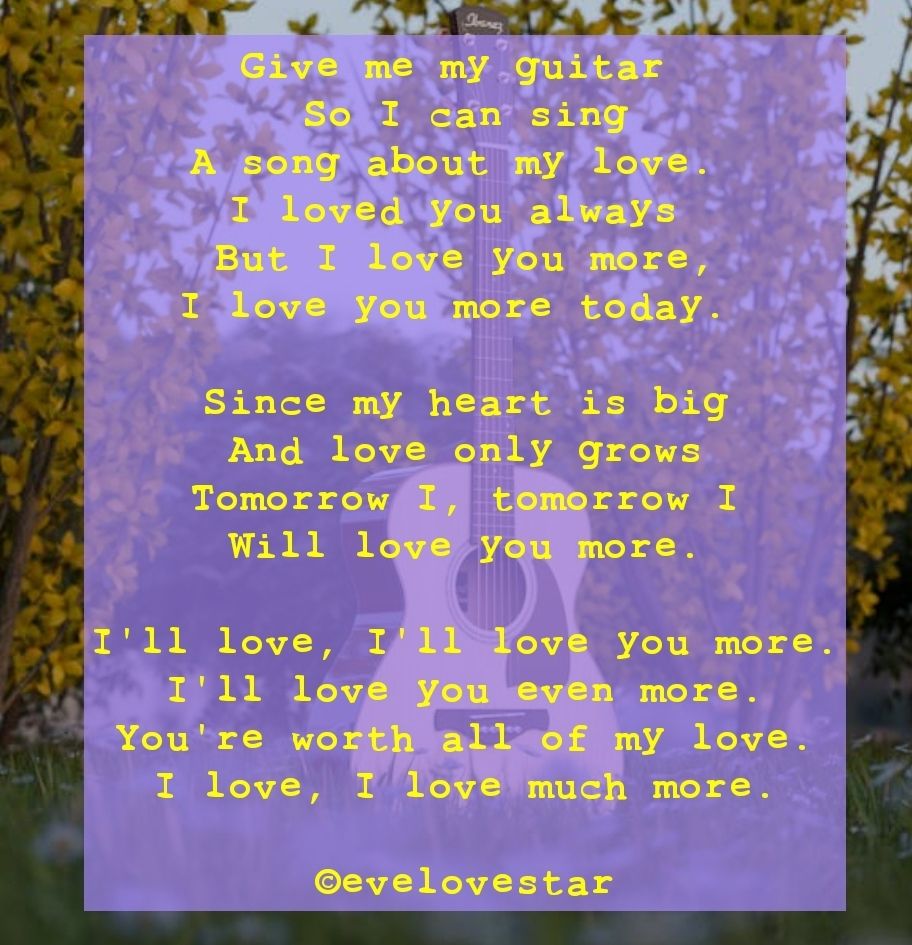
Songwriting: Give me my guitar

Dear reader,

This is a cool song I wrote many years ago.

I have a very old video singing it. I will not show you because it was too awful.

But, I created the lyrics for the song in a better way today.

I am looking for singers or musicians to sing this or any of my other songs. Just ask and I will allow you to.

Lilli is creating a Pandacorn (my newest song) animation right now which is simply adorable.

With love,

Eve

Words: Advice vs. advise

Dear reader,

English is my second language. learned it as an adult. Since I love to learn properly, grammar has been my best friend.

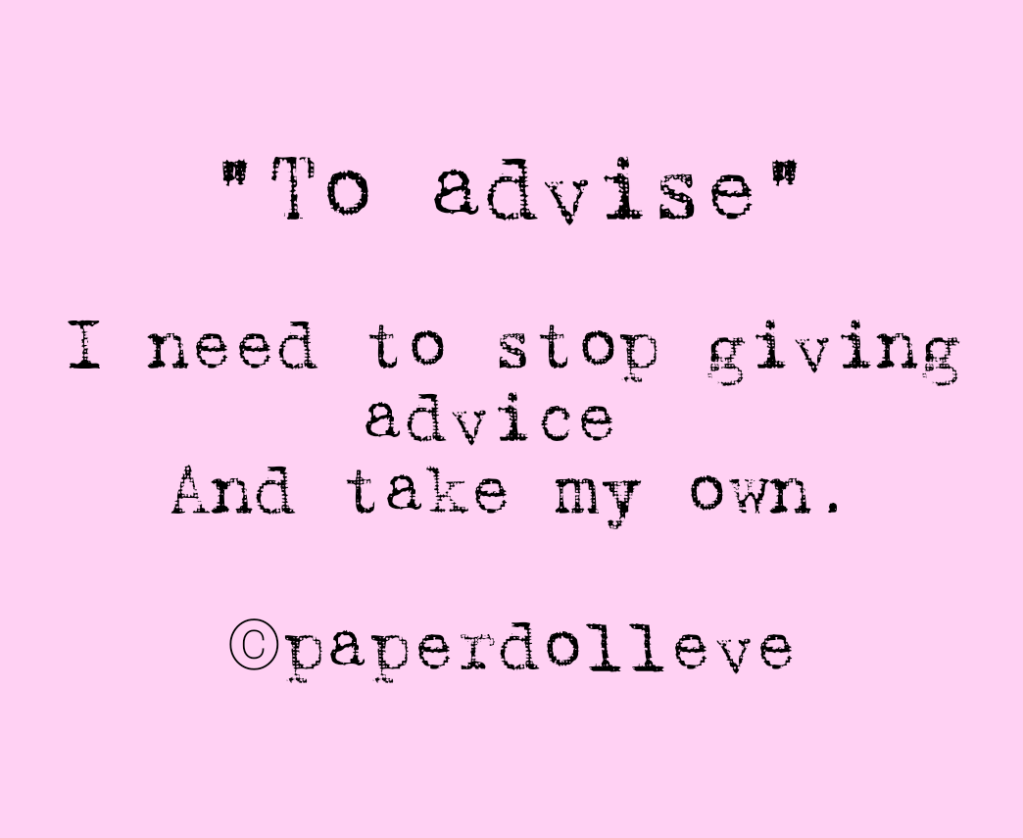
With this short poem, I was trying to make the distinction between advice and advise after I realized I had used the improper spelling of the word. Actually, I thought it was only one word long ago.

When you write, you learn. My advise if you are trying to make a distinction between the two words is to use them in writing. I know now, before, while I was confused and knew I could make a mistake, I would search the difference and find help from a blog post like this one or an article.

Difference between advice and advise

The difference between advise and advice is simple:

  • Advice is a noun, meaning a suggestion or recommendation. Example: “She gave me great advice.”
  • Advise is a verb, meaning to offer a suggestion. Example: “I advise you to listen carefully.”

Tip: Use “advice” when you’re talking about the suggestion itself, and use “advise” when you’re talking about giving or offering that suggestion.

To advice is a verb or a word that refers to action. The action is advising. The word is spelled with an s whenever you say TO ADVISE or ADVISING because these refer to the verb or the action of advising another.

A noun is a thing, wether a physical thing like a table or a non physical thing such as advice

Sentences and examples

When someone is giving a suggestion or recommendation, the action is called advising. So, “advising” is the act of offering advice.

Advice is the thing: the words or suggestions and to advise is the action of saying the advice.

For example:

  • Verb: “The teacher is advising the students to study.”
  • Noun: “The advice she gave was helpful.”

Just remember: the action of giving advice = advising!

Here are a few simple sentences for children to help them remember the difference between advise and advice:

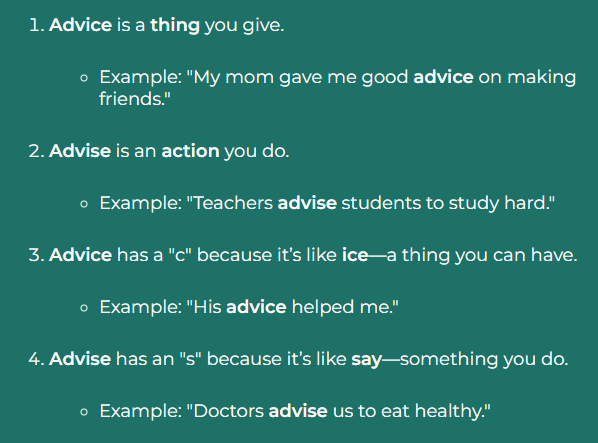
  1. Advice is a thing you give.
    • Example: “My mom gave me good advice on making friends.”
  2. Advise is an action you do.
    • Example: “Teachers advise students to study hard.”
  3. Advice has a “c” because it’s like ice—a thing you can have.
    • Example: “His advice helped me.”
  4. Advise has an “s” because it’s like say—something you do.
    • Example: “Doctors advise us to eat healthy.”

These can make it fun and easier for children to remember the difference!

Was this helpful?

Feel free to use my poem in your lesson or class or as a reminder.

Please tell me if you would like to see more like this,

With love,

Eve

Magnificent Letter G: handwriting practice with poetry.

Dear reader,

Lizzie does not want to learn cursive. I listen.

But she came to me and requested help.with her letter g, lowercase.

She collaborated with me to create this G poem and practiced until we loved her letter g.

The graceful groom
In Ancient Greece
Was in gloom all week:
Ghastly days, lost grace,
His good wife, a ghost,
In the green garden.
Heart goes grey,
Galaxies away,
Gracious goddess:
Gown, crown, greatness.
Green grape dance to the god,
Bring my wife back.
The god’s generous reply,
A glistening sun ray,
And a goose to greet.
In two years time,
Sacrifice a goat,
And your girl will grow
From the goose,
Take care and groom her
Be warned: if you neglect her,
Your guilt a curse will be
To grueling loneliness.

End of story by Lizzie

The groom agrees, he will not neglect the Goose. Two years pass slowly, the groom Has been taking good care of the goose, the Groom brings the goat to the altar, and Prays, Grape god returns, Two years have Passed, Your wish shall be granted, goose Into wife, I command. The groom reunited, He is happy again with his wife. This story Ends with a happy ending.

Lizzie practiced her letter g handwriting by writing the poem on a paper and her creative writing by creating this poem with me as well as writing the ending all by herself.

©evelovestar

Learn Spanish: Rima y Ritmo: Greeting Poem Printables and test for children

Dear Reader,

The free Spanish lesson plan is on this blog through this link:

Purchase the ebook through this link:

https://payhip.com/b/NLMdU: Learn Spanish: Rima y Ritmo: Greeting Poem Printables and test for children

Rima y Ritmo is my cool Spanish class where I use poetry to teach my kids my native language. I already taught this lesson to my children, and they loved it. I am currently designing lesson 2: the poem is about a butterfly.

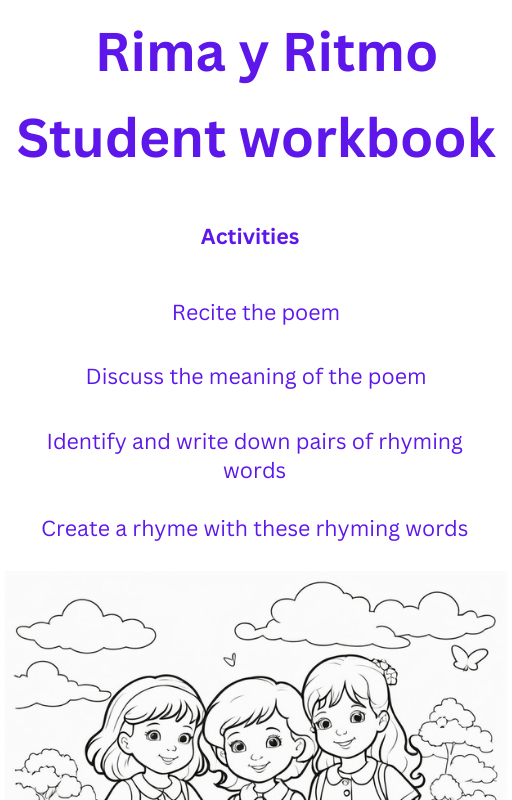
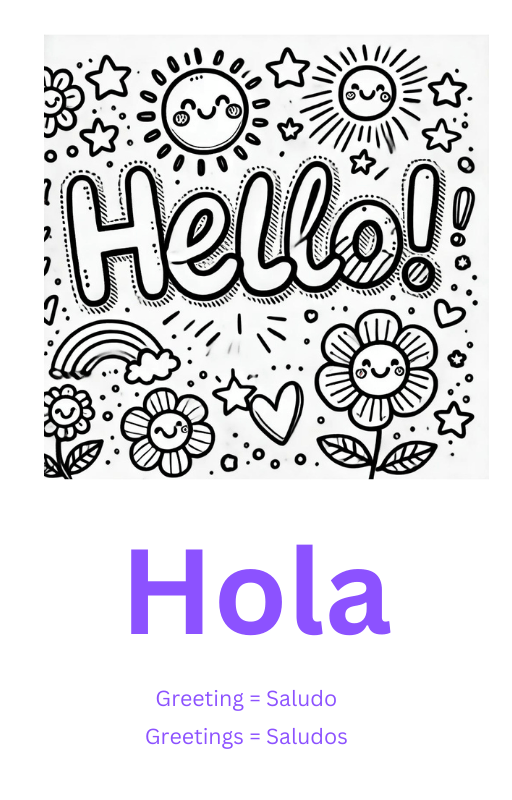
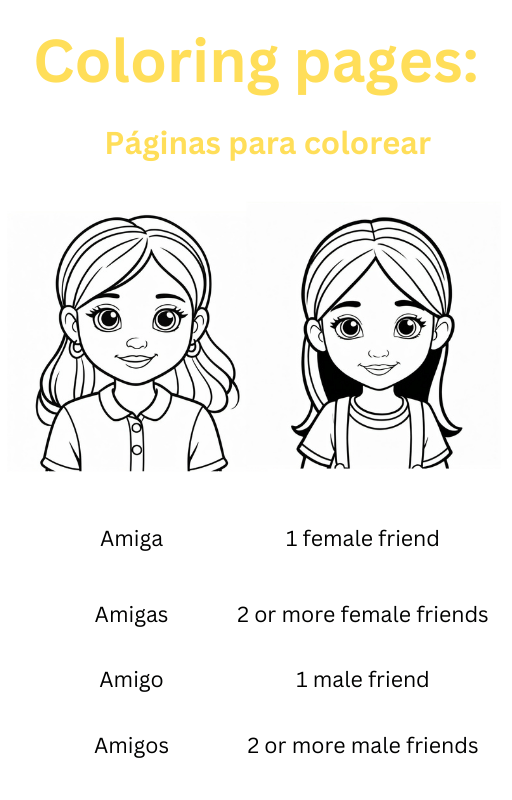
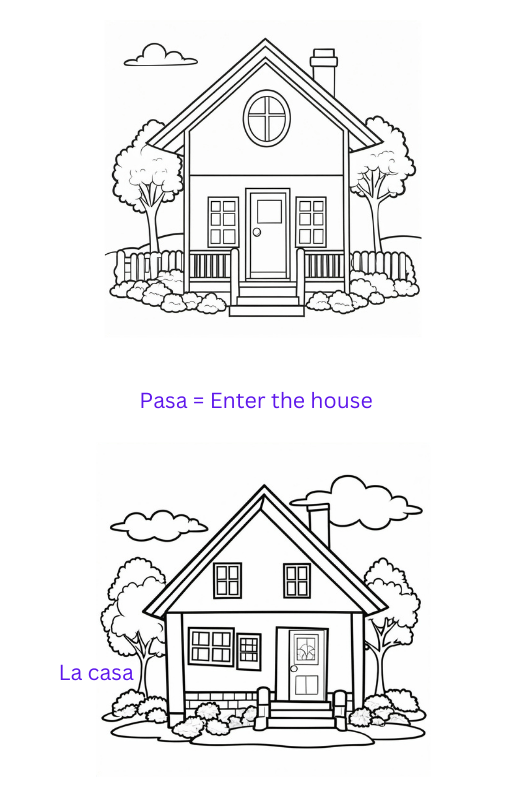
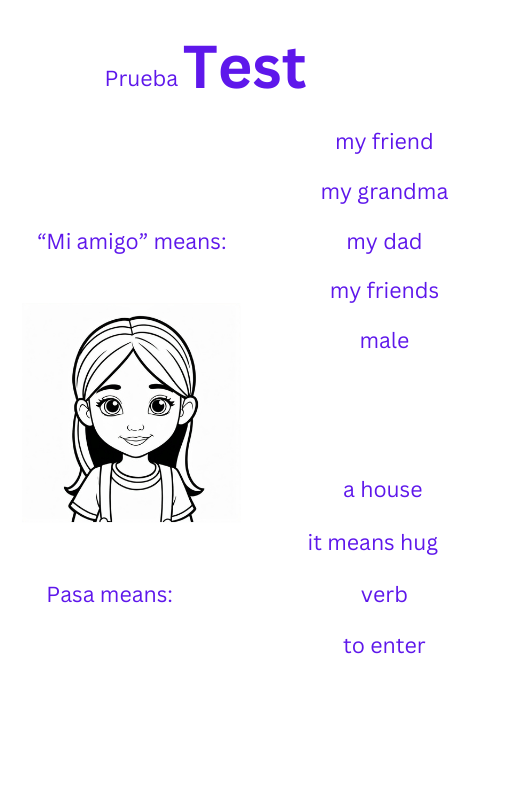
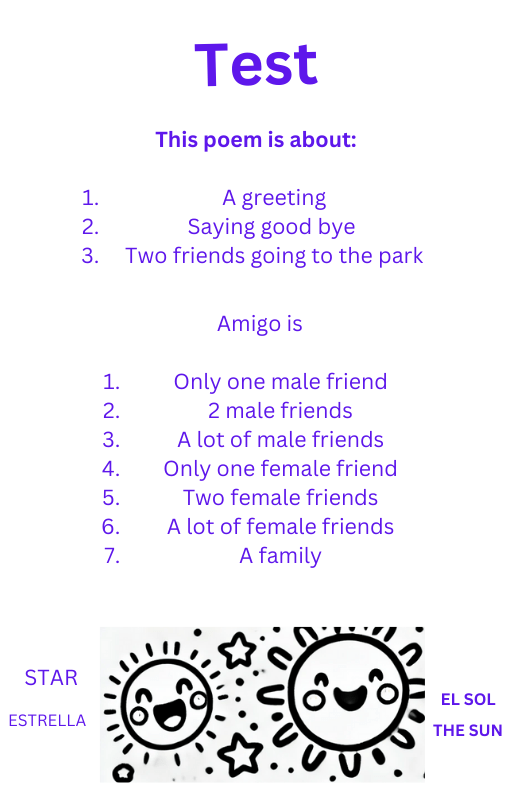
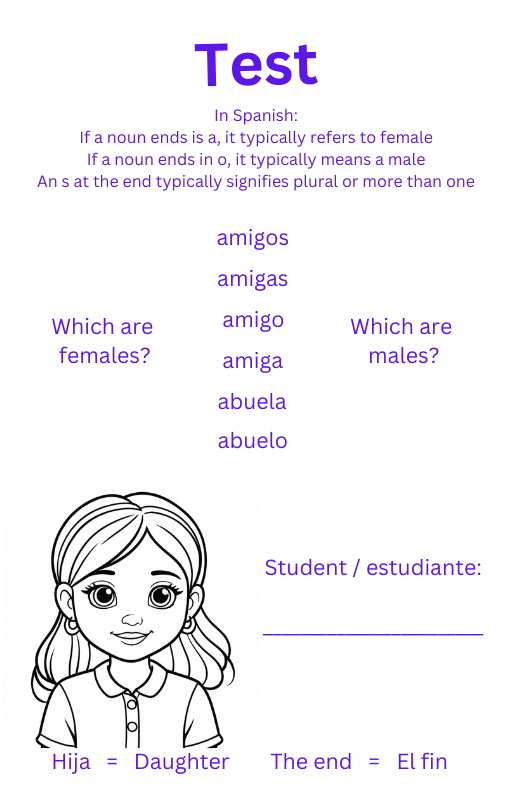
Below are the printable worksheets from my Rima y Ritmo class 1 ebook.

Print the printables, including the poem and read the lesson plan I linked above and using the poem and translation, work through these exercises. My children found them non easy.

Let me know if you need the answers.

Let me know if this helped and if you want to see more like this.

Would you benefit from video lessons?

With love,

Eve

Duolingo Language Learning: I use it for easy home education

Dear reader,

(Spanish learning/ teaching? Scrool to the end for my fun lesson)

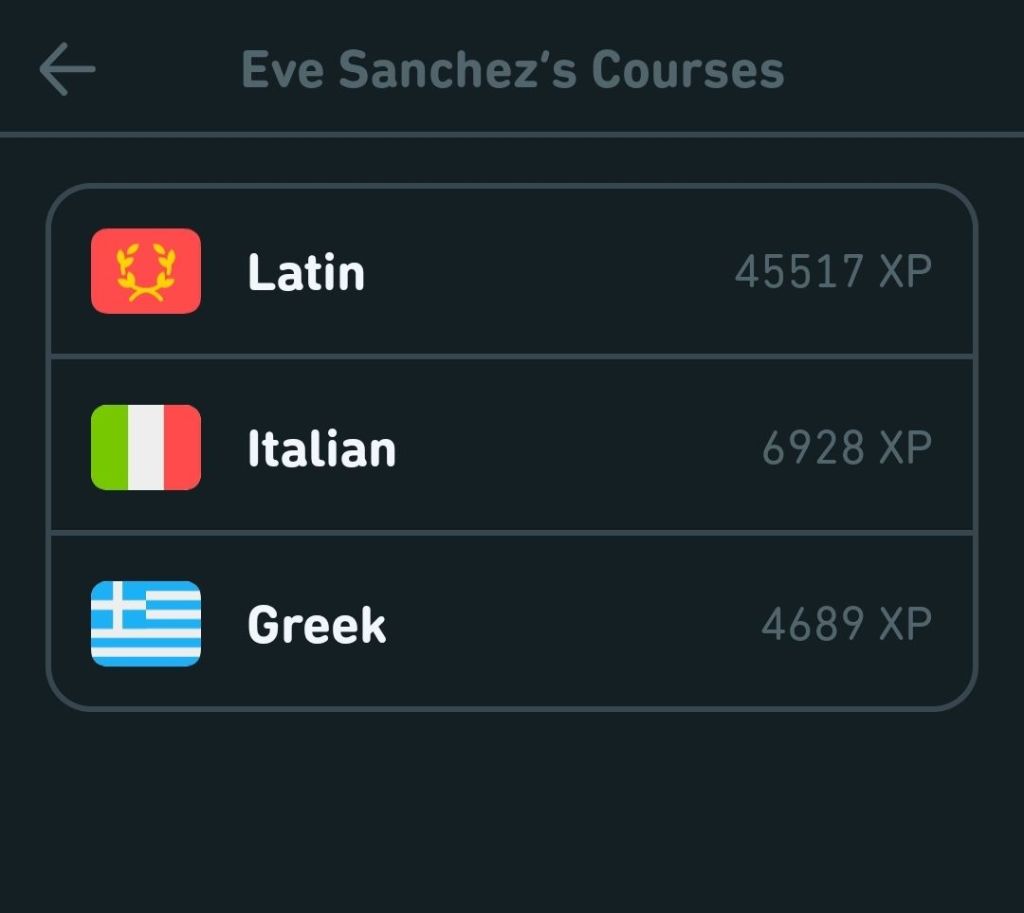
It is true that I love language study and learning and I love Duolingo, even though I am not happy they do not have a level two once you finish you language course. I finished my Latin course and got bored, picked up 2 more languages…

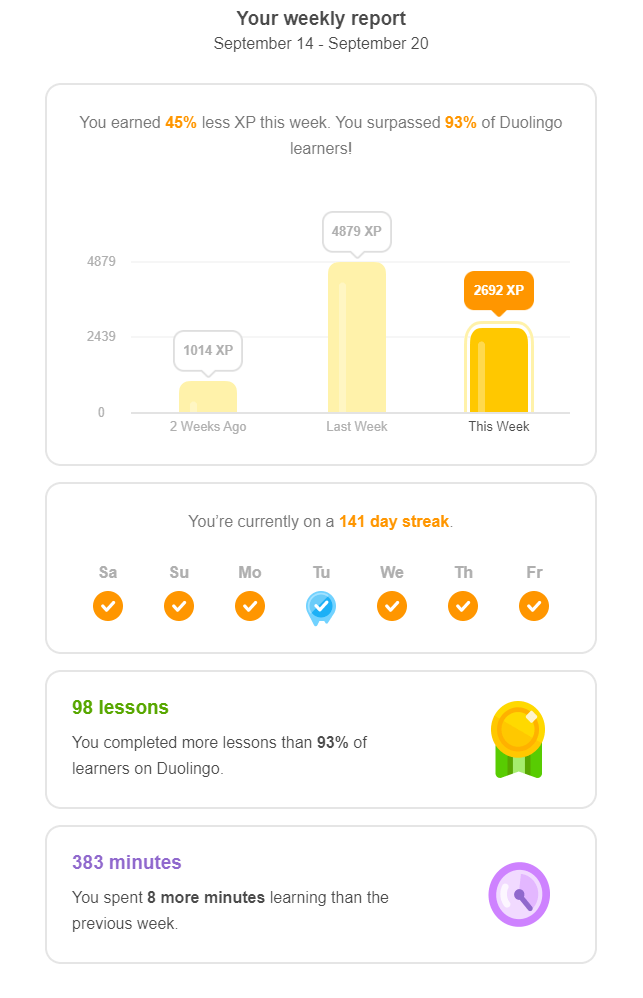
This is my Duolingo report this week:

I guess I have a need to prove I am a real person. Why?

With the modern trend of everything we find being AI, I do have a need to prove that I am a real person who really studies language and teaches her children.

Just today we did Halloween arts and crafts…

Anyway, let us connect on Duolingo if you use it, find me as Eve Sanchez.

Why Duolingo

screenshot_20240920_193751_duolingo1642364965774451837
I am currently trying to have more XP on Greek, also struggling with my Greek.

I do not need to learn a language, but I attempted to get my kids interested in Spanish, my first language, and they do not want to be told what to learn, they have their own opinions and ideas, which is really cute…

I joined Duolingo to inspire my kids to learn languages because they imitate anything I do: no pressure.

It worked because they started learning languages too. They are not organized and quit their own Duolingo, yet, Lilli does my Latin lessons at times, Vivi is learning the Greek alphabet with me, they have a Dinolingo Spanish course, Lilli took a Latin class, Lilli and I have Latin jokes, Alex does the Greek lessons with me and repeats the Greek words, Lilli and Vivi took Spanish classes: it worked, but my inspiration effort is ongoing.

Part of my effort is to have them observe my own learning, as well as to experience my learning methods which are varied and colorful, on top of that to expose them to different languages: music in Spanish and Italian; Italian, Latin, Greek words, phrases, and entire videos or podcasts being broadcasted in our house; and more.

And you,

Are you learning or teaching a language? Which? Do you have tips?

Do you listen to music in your target language?

Learning Spanish?

Check out my cool Spanish with poetry clas:

Purchase the class through this link which includes a children’s printable workbook, a test, and more:

https://payhip.com/b/NLMdU

But first, take the free lesson on this blog:

With love,

Eve

Learn Italian With Music, Update. Language learning tip.

Dear reader,

I stopped learning Italian on Duolingo because the Duolingo Italian course is not fun. Italian is a gorgeous language and Duolingo does not do it justice.

After I almost lost my streak because of the Italian course, I started a new language, Greek and started learning Italian by listening to Italian music and interacting with the language in a fun and relaxed way. I do not have to learn this language anyway.

Using Music for Language Learning

What is a fun way to learn a new language if traditional methods don’t quite resonate with you? If you’ve ever felt frustrated with a language learning app or textbook, it might be time to consider an alternative approach: music.

Music can transform the language learning process into a game of wonderment and exploration, making it not only enjoyable but also highly effective. Here’s how you can harness the power of music to learn a new language, drawing on my own experience with Italian music.

Discovering Language Through Music

1. Anchoring into Favorite Tunes

One of the most engaging ways to learn a new language is by immersing yourself in music you already love. For instance, I enjoyed the Spanish songs of Laura Pausini and Eros Ramazzotti. By listening to these artists’ Italian versions of the songs I know and love, I learned. This familiar territory provides a comforting anchor, helping you recognize and remember phrases and words more easily.

I fell in love with a new Italian song, started singing it in karaoke, then found translations to Spanish and English. I learned expressions and words as well as recognized words that are the same as in Spanish, my first language. Now I used the vocabulary I learned on my karaoke song in a different song.

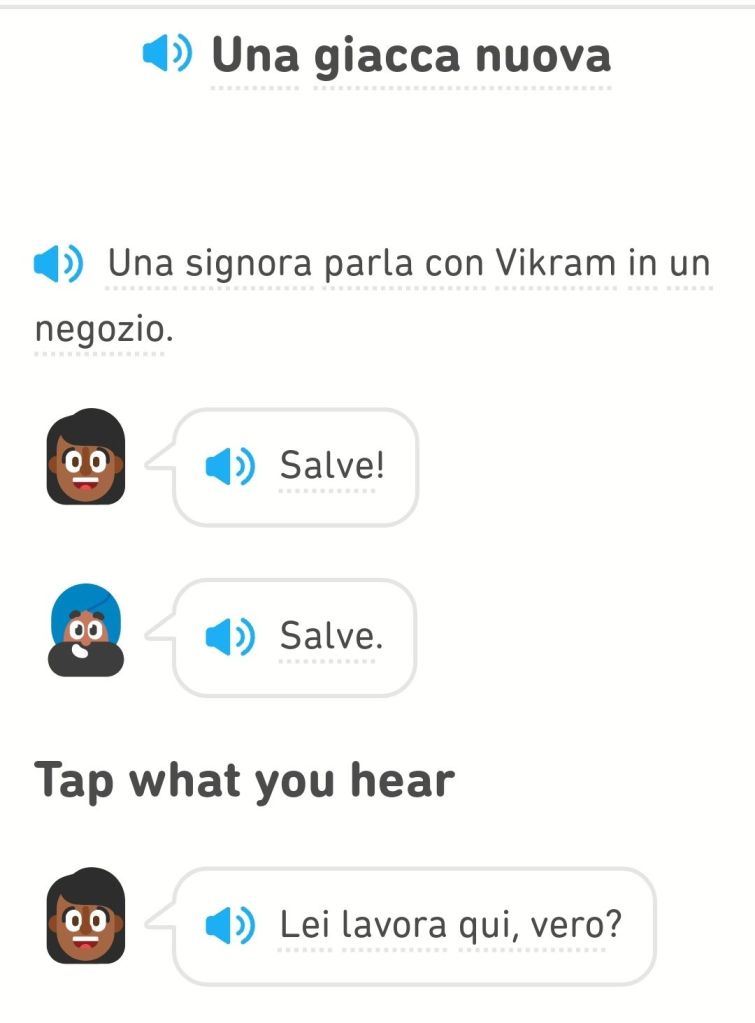
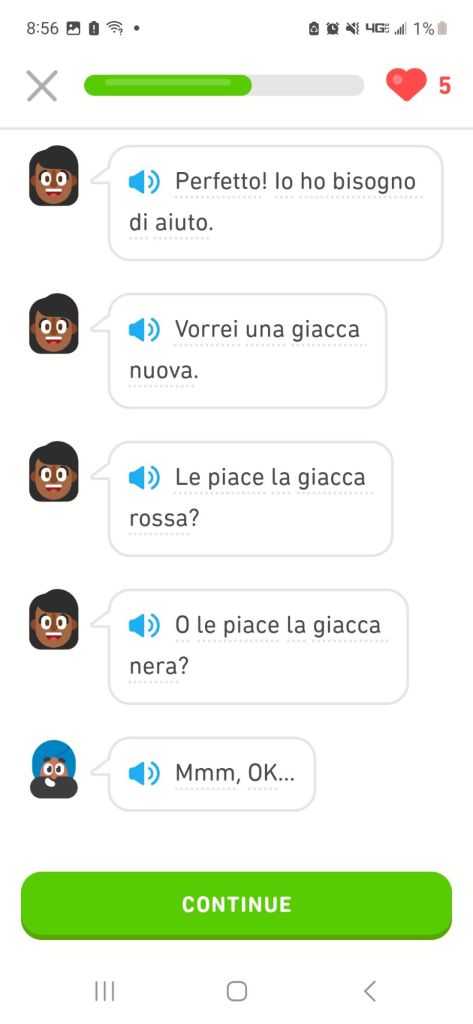
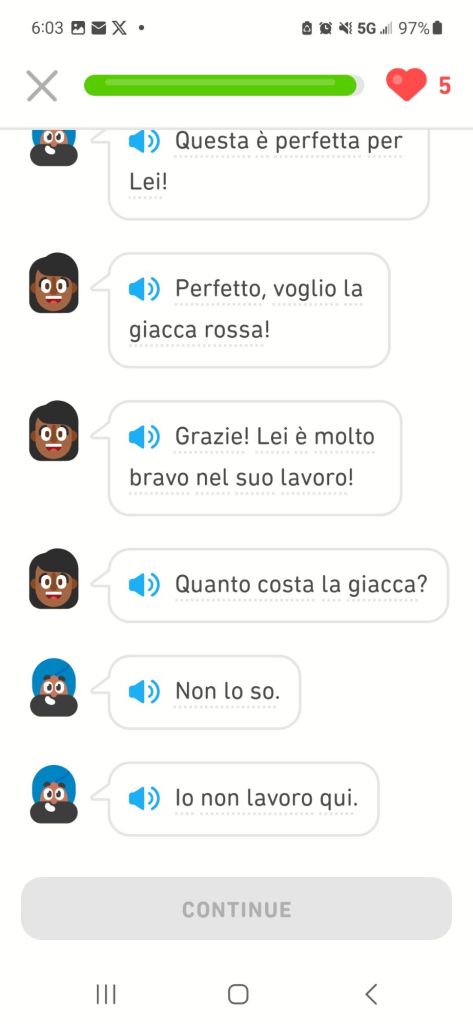
A fun Italian story on Duolingo
Io o bisogno di (I have a need for) is a phrase I heard in music, so through music, I practice what I learned on Duolingo.
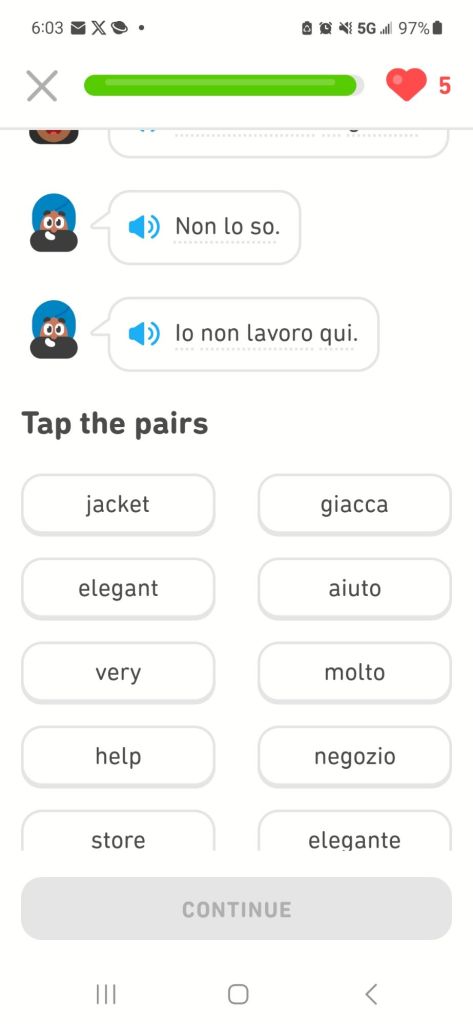
The woman asks the worker for help at the store. She is buying a new jacket. He helps her choose the red jacket, then tells her he does not work there.
Jacket = giacca, elegant = elegante, very = multo, help = aiuto, store = negozio.

2. Pattern Recognition

Music is an excellent tool for pattern recognition. Pay attention to recurring phrases, themes, and lyrical structures.

For example, in Italian music, I noticed themes such as “Il mare” (the sea), “Parole” (words), and “il cuore” (the heart). I learned all three words because of music and since they’re themes in Italian music, they’re in so many songs. Noticing these patterns helps you internalize the language structure and vocabulary. The rhythm and melody also make it easier to remember new words and phrases.

3. Exploring New Sounds

Spotify and other streaming services offer a wide range of Italian music that can introduce you to the rhythm and intonation of the language. Fast-paced European-style songs with poetic lyrics can be especially engaging. These songs often blend beautiful singing with intricate language, providing a rich auditory experience that helps you get used to the language’s sounds and patterns.

Italian Party Music Spotify Playlist (Adult)

A Game of Wonderment

Learning a language through music is akin to being a baby in an Italian-speaking environment. Just as a child absorbs language by hearing it spoken around them, you absorb Italian by listening to its music. Embrace the process of trying to understand without judging yourself. It’s natural not to grasp every word or sentence at first. Over time, you’ll start recognizing familiar words and phrases, which will naturally expand your vocabulary and understanding.

Benefits of Music-Based Learning

1. Enhanced Listening Skills

Listening to music helps improve your listening skills and pronunciation. You become more attuned to the nuances of the language, such as intonation and stress, which are crucial for effective communication.

2. Emotional Connection

Music often evokes emotions, making the language learning process more personal and memorable. The emotional connection to a song can make new vocabulary stick better. Similar to my pitch for poetry for language learning.

3. Cultural Insight

Music is a reflection of culture. By listening to Italian songs, you gain insights into Italian culture, traditions, and values, enriching your overall learning experience.

Conclusion

I still do not speak or understand Italian but I am learning and it is fun. I do not have to learn it anyway but I take any opportunity I get to learn.

Incorporating music into my language learning routine was a powerful and enjoyable method to familiarize myself with my new language. By anchoring myself in familiar tunes, recognizing patterns, and exploring new sounds, I transformed language learning into an engaging game.

My goal is to become comfortable with the language’s sounds and rhythms. As I continue to listen and immerse myself, I found that I understood some words and the knowledge of the language grew naturally, much like a child absorbing their mother tongue.

Embrace the melody of learning, and let the music guide you to fluency.

Phrases I just heard in music

I listen to this playlist all the time.

My favorite song is my karaoke song

  • Dove sei tu? Where are you?
  • Podemo escapare
  • Per favore, non piangere.
  • Ho bisogno di te
  • Me lo merito
  • Ma quale verita
  • Non capita
  • Cuando piango
  • Grazie per existere
  • Sinceramente Tua

I recognize a word such as it happened with “parole” (words) in music after listening to it many times in several contexts, looking up the meaning and remembering it.

And you, what language are you learning or teaching and what tools are you using?

Thank you for your time,

Eve

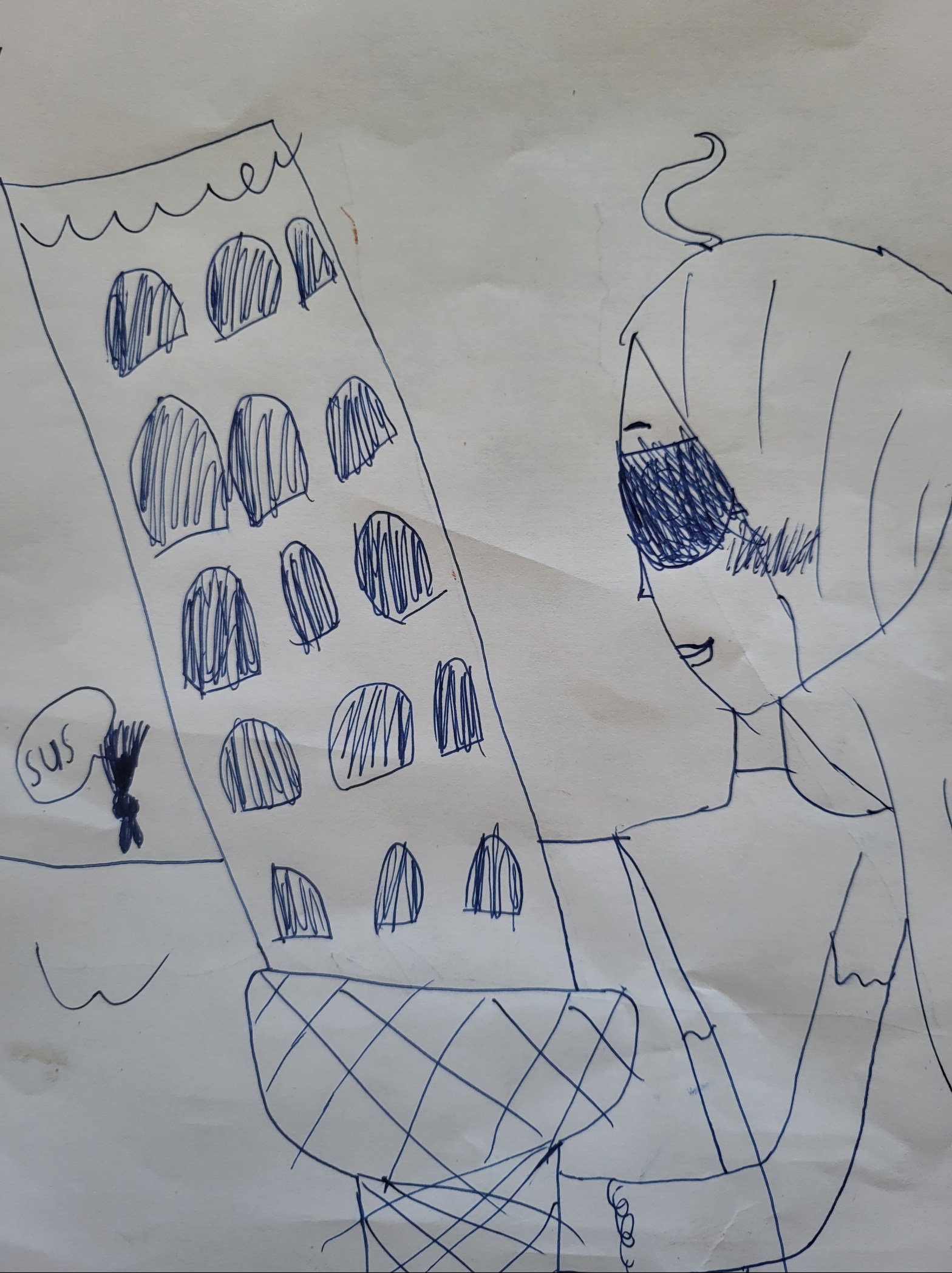
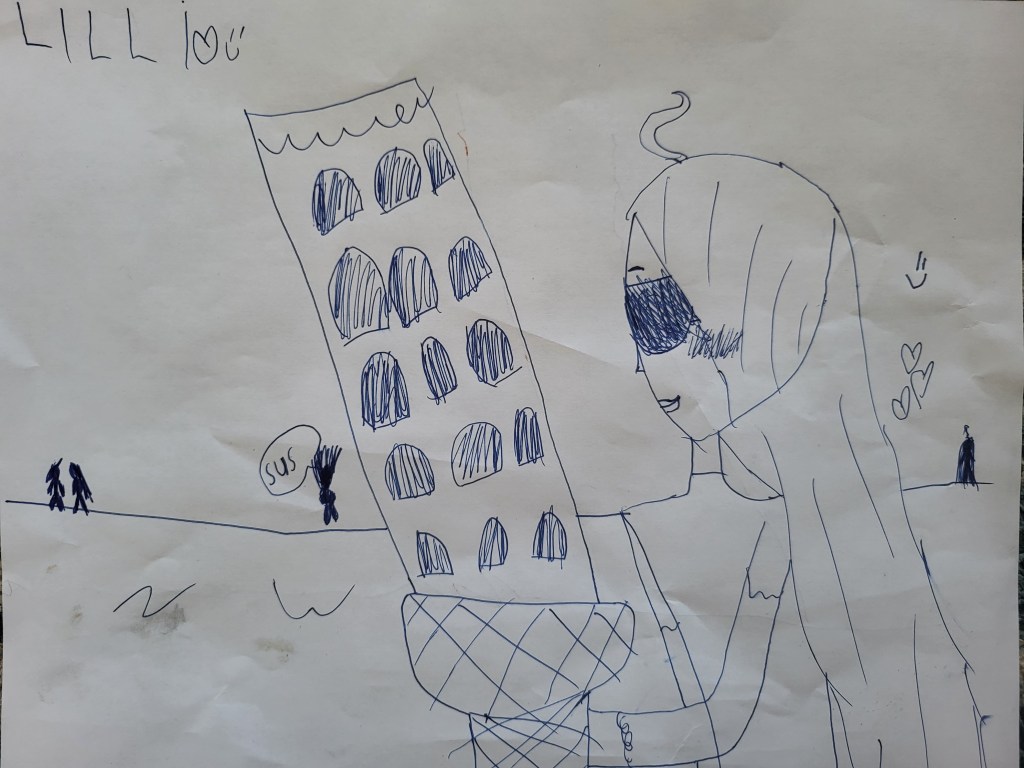
Leaning Tower of Pisa. Intro for children

Dear parent,

The Leaning Tower of Pisa, one of the most famous architectural landmarks in the world, known for its tilt. Located in Pisa, Italy, the tower is actually the freestanding bell tower, or campanile, of the cathedral of the city.

Ice Cream tower

History and Construction

  • Construction Began: August 9, 1173.
  • Architect: The exact identity of the architect is still debated, but the project was overseen by Bonanno Pisano.
  • Construction Duration: The construction took about 200 years, with several interruptions due to wars and engineering challenges.
  • Height: Approximately 56 meters (183 feet) on the higher side.
  • Material: The tower is constructed primarily of white and grey marble.
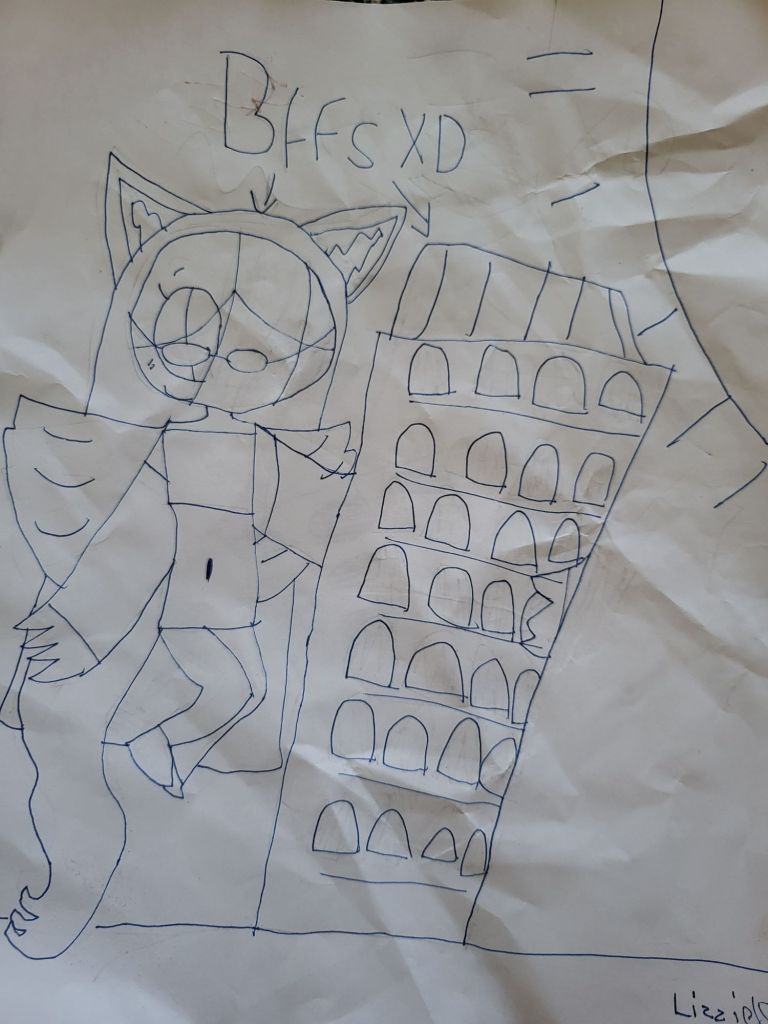
A fox girl with wings holding the tower by Lizzie

The Tilt

  • Cause of the Lean: The tilt began during construction, due to the soft, unstable ground beneath the tower, which consists of a mix of clay, fine sand, and shells. This ground couldn’t support the tower’s weight evenly.
  • Angle: The tower’s tilt reached about 5.5 degrees before modern restoration efforts reduced it to about 3.97 degrees.
  • Efforts to Stabilize: Over the centuries, many efforts have been made to stabilize the tower, including adding weights to the opposite side and reinforcing the foundation.

Cultural Significance

  • Symbol of Pisa: The Leaning Tower is a symbol of Italy and the city of Pisa, recognized worldwide for its unique architecture and history.
  • UNESCO World Heritage Site: The tower, along with the cathedral, baptistery, and cemetery in the Piazza dei Miracoli, is part of a UNESCO World Heritage Site.
  • Tourism: Millions of tourists visit the Leaning Tower of Pisa every year, and it has become a popular spot for fun photos that play with the tower’s tilt.

Fun Fact

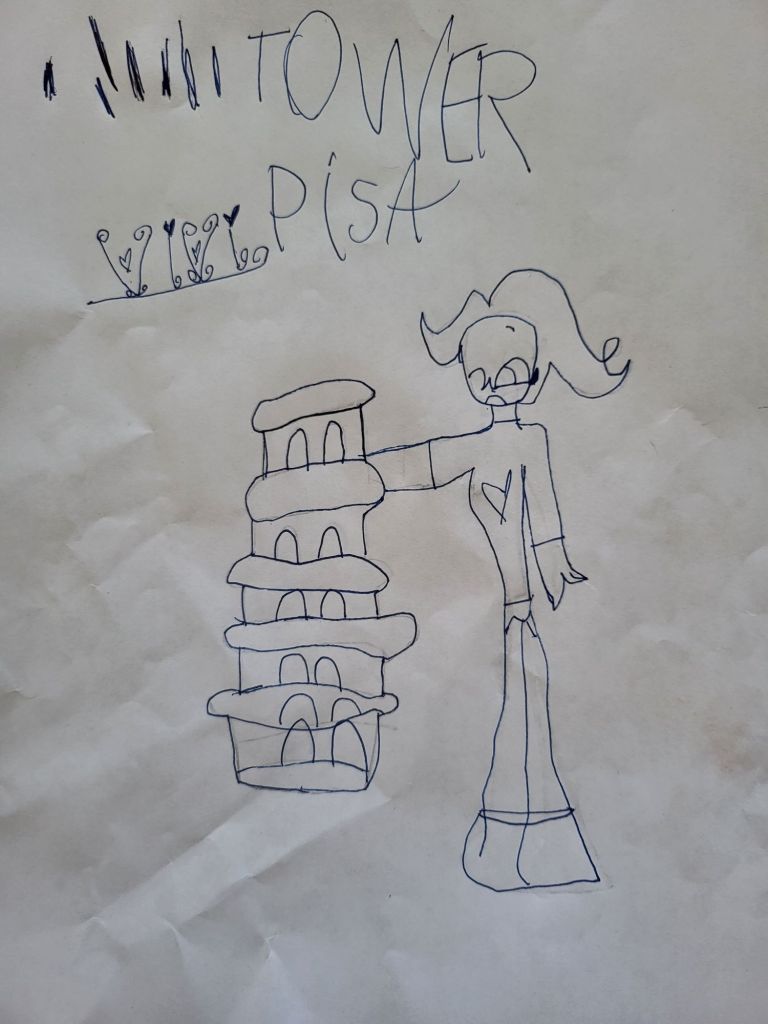
A girl standing far in front of the tower, making her really big in comparison by Vivi

The tower was originally intended to stand vertically, like other bell towers, but its tilt has made it far more famous than it might have been otherwise. The lean has become a part of its charm, and today, it’s celebrated as an iconic historical and architectural marvel.

Then we searched the fun pictures and found many cool ones on Pinterest of people holding, pushing, or eating the tower which are super cool and inspirational. This inspired their currect art project. See the pictures I shared on my Homeschool Pinterest board, they inspired my kids Leaning tower art:

Pinterest: Leaning Tower of Pisa. Intro for children

This serves as history, culture, architecture, geography, and language, I strudy Italian so I take any chance to learn and speak, currently I am listening to Italian music.

This was fun for us,

If you created art inspired by this, please share with us,

With love,

Eve

The Pythia: high priestess of Delphi. Most influential women of Ancient Greece

The Pythia, mysterious figures of ancient lore. Not myth, though.

Did you know

There were several Pythias.

The Pythias are said to have been poetesses

The Pythia spoke in cryptic messages translated by priests

She would have been a teenager, unmarried young woman, or woman past childbearing age.

Alexander the Great and many kings visited the Pythia

The Pythia influenced state, kings, and citizens with her prophecies

Pythia’s Whisper, a poem

Pythia’s Whisper

In Delphi’s sacred shadow, she speaks,
Veiled in mist of ancient dreams,
A breath of earth and smoke she seeks,
Where truth in whispered echoes streams.

Her voice, a tremor through the veil,
Glimmers of the gods, their will,
In trance she rides the hidden gale,
To prophesy with fervent thrill.

The chasm breathes its mystic air,
A sigh of fate, a quiver deep,
She dances in the temple’s lair,
Where ancient secrets softly seep.

In every riddle, cosmic dance,
A glimpse of truth, both fierce and sweet,
The Pythia, in fleeting trance,
Unfolds the world’s concealed heartbeat.

Short version


In Delphi’s shadow, veiled in mist, 
She breathes the gods’ ethereal kiss, 
In trance, her voice through secrets weaves, 
Prophecies in whispered leaves.

This information is from my mind, from too much reading.

The book Alexandros (this was the Spanish name, but this is my favorite book, I’ll buy this book) of his visit to Pythia.

A philologist I follow (who is not safe for home education) speaks of her poetry.

Many ancient historians wrote of the Pythia.

If you liked this, let me know,

With love,

Eve

Spanish lesson 1. Rima y Ritmo: Poetry with a native poet (1)

Dear reader,

Edit: My children loved the class and printable worksheet and requested more classes like this. Follow for the next classes coming up in the same fun but in-depth manner.

I have been pitching the idea everywhere that poetry is an excellent tool for language learning as reading materials. And now I will prove by creating the most creative Spanish lesson ever.

The full lesson, including a printable worksheet and test for children is available if you need additional help with this material:

Here’s why poetry is amazing for language learning:

Culture

Deep learning through complexity of poetry

Fun content that is memorable

Rhyming and rhythm helps with memorization

Spanish: 1st level. Lesson 1

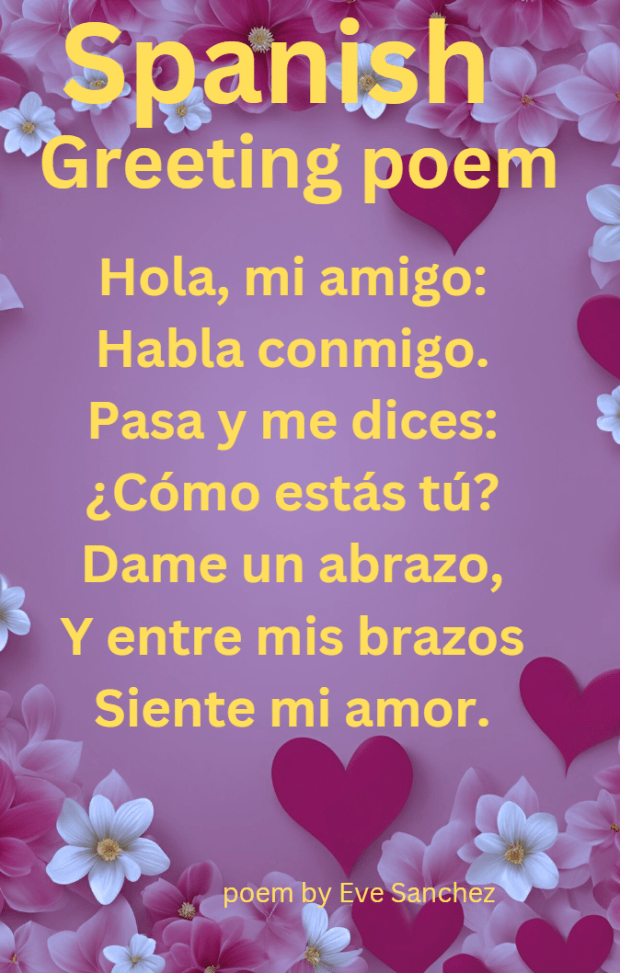
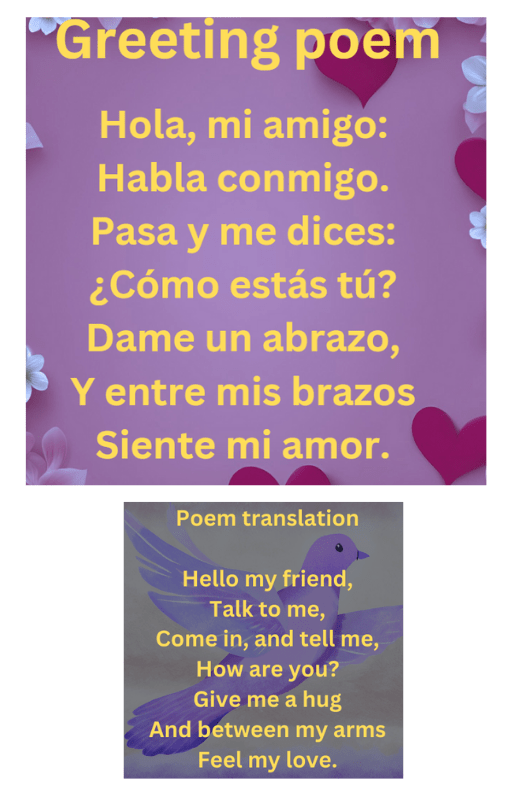
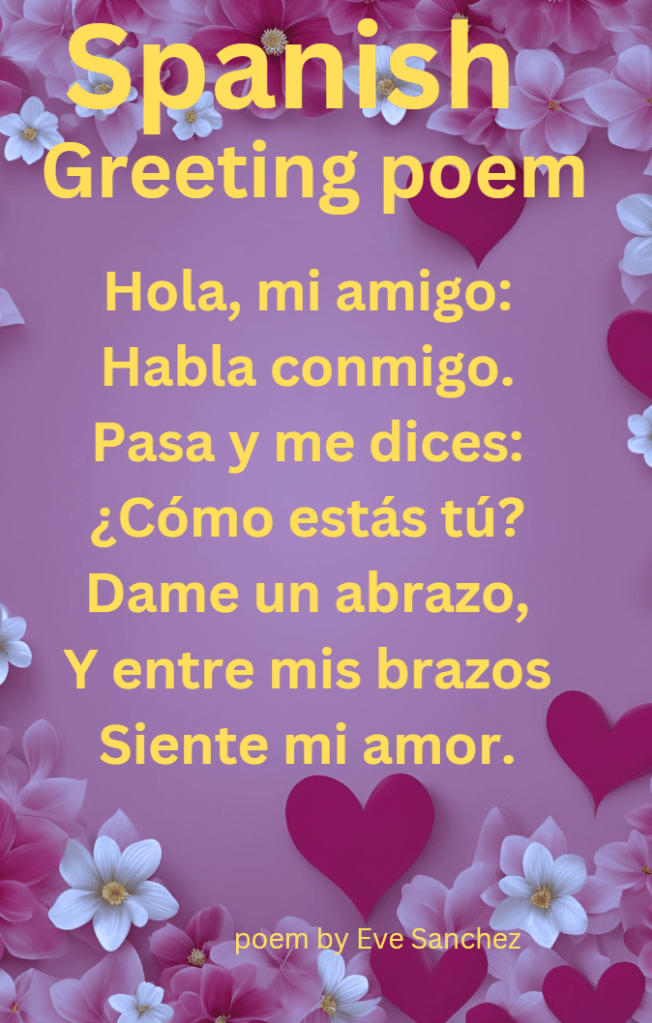
Hola mi amigo (Hello my friend) poem by Eve. Read further, and I’ll explain every word and phrase.

This poem is appropriate for a level 1 learning. It uses simple language and common phrases, making it accessible for beginners. This is a little more intense than the usual level 1 dialog, but it is also much more memorable, and I bet you can engage with this content more than with the usual language class dialog.

The main points for teaching are:

  • Basic Vocabulary: The words and expressions are straightforward and familiar, suitable for early learners.
  • Simple Sentence Structure: The poem’s structure is uncomplicated, which helps learners grasp basic sentence formation and concepts.
  • Easy to memorize: I do not attempt to memorize vocabulary anymore. That is the “boring” learning style that many of us reject. I like to engage with the reading content. However, poetry is naturally easier to memorize than prose or conversations. You will find yourself remembering without trying, especially if you do it with fun in mind and without judging your learning speed.

Lesson Plan. Feel free to use this for personal use/ homeschooling

(For more learning, I’m collecting all this into an ebook, return, and you will see additional lesson posts totally free)

If you’re a teacher and wish to use this material, let me know.

Welcome to my unique language lesson, where we explore the beauty of poetry as a tool for learning. Poetry is more than just a form of artistic expression; it’s a gateway to deep emotional understanding and linguistic mastery. By delving into poetry, you’ll not only enhance your language skills but also gain insight into the cultural and emotional nuances of Spanish.

Why poetry? It offers a fun and engaging way to learn, transforming the study of vocabulary and grammar into a creative and immersive experience. Poetry often includes complex structures and rich imagery, which challenges learners to think critically and understand the language on a deeper level. Many native speakers might not fully grasp the subtleties of poetry, but by engaging with it, you’ll achieve a profound and sophisticated understanding of the language.

In this class, we’ll use carefully selected poems to guide our learning journey. You’ll explore themes, emotions, and linguistic intricacies that will elevate your understanding of the language. Let’s embark on this poetic adventure together and discover the power of language through the art of verse.

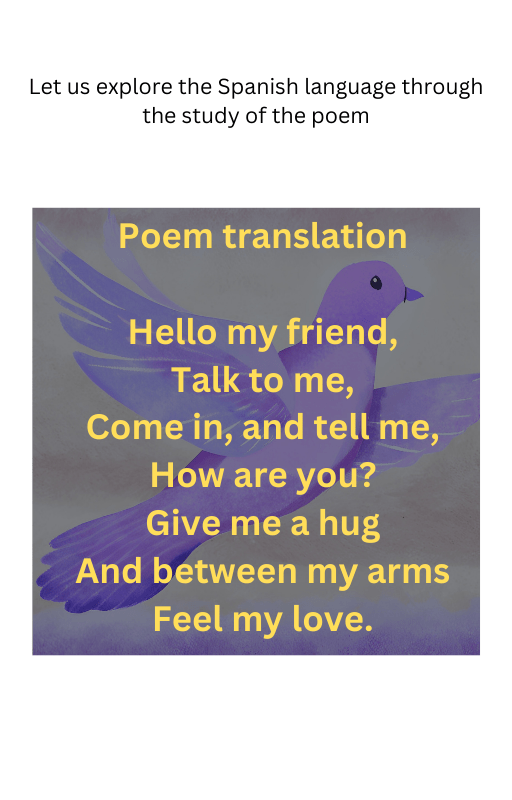
Poem translation

Hello my friend,
Talk to me,
Come in, and tell me,
How are you?
Give me a hug
And between my arms
Feel my love.

Continue reading “Spanish lesson 1. Rima y Ritmo: Poetry with a native poet (1)”