I stopped learning Italian on Duolingo because the Duolingo Italian course is not fun. Italian is a gorgeous language and Duolingo does not do it justice.
After I almost lost my streak because of the Italian course, I started a new language, Greek and started learning Italian by listening to Italian music and interacting with the language in a fun and relaxed way. I do not have to learn this language anyway.
Using Music for Language Learning
What is a fun way to learn a new language if traditional methods don’t quite resonate with you? If you’ve ever felt frustrated with a language learning app or textbook, it might be time to consider an alternative approach: music.
Music can transform the language learning process into a game of wonderment and exploration, making it not only enjoyable but also highly effective. Here’s how you can harness the power of music to learn a new language, drawing on my own experience with Italian music.
Discovering Language Through Music
1. Anchoring into Favorite Tunes
One of the most engaging ways to learn a new language is by immersing yourself in music you already love. For instance, I enjoyed the Spanish songs of Laura Pausini and Eros Ramazzotti. By listening to these artists’ Italian versions of the songs I know and love, I learned. This familiar territory provides a comforting anchor, helping you recognize and remember phrases and words more easily.
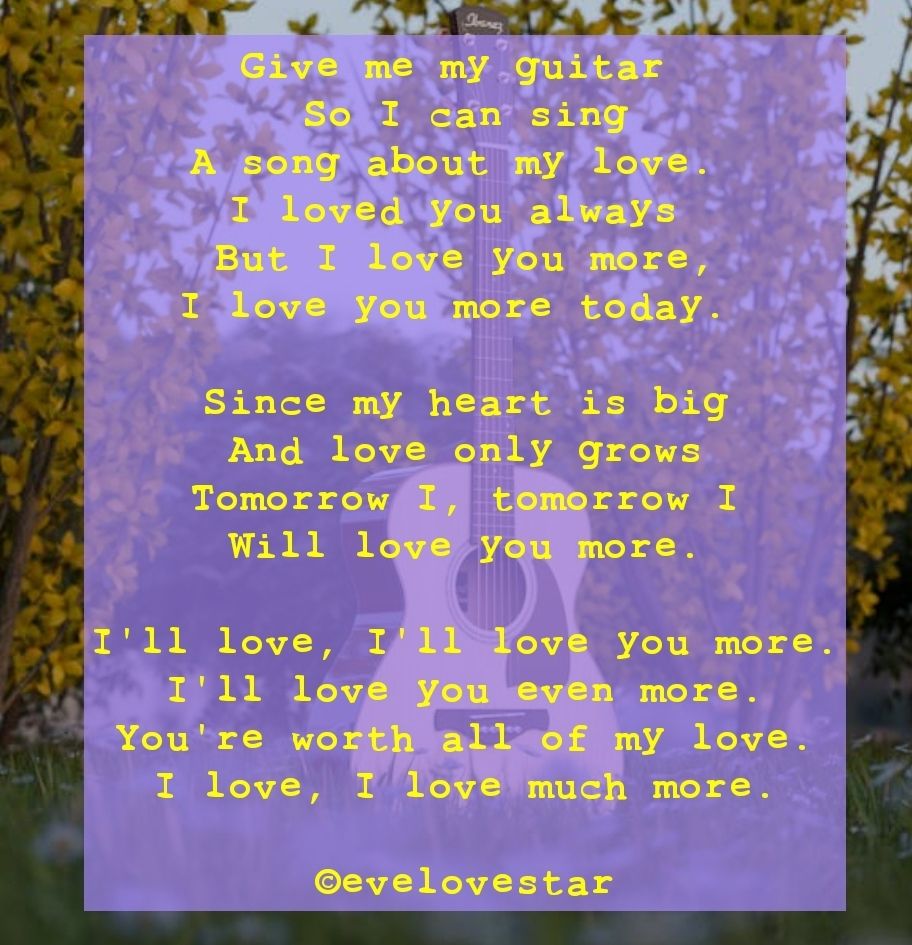
I fell in love with a new Italian song, started singing it in karaoke, then found translations to Spanish and English. I learned expressions and words as well as recognized words that are the same as in Spanish, my first language. Now I used the vocabulary I learned on my karaoke song in a different song.
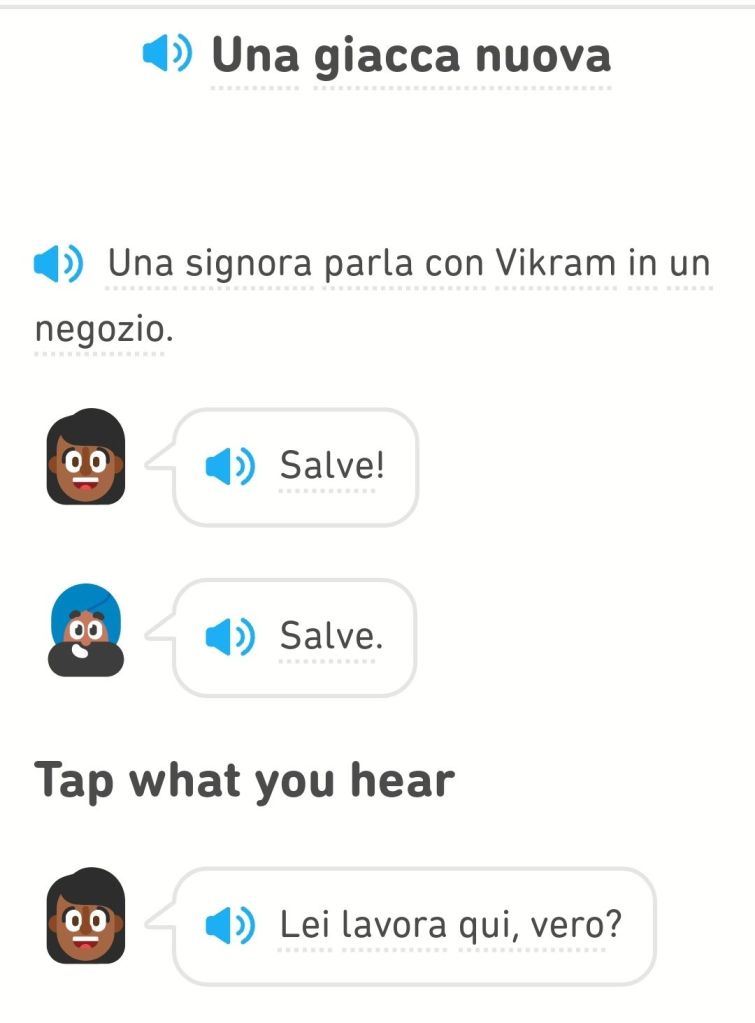
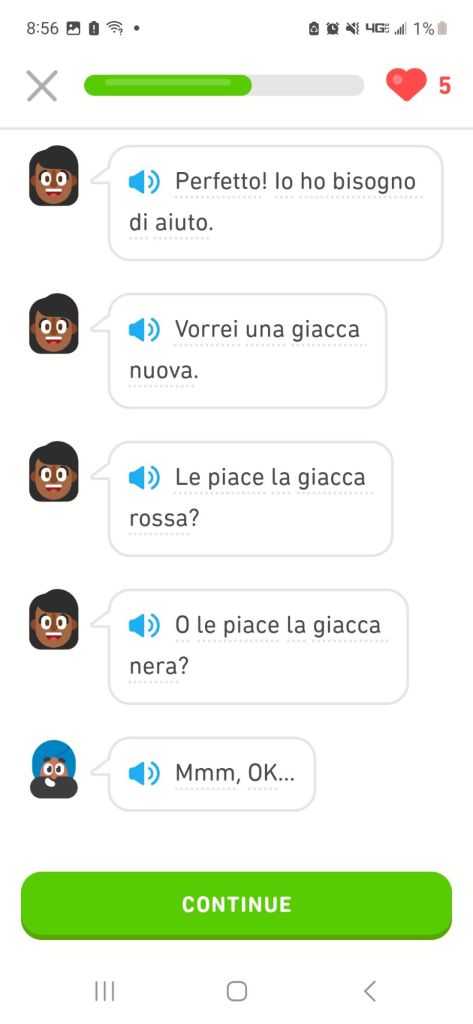
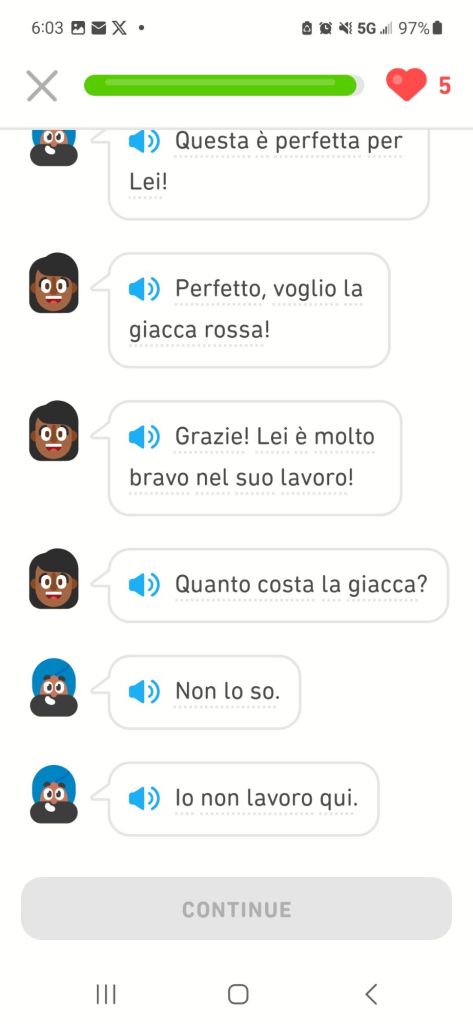
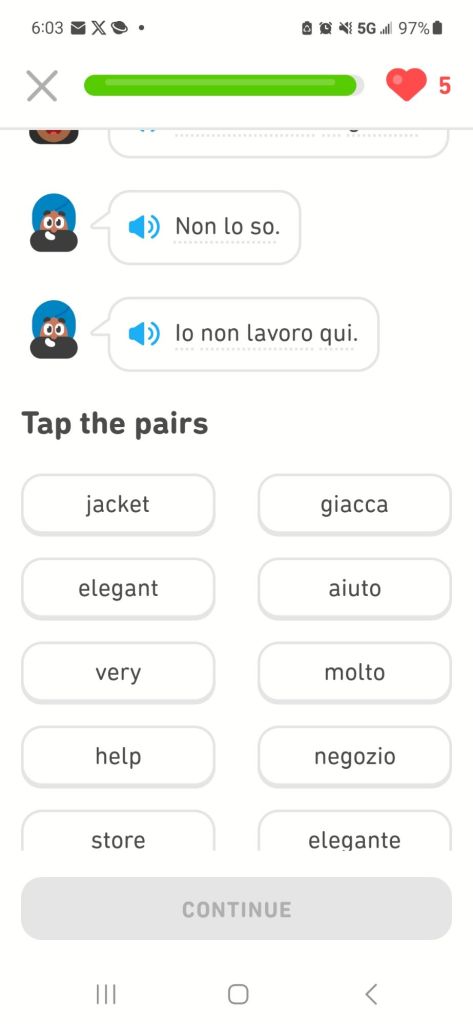
A fun Italian story on DuolingoIo o bisogno di (I have a need for) is a phrase I heard in music, so through music, I practice what I learned on Duolingo.The woman asks the worker for help at the store. She is buying a new jacket. He helps her choose the red jacket, then tells her he does not work there.Jacket = giacca, elegant = elegante, very = multo, help = aiuto, store = negozio.
2. Pattern Recognition
Music is an excellent tool for pattern recognition. Pay attention to recurring phrases, themes, and lyrical structures.
For example, in Italian music, I noticed themes such as “Il mare” (the sea), “Parole” (words), and “il cuore” (the heart). I learned all three words because of music and since they’re themes in Italian music, they’re in so many songs. Noticing these patterns helps you internalize the language structure and vocabulary. The rhythm and melody also make it easier to remember new words and phrases.
3. Exploring New Sounds
Spotify and other streaming services offer a wide range of Italian music that can introduce you to the rhythm and intonation of the language. Fast-paced European-style songs with poetic lyrics can be especially engaging. These songs often blend beautiful singing with intricate language, providing a rich auditory experience that helps you get used to the language’s sounds and patterns.
Italian Party Music Spotify Playlist (Adult)
A Game of Wonderment
Learning a language through music is akin to being a baby in an Italian-speaking environment. Just as a child absorbs language by hearing it spoken around them, you absorb Italian by listening to its music. Embrace the process of trying to understand without judging yourself. It’s natural not to grasp every word or sentence at first. Over time, you’ll start recognizing familiar words and phrases, which will naturally expand your vocabulary and understanding.
Benefits of Music-Based Learning
1. Enhanced Listening Skills
Listening to music helps improve your listening skills and pronunciation. You become more attuned to the nuances of the language, such as intonation and stress, which are crucial for effective communication.
2. Emotional Connection
Music often evokes emotions, making the language learning process more personal and memorable. The emotional connection to a song can make new vocabulary stick better. Similar to my pitch for poetry for language learning.
3. Cultural Insight
Music is a reflection of culture. By listening to Italian songs, you gain insights into Italian culture, traditions, and values, enriching your overall learning experience.
Conclusion
I still do not speak or understand Italian but I am learning and it is fun. I do not have to learn it anyway but I take any opportunity I get to learn.
Incorporating music into my language learning routine was a powerful and enjoyable method to familiarize myself with my new language. By anchoring myself in familiar tunes, recognizing patterns, and exploring new sounds, I transformed language learning into an engaging game.
My goal is to become comfortable with the language’s sounds and rhythms. As I continue to listen and immerse myself, I found that I understood some words and the knowledge of the language grew naturally, much like a child absorbing their mother tongue.
Embrace the melody of learning, and let the music guide you to fluency.
Phrases I just heard in music
I listen to this playlist all the time.
My favorite song is my karaoke song
Dove sei tu? Where are you?
Podemo escapare
Per favore, non piangere.
Ho bisogno di te
Me lo merito
Ma quale verita
Non capita
Cuando piango
Grazie per existere
Sinceramente Tua
I recognize a word such as it happened with “parole” (words) in music after listening to it many times in several contexts, looking up the meaning and remembering it.
And you, what language are you learning or teaching and what tools are you using?

You must be logged in to post a comment.