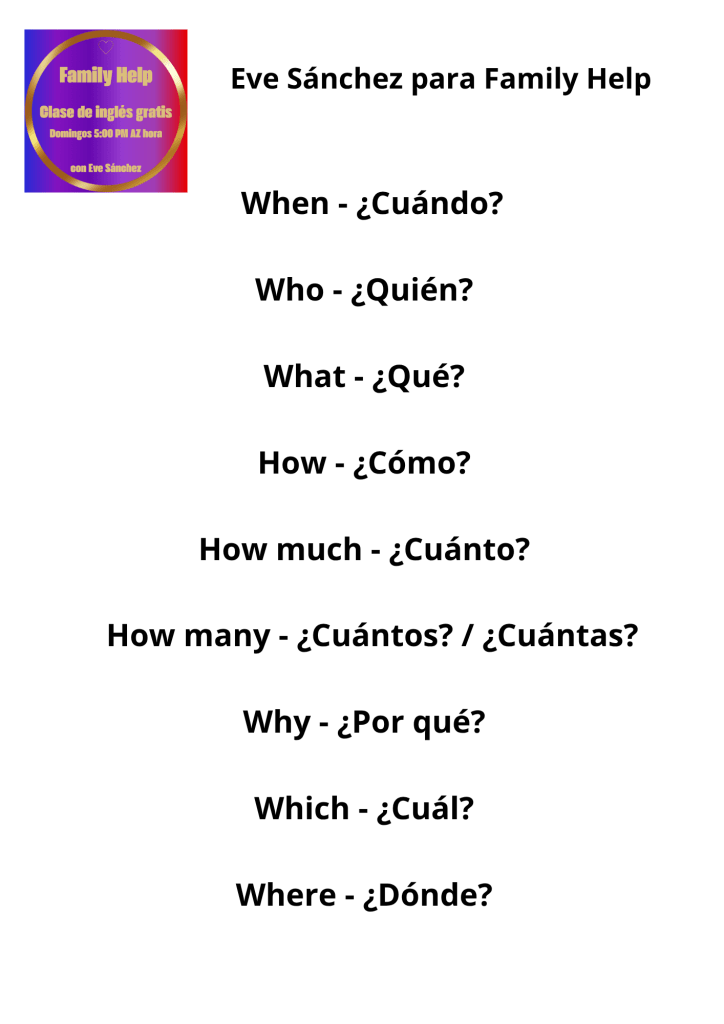
I have designed these materials so they can also be used by English speakers learning Spanish. Let me know if these are of help or what materials are needed in your case. These are from my new class as a ESL tutor and I will continue to share them.
🎉 Clase de inglés: Conversando con amigos 🎉
🗓 Todos los domingos | 🕔 5:00 PM hora de Arizona 📍 En vivo por zoom | 💬 ¡Siempre gratis!
¿Te gustaría hablar inglés como lo hacen los amigos en la vida real? Esta clase es para ti. 🧡
En un ambiente relajado y divertido, vamos a practicar inglés conversacional real, el que se usa todos los días en Estados Unidos. Aquí no se trata de memorizar reglas gramaticales, sino de conectar, comunicar y ganar confianza al hablar.
🔹 ¿Qué haremos en clase? ✅ Escucharás y entenderás inglés natural ✅ Hablarás en conversaciones guiadas y espontáneas ✅ Aprenderás expresiones útiles y vocabulario real ✅ Compartiremos historias, cultura, emociones y risas ✅ Conocerás personas de todo el mundo que también quieren mejorar su inglés
✨ La clase es impartida por una poeta y amante de los idiomas que convierte el aprendizaje en una experiencia creativa y con corazón.
👥 Todos los niveles son bienvenidos. No importa si sabes poco o mucho inglés — aquí todos aprendemos juntos.
¡Únete y comienza a hablar como un verdadero amigo! 💬🌟
We loved learning about Athena, and we drew lots of Athena images. I did not share with you, my Athena paper doll. I have a bad excuse. It was imperfect… I get it, it is not a good trait to teach my daughters, to be a perfectionist, so, I will show you on my next post. I will re-create my Athena paper doll until it is perfect. Those are opposing statements, but I will show you the imperfect job, then I will recreate and perfect.
But this is not about me, or my perfectionism.
This is about Lilli.
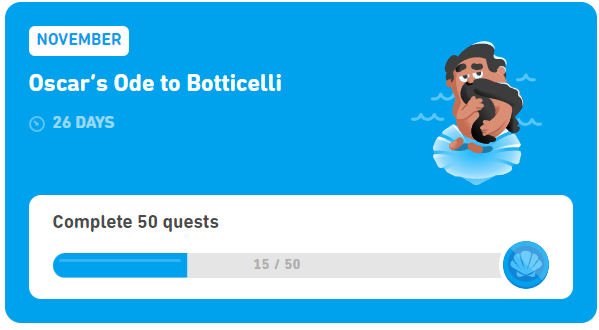
I sent Lilli to the computer to work on her Duolingo lesson. But I got distracted by a funny picture of one of the Duolingo characters “dressed” as the Venus of Boticelli. I had been meaning to show Lilli because of how funny it looks and the fact that Lilli knows about Venus and that painting (I am a bit obsessed with the goddess).
Since we learned about Athena, the next goddess we were going to learn about was Aphrodite. Of course, Venus is the Roman name for Aphrodite. Lilli likes Aphrodite even more than Athena, she said. I realized that we must not forget Artemis….
I started with Athena on purpose. I intended to initiate the ancient goddess club with the wise one. Obviously.
About Lilli’s Boticelli inspired Venus:
I was making fun of this hilarious Venus inspired character when I started talking to Lilli of the famous painting which she already knows and considers sus(picious), because, well, Venus is undressed in the painting and covering up with her fabulous hair, just like this hilarious character is covering up with his beard.
The painting is of her birth. According to myth, she was born fully grown like Athena, with one difference, Athena was born in full armor, Venus, was born fully grown and without clothes. Int he very gorgeous Boticelli painting, Venus is being offered a gorgeous cloth to cover herself up.
Duolingo’s Oscar as Venus (Inspired by the famous Boticelli painting)
Between one joke and the next, we were looking up the famous Boticelli picture. We saw that there were countless pictures of it for sale and Lilli was amazed at how expensive they were, and I told her that is really nothing for a copy of one of the most famous paintings in the world. One of the most reproduced paintings ever.
I realized that the original painting is so old that it precedes copyright laws and thus it is completely free to be copied and used in any way and even to sell. I immediately told Lilli that she should draw her, not thinking anything of it. I opened Duolingo and went to work with Lizzie on her story, I will write about that story as soon as she is ready, but it is a marvelous project.
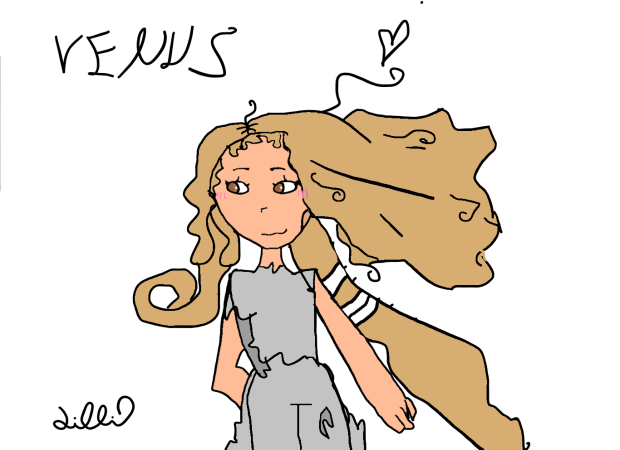
While I was sitting with Lizzie at her computer, Lilli calls me, and she shows me this incredible Venus art! I was speechless.
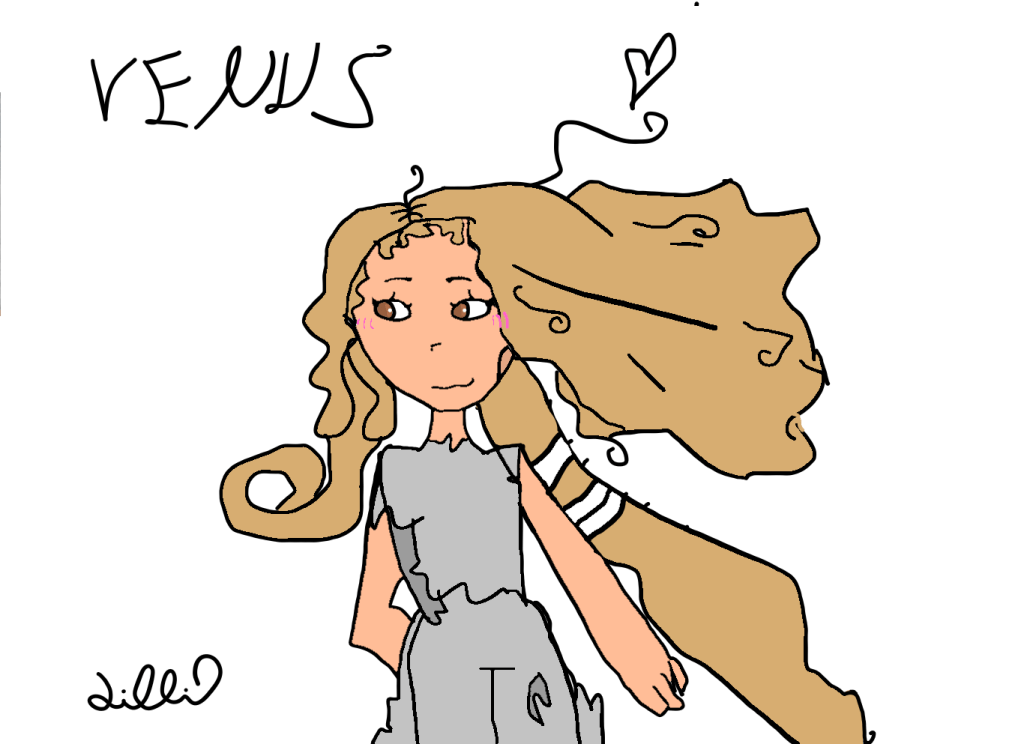
Venus of Boticelli by Lilli
Lilli dressed her Venus! That was sweet. Something about her wearing rags, though, she said since the Greeks tied their clothes. But I am not certain why she dressed Venus in rags but for a child, it is much better than in her birth suit. So, I take her creativity, and I loved it.
I am simply in love with that hair, and you bet I will spend the better of the next 5 years drawing my Venus of Boticelli. That was a joke….
Boticelli and his birth of Venus painting
Take advantage and learn some art history through the links below:
(How are the kids’ language learning going? Lizzie did her first ever Duolingo class today, that was a huge success, and she noticed what she didn’t know, of course, but I noticed how much she actually knew. Perspectives.). Lilli and Vivi both do Duolingo Spanish. I have to remind them, but they understand so much. I am getting Alex (4) to understand what it means that other language Spanish, huh, he doesn’t fully get it yet, but he likes papas fritas (fried potatoes)….
Meanwhile, I am learning three languages. I will have to go back to the drawing board with my initiative for teaching the children languages. However, the children have learned Spanish, they simply are not language “nerds” like me. The thing is I love language learning. They love art and games. To me language is art and fun.
NOTE: I used the word nerd full of love and with no judgement. I think language nerds are some of the coolest people ever. Perspectives.
I stopped learning Italian on Duolingo because the Duolingo Italian course is not fun. Italian is a gorgeous language and Duolingo does not do it justice.
After I almost lost my streak because of the Italian course, I started a new language, Greek and started learning Italian by listening to Italian music and interacting with the language in a fun and relaxed way. I do not have to learn this language anyway.
Using Music for Language Learning
What is a fun way to learn a new language if traditional methods don’t quite resonate with you? If you’ve ever felt frustrated with a language learning app or textbook, it might be time to consider an alternative approach: music.
Music can transform the language learning process into a game of wonderment and exploration, making it not only enjoyable but also highly effective. Here’s how you can harness the power of music to learn a new language, drawing on my own experience with Italian music.
Discovering Language Through Music
1. Anchoring into Favorite Tunes
One of the most engaging ways to learn a new language is by immersing yourself in music you already love. For instance, I enjoyed the Spanish songs of Laura Pausini and Eros Ramazzotti. By listening to these artists’ Italian versions of the songs I know and love, I learned. This familiar territory provides a comforting anchor, helping you recognize and remember phrases and words more easily.
I fell in love with a new Italian song, started singing it in karaoke, then found translations to Spanish and English. I learned expressions and words as well as recognized words that are the same as in Spanish, my first language. Now I used the vocabulary I learned on my karaoke song in a different song.
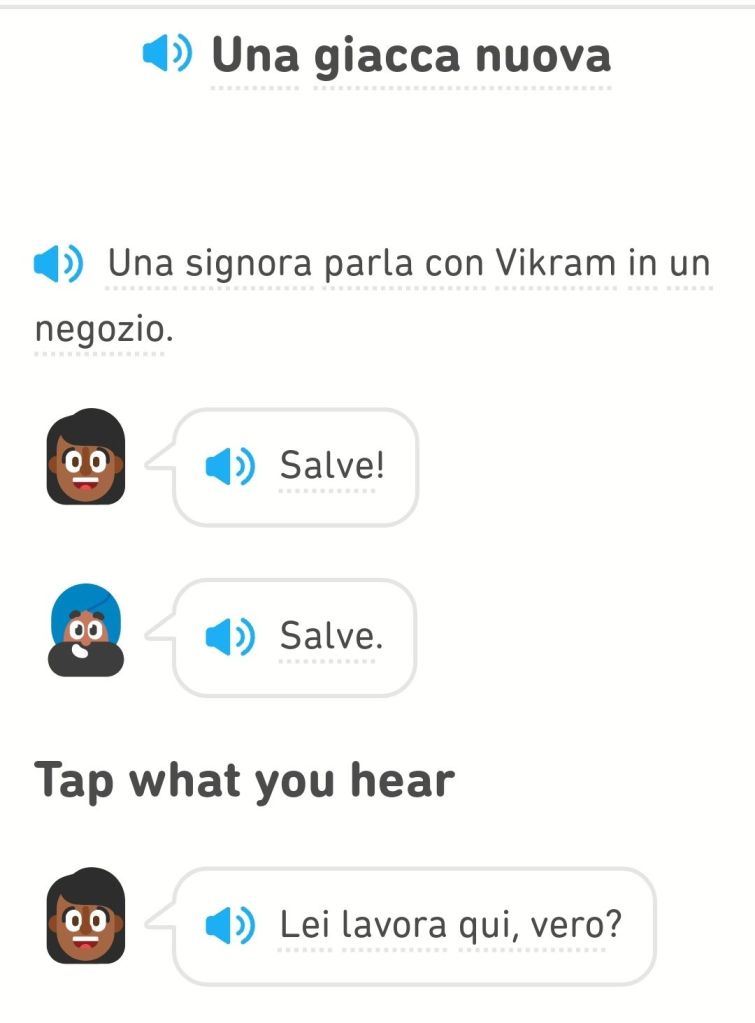
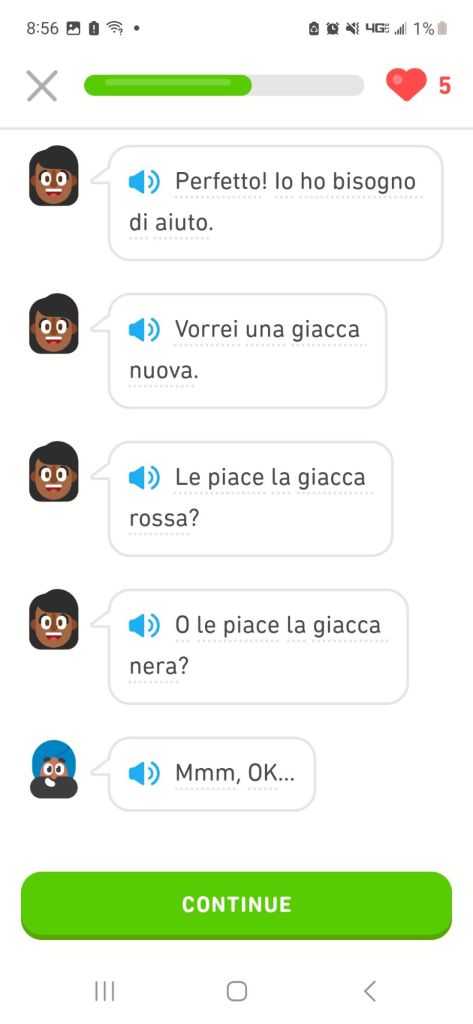
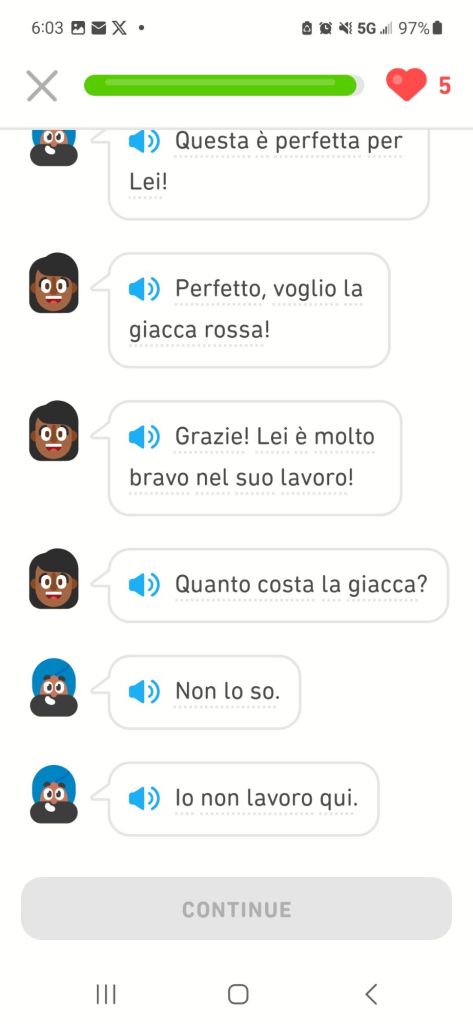
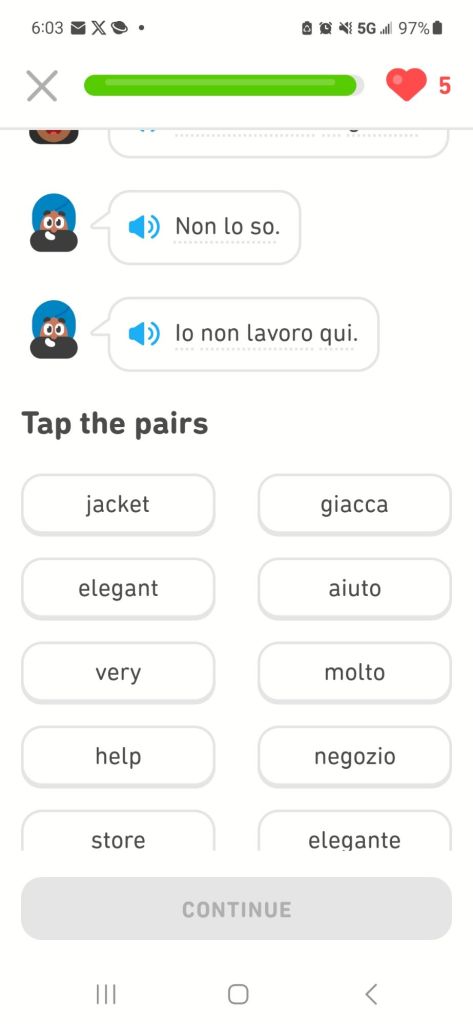
A fun Italian story on DuolingoIo o bisogno di (I have a need for) is a phrase I heard in music, so through music, I practice what I learned on Duolingo.The woman asks the worker for help at the store. She is buying a new jacket. He helps her choose the red jacket, then tells her he does not work there.Jacket = giacca, elegant = elegante, very = multo, help = aiuto, store = negozio.
2. Pattern Recognition
Music is an excellent tool for pattern recognition. Pay attention to recurring phrases, themes, and lyrical structures.
For example, in Italian music, I noticed themes such as “Il mare” (the sea), “Parole” (words), and “il cuore” (the heart). I learned all three words because of music and since they’re themes in Italian music, they’re in so many songs. Noticing these patterns helps you internalize the language structure and vocabulary. The rhythm and melody also make it easier to remember new words and phrases.
3. Exploring New Sounds
Spotify and other streaming services offer a wide range of Italian music that can introduce you to the rhythm and intonation of the language. Fast-paced European-style songs with poetic lyrics can be especially engaging. These songs often blend beautiful singing with intricate language, providing a rich auditory experience that helps you get used to the language’s sounds and patterns.
Italian Party Music Spotify Playlist (Adult)
A Game of Wonderment
Learning a language through music is akin to being a baby in an Italian-speaking environment. Just as a child absorbs language by hearing it spoken around them, you absorb Italian by listening to its music. Embrace the process of trying to understand without judging yourself. It’s natural not to grasp every word or sentence at first. Over time, you’ll start recognizing familiar words and phrases, which will naturally expand your vocabulary and understanding.
Benefits of Music-Based Learning
1. Enhanced Listening Skills
Listening to music helps improve your listening skills and pronunciation. You become more attuned to the nuances of the language, such as intonation and stress, which are crucial for effective communication.
2. Emotional Connection
Music often evokes emotions, making the language learning process more personal and memorable. The emotional connection to a song can make new vocabulary stick better. Similar to my pitch for poetry for language learning.
3. Cultural Insight
Music is a reflection of culture. By listening to Italian songs, you gain insights into Italian culture, traditions, and values, enriching your overall learning experience.
Conclusion
I still do not speak or understand Italian but I am learning and it is fun. I do not have to learn it anyway but I take any opportunity I get to learn.
Incorporating music into my language learning routine was a powerful and enjoyable method to familiarize myself with my new language. By anchoring myself in familiar tunes, recognizing patterns, and exploring new sounds, I transformed language learning into an engaging game.
My goal is to become comfortable with the language’s sounds and rhythms. As I continue to listen and immerse myself, I found that I understood some words and the knowledge of the language grew naturally, much like a child absorbing their mother tongue.
Embrace the melody of learning, and let the music guide you to fluency.
Phrases I just heard in music
I listen to this playlist all the time.
My favorite song is my karaoke song
Dove sei tu? Where are you?
Podemo escapare
Per favore, non piangere.
Ho bisogno di te
Me lo merito
Ma quale verita
Non capita
Cuando piango
Grazie per existere
Sinceramente Tua
I recognize a word such as it happened with “parole” (words) in music after listening to it many times in several contexts, looking up the meaning and remembering it.
And you, what language are you learning or teaching and what tools are you using?
The Leaning Tower of Pisa, one of the most famous architectural landmarks in the world, known for its tilt. Located in Pisa, Italy, the tower is actually the freestanding bell tower, or campanile, of the cathedral of the city.
Ice Cream tower
History and Construction
Construction Began: August 9, 1173.
Architect: The exact identity of the architect is still debated, but the project was overseen by Bonanno Pisano.
Construction Duration: The construction took about 200 years, with several interruptions due to wars and engineering challenges.
Height: Approximately 56 meters (183 feet) on the higher side.
Material: The tower is constructed primarily of white and grey marble.
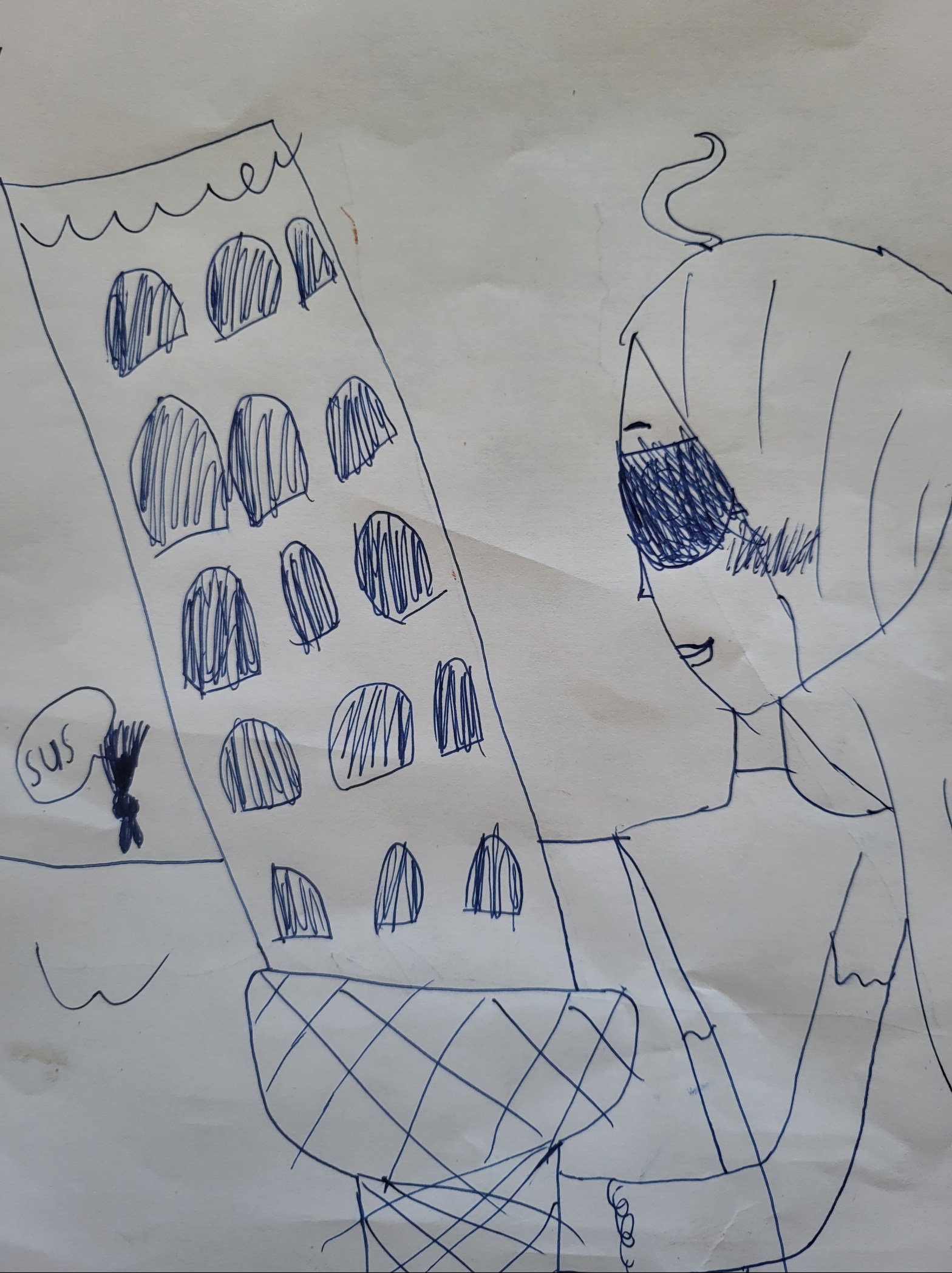
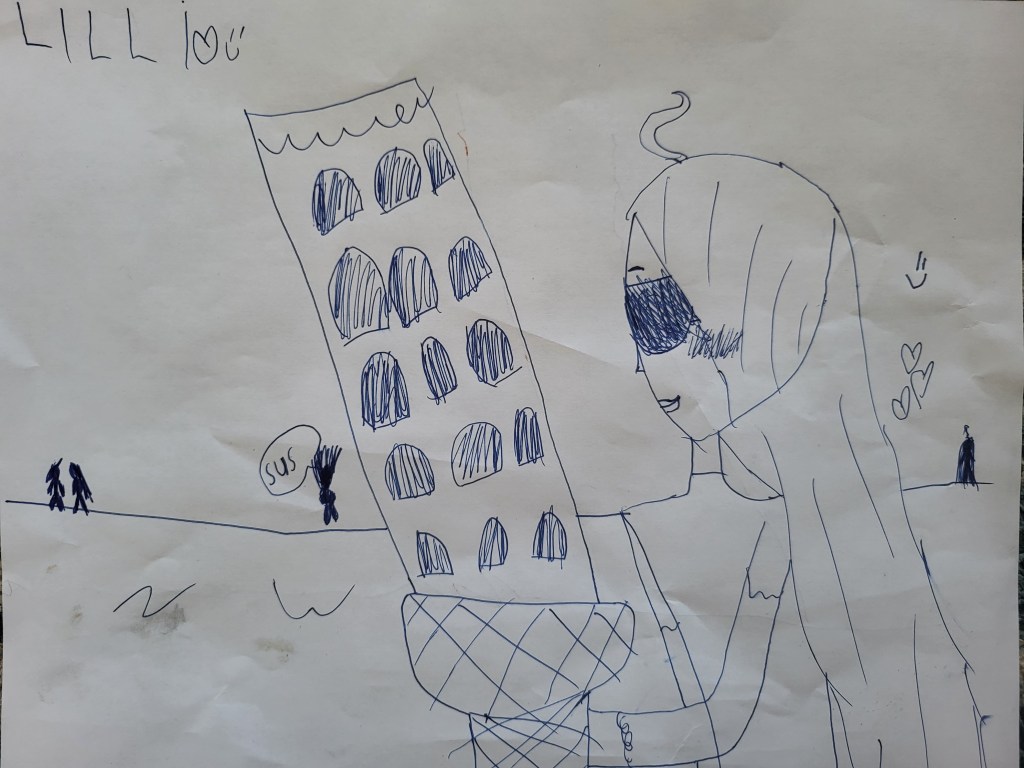
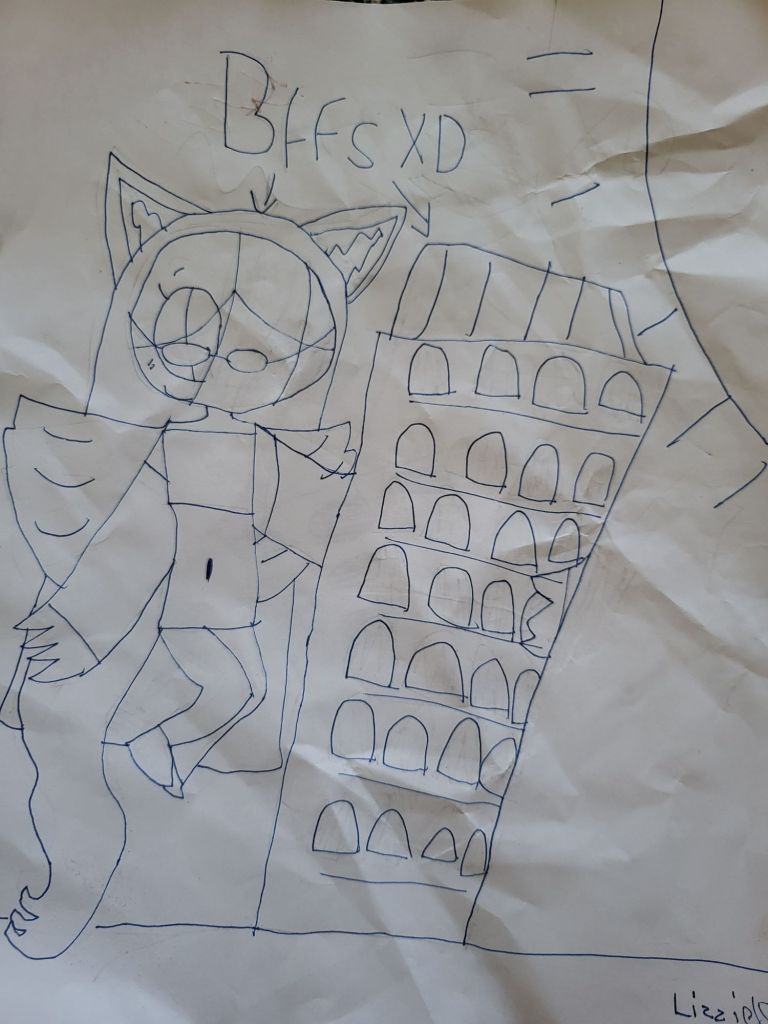
A fox girl with wings holding the tower by Lizzie
The Tilt
Cause of the Lean: The tilt began during construction, due to the soft, unstable ground beneath the tower, which consists of a mix of clay, fine sand, and shells. This ground couldn’t support the tower’s weight evenly.
Angle: The tower’s tilt reached about 5.5 degrees before modern restoration efforts reduced it to about 3.97 degrees.
Efforts to Stabilize: Over the centuries, many efforts have been made to stabilize the tower, including adding weights to the opposite side and reinforcing the foundation.
Cultural Significance
Symbol of Pisa: The Leaning Tower is a symbol of Italy and the city of Pisa, recognized worldwide for its unique architecture and history.
UNESCO World Heritage Site: The tower, along with the cathedral, baptistery, and cemetery in the Piazza dei Miracoli, is part of a UNESCO World Heritage Site.
Tourism: Millions of tourists visit the Leaning Tower of Pisa every year, and it has become a popular spot for fun photos that play with the tower’s tilt.
Fun Fact
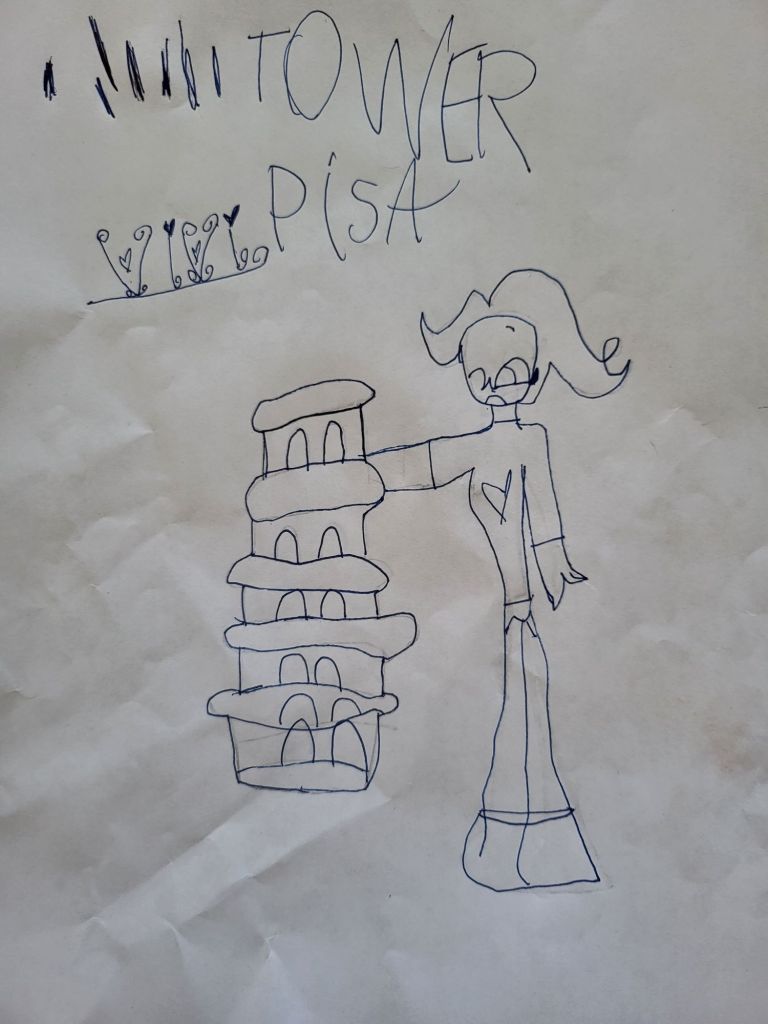
A girl standing far in front of the tower, making her really big in comparison by Vivi
The tower was originally intended to stand vertically, like other bell towers, but its tilt has made it far more famous than it might have been otherwise. The lean has become a part of its charm, and today, it’s celebrated as an iconic historical and architectural marvel.
Then we searched the fun pictures and found many cool ones on Pinterest of people holding, pushing, or eating the tower which are super cool and inspirational. This inspired their currect art project. See the pictures I shared on my Homeschool Pinterest board, they inspired my kids Leaning tower art:
Pinterest: Leaning Tower of Pisa. Intro for children
This serves as history, culture, architecture, geography, and language, I strudy Italian so I take any chance to learn and speak, currently I am listening to Italian music.
This was fun for us,
If you created art inspired by this, please share with us,

You must be logged in to post a comment.