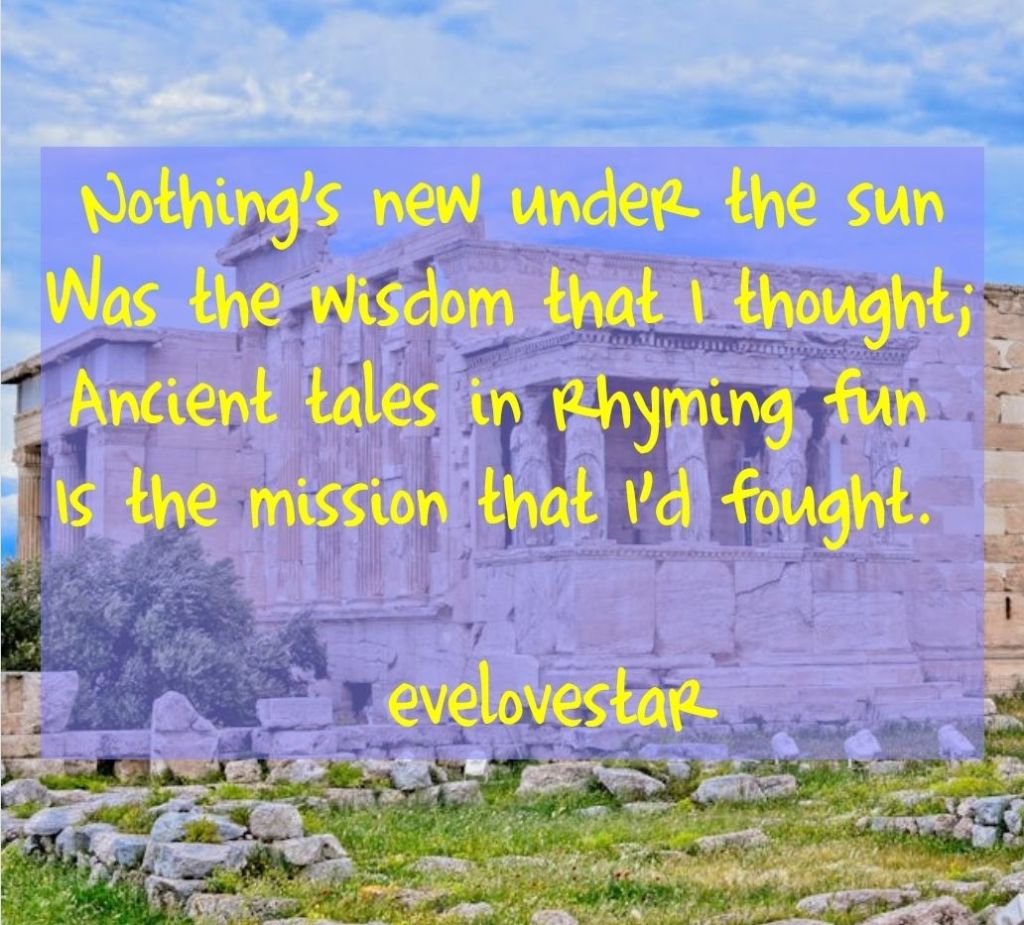
I have a fascination with ancient Greece and its history. It frequently intersects my art and poetry.
My oldest daughter Lizzie has a cool ancient history class on Outschool. I think culture is important. I also teach the kids ancient history myself. They receive it well.
Free Ancient Greece Learning Resources
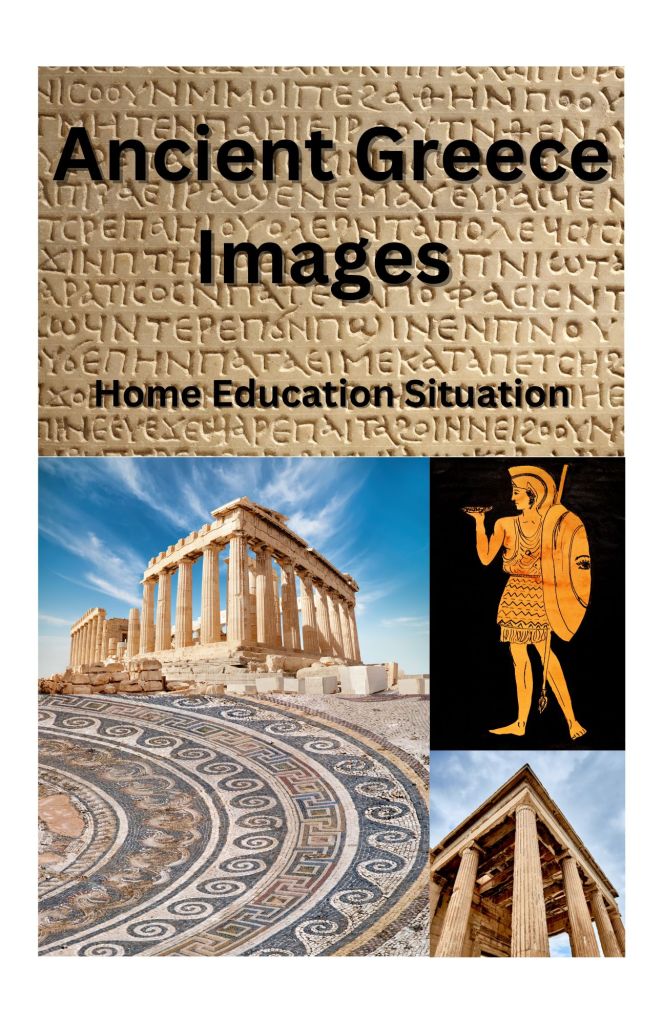
Free document. Ancient Greece Learning Ideas with images and 49 ideas for learning about Greek history and ancient Greek culture. Download yours through this link:
Read our blog as we have shared ancient Greek inspired poetry, lesson plans, mythology, art, paper dolls, and more.
Follow us as I will be creating more materials based on these stunning images. I created this ebook to use it in my daughter’s home education, so you will see much more on this topic.
I’m so excited to share a special FREE resource with you today! This parent guide is packed with creative ideas to help your kids dive into the beauty and history of Ancient Greece. It’s perfect for homeschoolers who want to spark curiosity and make learning come alive through art, history, and storytelling.
But wait—there’s more! 🏛️ If you love this guide, imagine pairing it with stunning, high-quality photographs of Ancient Greece. Our Greek Images eBook, available on Etsy for a super affordable price, offers 39 captivating images of ancient ruins, famous cities, sculptures, and more. These pictures are the perfect complement to your lessons and will immerse your kids in the magic of the past while making your homeschool space even more inspiring!
What You’ll Get with the Free Guide
Creative activity ideas tailored for ages 10–12
Ways to use art and storytelling to engage your kids
Tips on how visuals can transform learning into an unforgettable adventure
Why Pair It with the Greek Images eBook?
Our eBook includes vibrant, carefully curated photographs that go beyond what you’ll find online. They’re perfect for:
Classroom decor to set the mood for your Ancient Greece lessons
Inspiring art and writing projects
Creating digital or physical history presentations
And if you’re ready to bring Ancient Greece to life with gorgeous visuals, check out the Greek Images eBook on Etsy. Every purchase supports our growing library of homeschool resources, and there’s so much more to come!
Let’s make history fun, beautiful, and unforgettable—for your kids and for you. 🏺✨
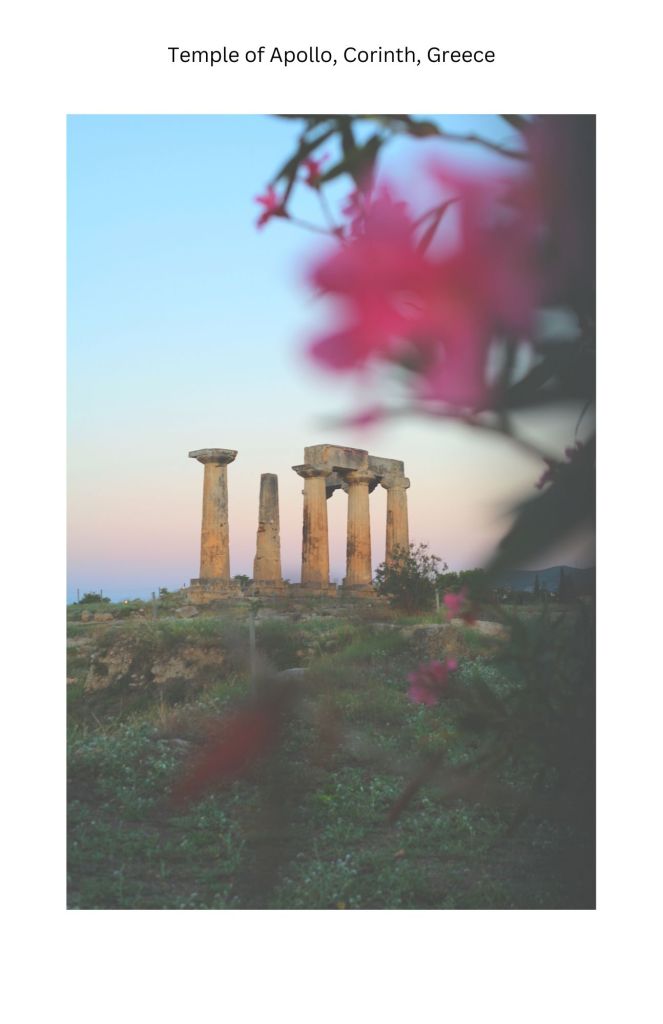
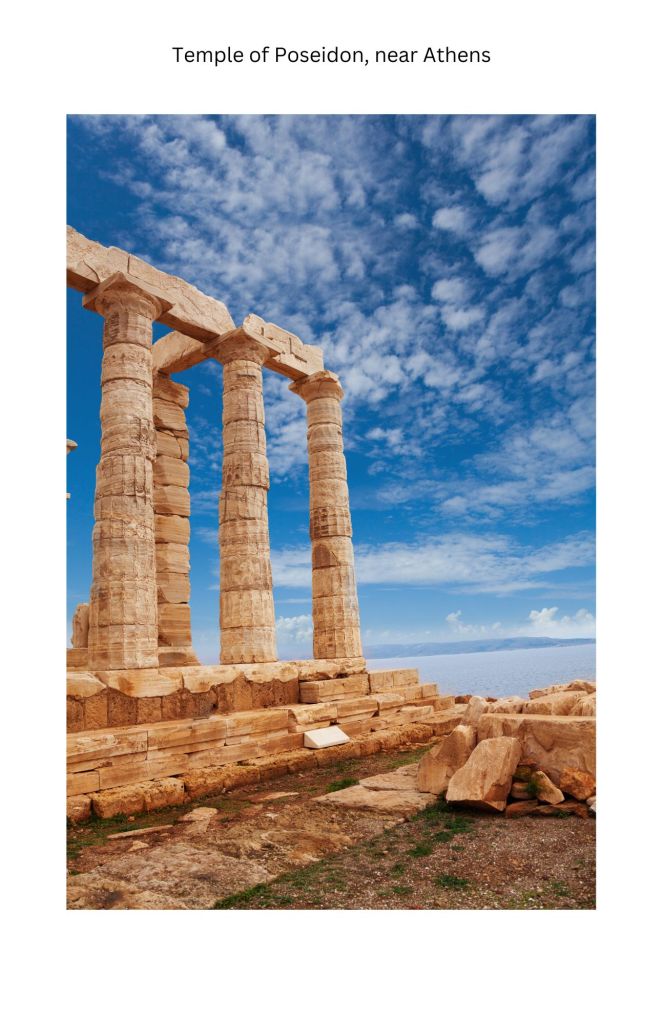
This free document also contains some high quality images
This document is included in my bundle for sale on Etsy. Get the Stunning Ancient and modern Greece images on Etsy through this link:
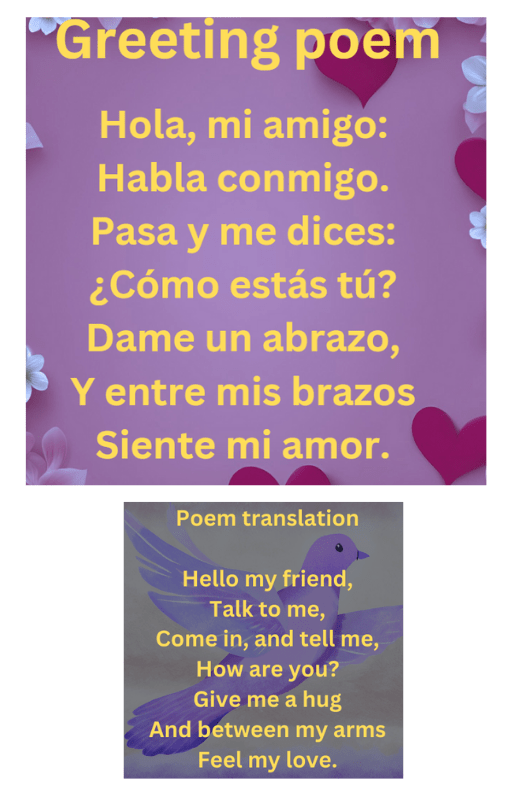
At our Etsy shop, you’ll find a treasure trove of creative, inspiring, and educational resources for homeschoolers of all ages! From activity pages for toddlers to captivating Ancient Greece printables, mandala coloring books with poetic twists, and even bilingual materials and Spanish lessons, we aim to make learning fun, engaging, and unforgettable.
For parents, we offer mindfulness and growth tools, with even more exciting resources to come.
But this is just the beginning! Our mission is to make poetry cool again and to inspire a lifelong love of learning.
Can’t purchase today? Don’t worry—we’ve got you covered with supplemental free content on this blog, videos, and a homeschool world domination plan (yes, really). Join us as we make education an adventure for the whole family!
Current Homeschool Offers
Let’s Learn with Fruit – Toddler Interactive Activities (2 – 5 year olds)
We loved learning about Athena, and we drew lots of Athena images. I did not share with you, my Athena paper doll. I have a bad excuse. It was imperfect… I get it, it is not a good trait to teach my daughters, to be a perfectionist, so, I will show you on my next post. I will re-create my Athena paper doll until it is perfect. Those are opposing statements, but I will show you the imperfect job, then I will recreate and perfect.
But this is not about me, or my perfectionism.
This is about Lilli.
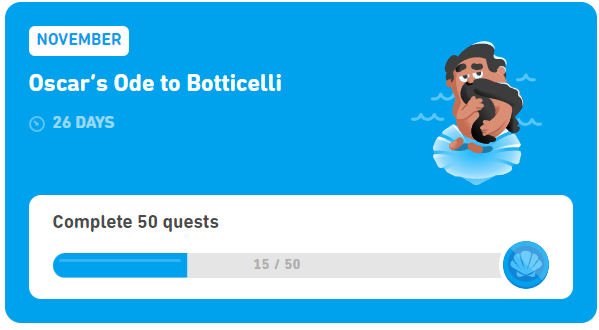
I sent Lilli to the computer to work on her Duolingo lesson. But I got distracted by a funny picture of one of the Duolingo characters “dressed” as the Venus of Boticelli. I had been meaning to show Lilli because of how funny it looks and the fact that Lilli knows about Venus and that painting (I am a bit obsessed with the goddess).
Since we learned about Athena, the next goddess we were going to learn about was Aphrodite. Of course, Venus is the Roman name for Aphrodite. Lilli likes Aphrodite even more than Athena, she said. I realized that we must not forget Artemis….
I started with Athena on purpose. I intended to initiate the ancient goddess club with the wise one. Obviously.
About Lilli’s Boticelli inspired Venus:
I was making fun of this hilarious Venus inspired character when I started talking to Lilli of the famous painting which she already knows and considers sus(picious), because, well, Venus is undressed in the painting and covering up with her fabulous hair, just like this hilarious character is covering up with his beard.
The painting is of her birth. According to myth, she was born fully grown like Athena, with one difference, Athena was born in full armor, Venus, was born fully grown and without clothes. Int he very gorgeous Boticelli painting, Venus is being offered a gorgeous cloth to cover herself up.
Duolingo’s Oscar as Venus (Inspired by the famous Boticelli painting)
Between one joke and the next, we were looking up the famous Boticelli picture. We saw that there were countless pictures of it for sale and Lilli was amazed at how expensive they were, and I told her that is really nothing for a copy of one of the most famous paintings in the world. One of the most reproduced paintings ever.
I realized that the original painting is so old that it precedes copyright laws and thus it is completely free to be copied and used in any way and even to sell. I immediately told Lilli that she should draw her, not thinking anything of it. I opened Duolingo and went to work with Lizzie on her story, I will write about that story as soon as she is ready, but it is a marvelous project.
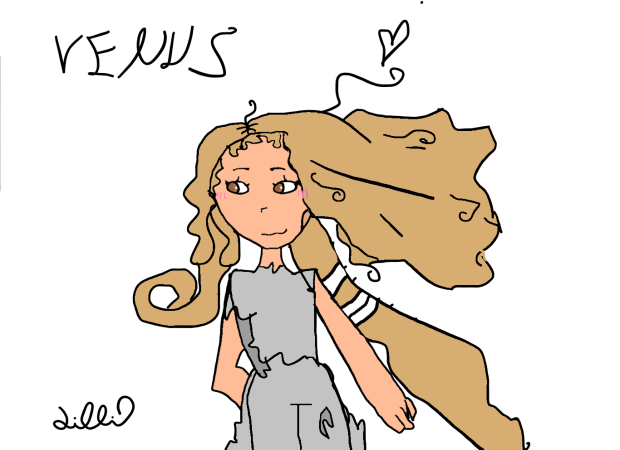
While I was sitting with Lizzie at her computer, Lilli calls me, and she shows me this incredible Venus art! I was speechless.
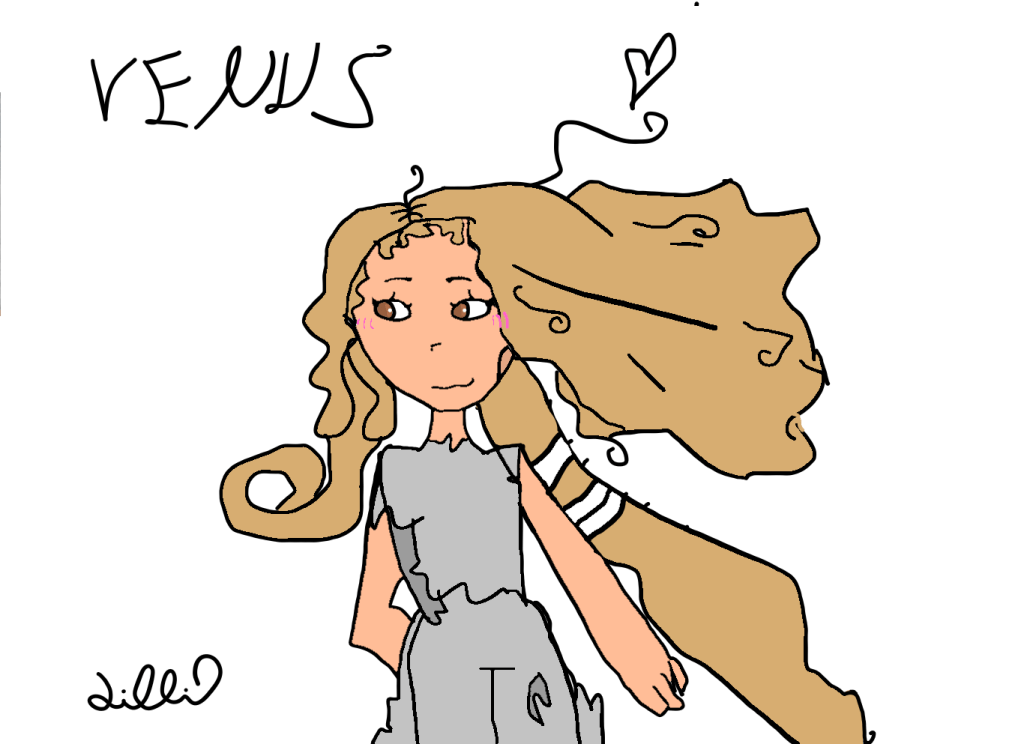
Venus of Boticelli by Lilli
Lilli dressed her Venus! That was sweet. Something about her wearing rags, though, she said since the Greeks tied their clothes. But I am not certain why she dressed Venus in rags but for a child, it is much better than in her birth suit. So, I take her creativity, and I loved it.
I am simply in love with that hair, and you bet I will spend the better of the next 5 years drawing my Venus of Boticelli. That was a joke….
Boticelli and his birth of Venus painting
Take advantage and learn some art history through the links below:
(How are the kids’ language learning going? Lizzie did her first ever Duolingo class today, that was a huge success, and she noticed what she didn’t know, of course, but I noticed how much she actually knew. Perspectives.). Lilli and Vivi both do Duolingo Spanish. I have to remind them, but they understand so much. I am getting Alex (4) to understand what it means that other language Spanish, huh, he doesn’t fully get it yet, but he likes papas fritas (fried potatoes)….
Meanwhile, I am learning three languages. I will have to go back to the drawing board with my initiative for teaching the children languages. However, the children have learned Spanish, they simply are not language “nerds” like me. The thing is I love language learning. They love art and games. To me language is art and fun.
NOTE: I used the word nerd full of love and with no judgement. I think language nerds are some of the coolest people ever. Perspectives.
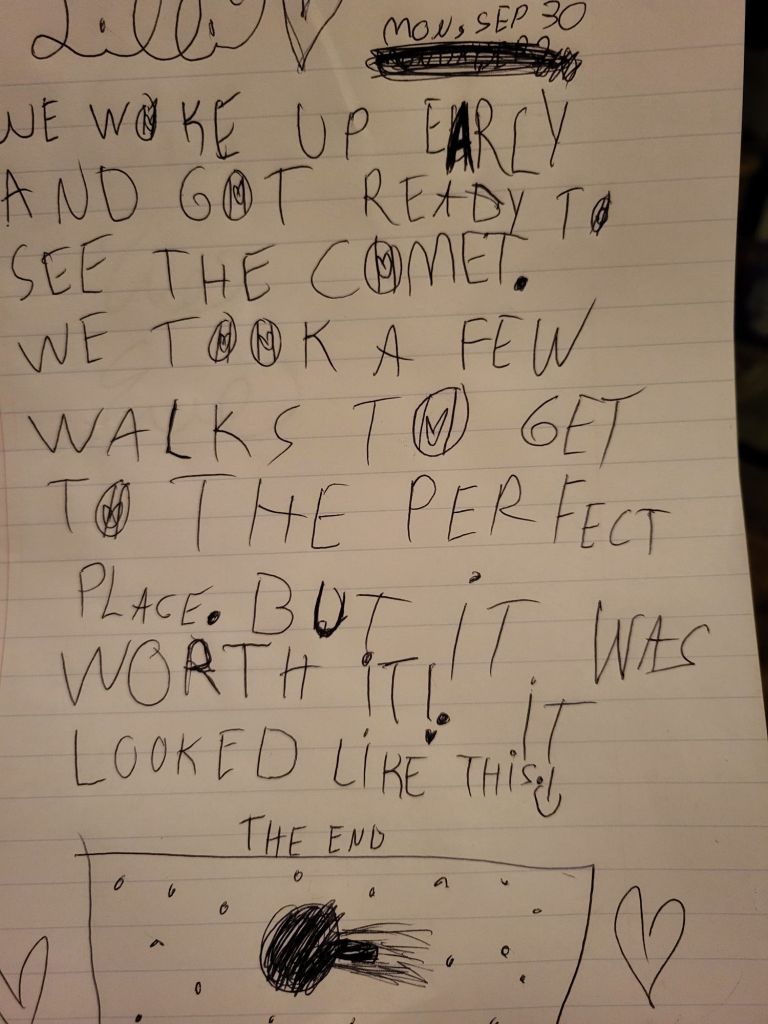
This week we woke up our kids very early and took to the darkness outside looking for the comet A3. We saw it, too. It was an amazing sight even though it only lasted a few seconds and we all saw it (except for the two toddlers).
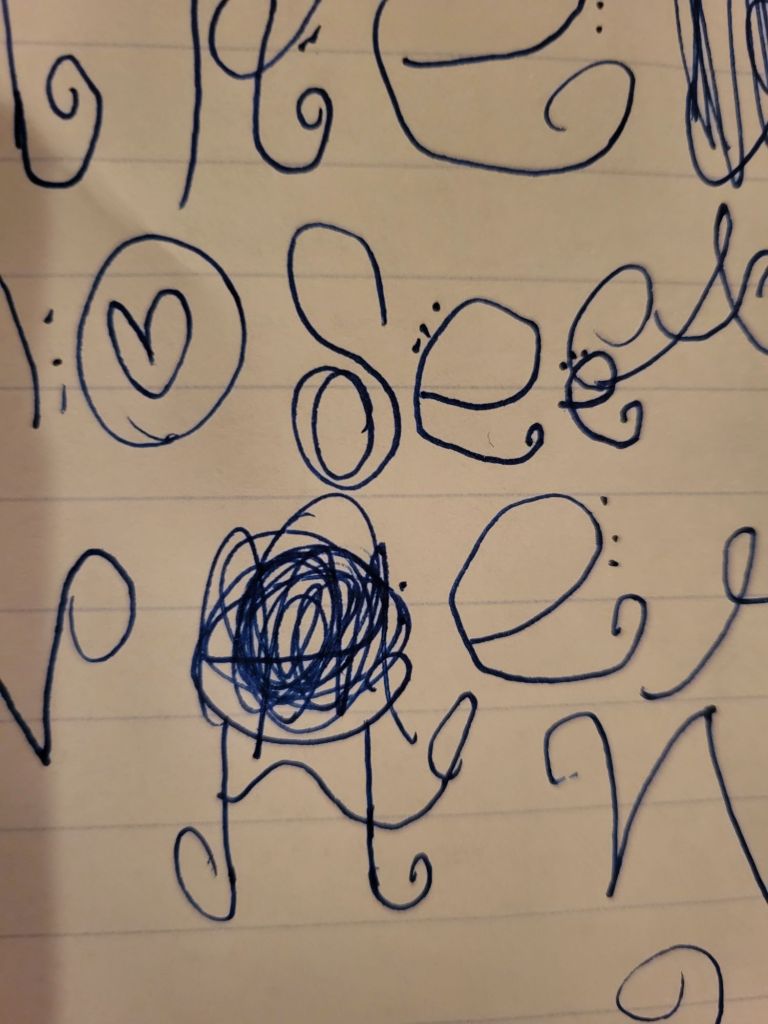
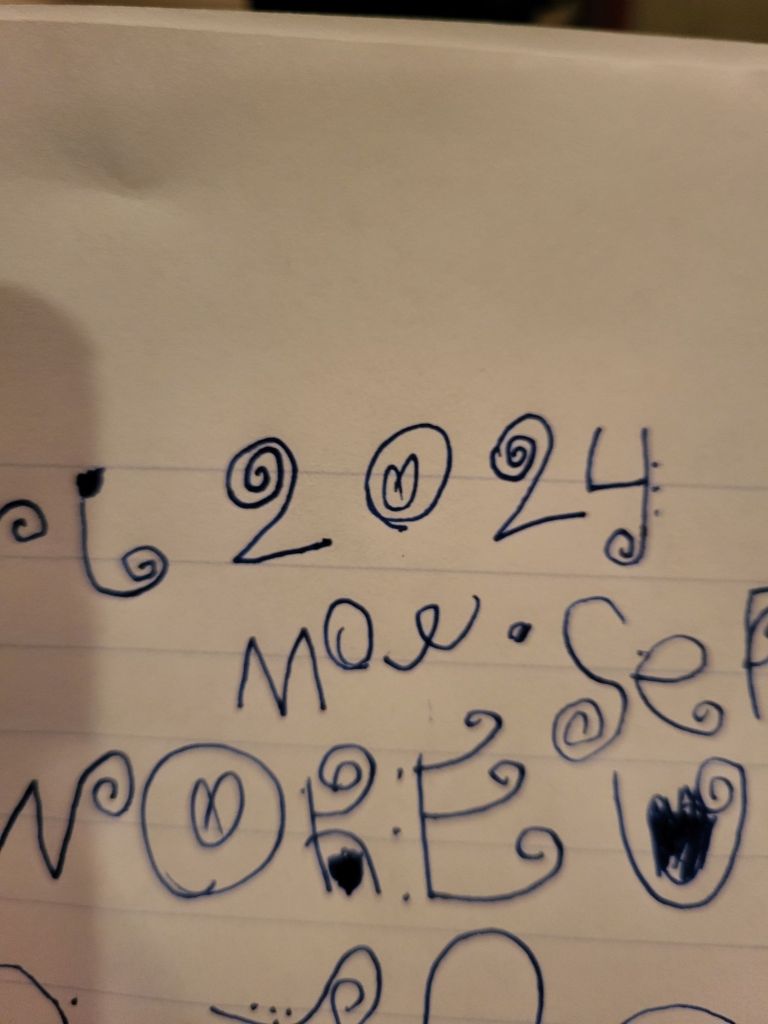
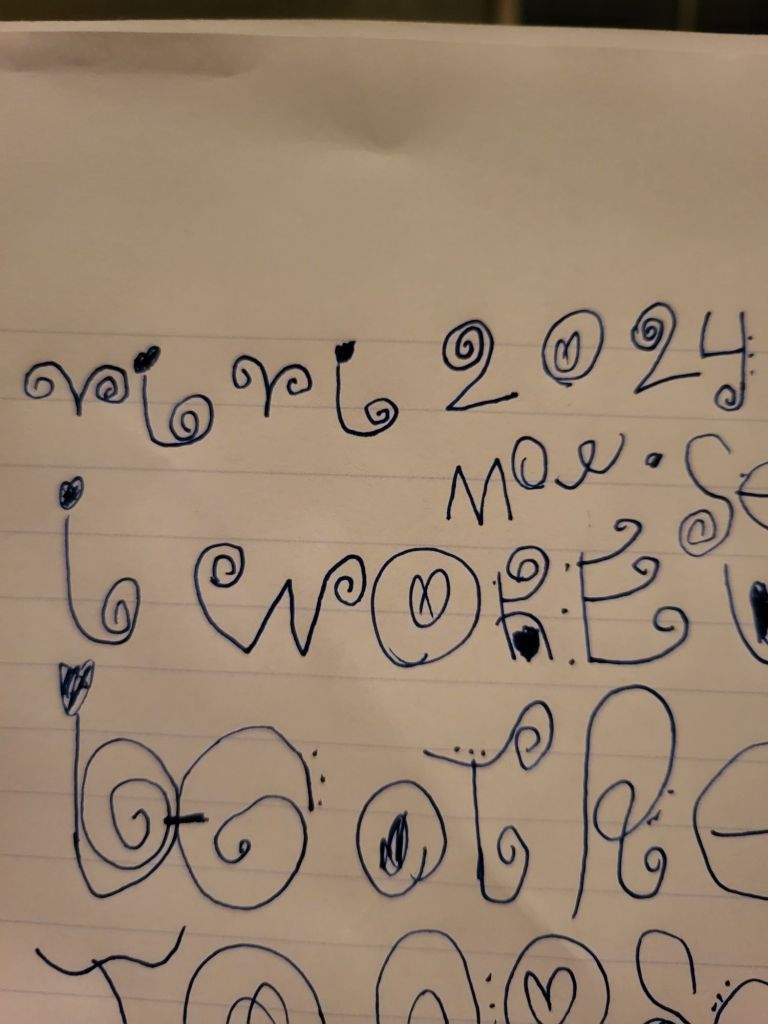
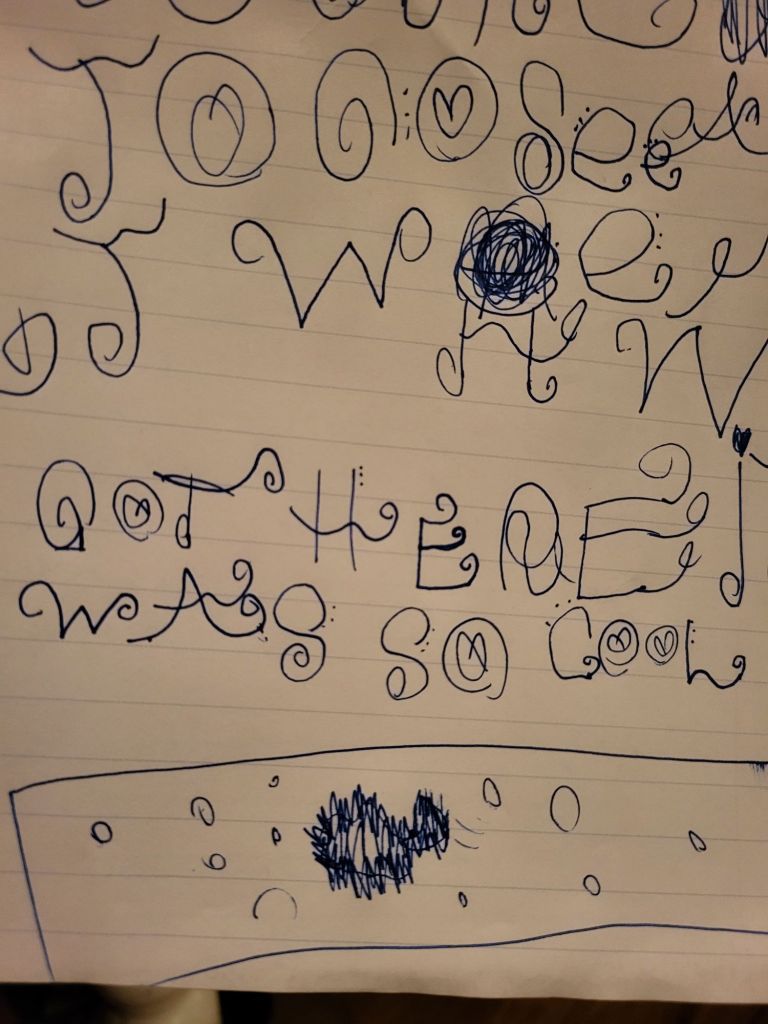
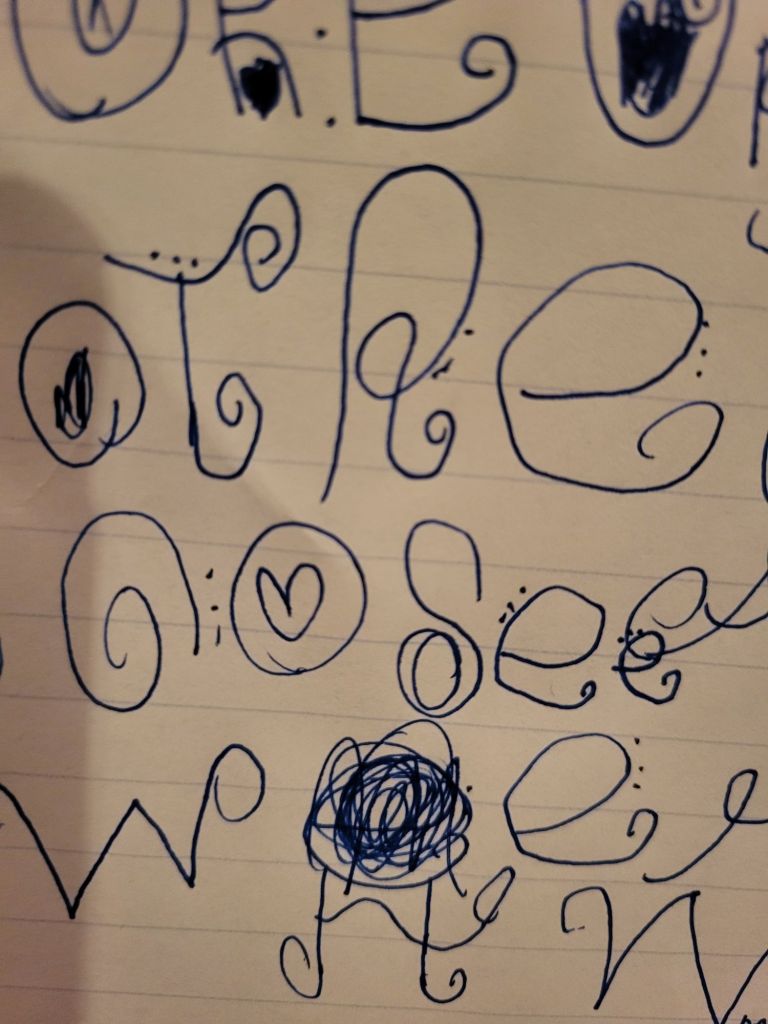
Lilli and Vivi wrote journal entries about it. Lilli, a perfect memory with 0 errors or need for improvement. Vivi in gorgeous letters. She needs to work on the legibility of her writing, but she has chosen incredibly beautiful decorated letters, which I love and I told her, I will have to copy some of her incredible letters.
My focus will be on practicing with Vivi so she can improve the legibility of her writing while keeping her wonderful letter design. I enjoyed her work so much and I was full of pride.
Lilli researched and taught us what a comet as well as a, meteor shower is, wrote this in her journal.
Both Lilli and Vivi drew the comet.
Home Education Log: Learning activities with our kids
This is not an entire list.
We discussed our ancestry, DNA, DNA tests related to ancestry, neanderthal DNA in humans in research, history of our families which interested and intrigued our oldest kid.
We did Halloween inspired art and crafts.
Alex drew a ghost and many more cool drawings. He was inspired by documentaries and videos we watched on the history of Halloween.
We watched documentaries about the history of Halloween, kids stories, and more on this topic.
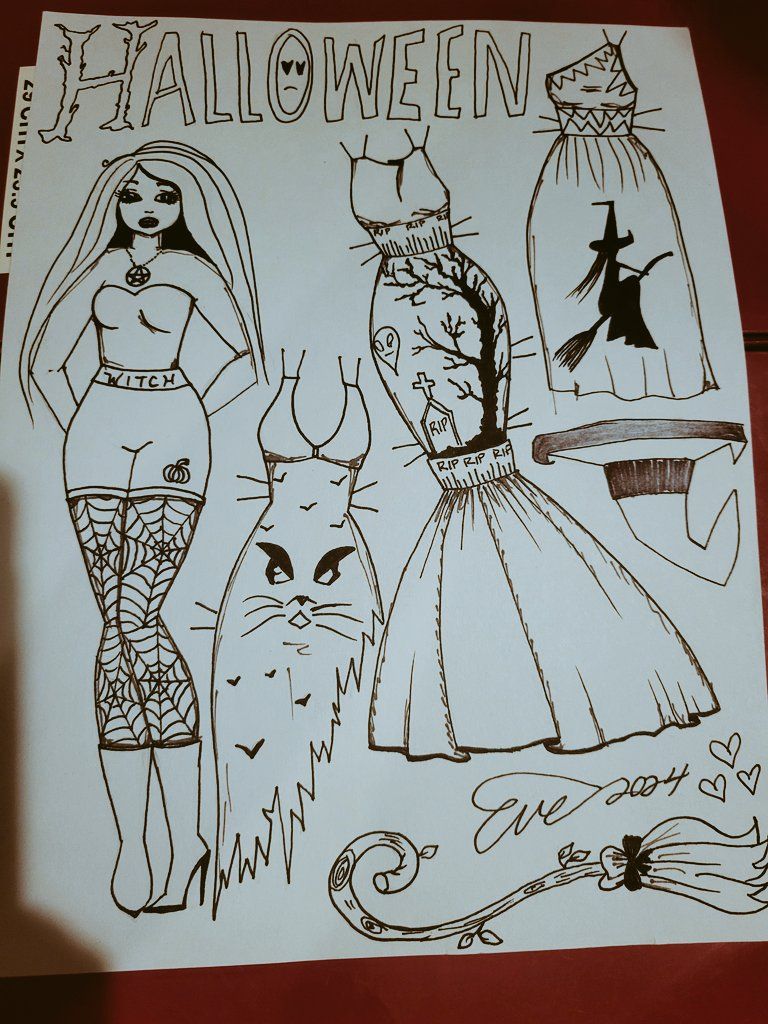
I finished a Halloween paper doll: I love fashion illustration and I incorporate it into our art activities.
This lovely fashion witch was designed in 2014. Back then my illustration skills were beginner level, but the dress designs were gorgeous. With my new skills, I drew a new doll and copied the same exact dresses, added the witch hat and broom.
We found old art of mine and discussed my art progress at which point I took advantage and gave a speech about improving one’s skill. I allowed the kids to see my bad beginner art that I am ashamed to show today and explained how I learned to draw figures by watching experts and used that fuel to inspire them by assuring them they too will be much better in their art.
I helped the kids finish Math worksheets they did not finish during their week.
We studied the Celts, specially regarding our own Celtic roots.
Lilli and I did Math: skip counting, addition, multiplication, and division.
Vivi and I worked on addition.
The kids have been sick, so we have not been to Jiu-jitsu class. They have been playing in the yard and “working in the garden”.
The kids read children’s books.
Lizzie and I wrote a poem together (she created the story) and she did the ending in prose using many words that start with g. Then she wrote the poem by hand. Her intention was to improve her handwriting of the letter g and she succeeded, her g was beautiful after such practice. She will be choosing her next letter to work on and we will repeat this exercise.
Lilli started the new Duolingo Music course.
Lilli returned to her Duolingo Spanish course.
I created children’s songs inspired by Lilli. Lilli created pictures to go with the song. I added AI music to the songs. We sung and sung and danced.
Lizzie decided to write a song. She created a story and we will be working on turning it into a song.
Lilli, Lizzie, Vivi worked on Math, Science, Grammar, Art on Outschool.
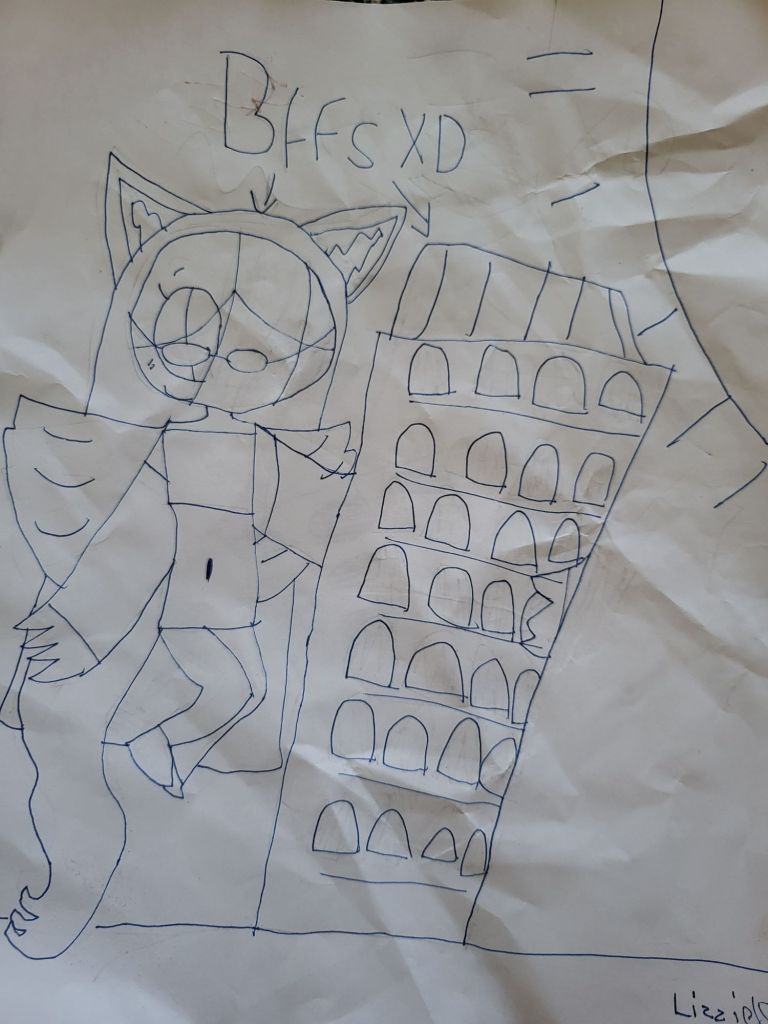
The Leaning Tower of Pisa, one of the most famous architectural landmarks in the world, known for its tilt. Located in Pisa, Italy, the tower is actually the freestanding bell tower, or campanile, of the cathedral of the city.
Ice Cream tower
History and Construction
Construction Began: August 9, 1173.
Architect: The exact identity of the architect is still debated, but the project was overseen by Bonanno Pisano.
Construction Duration: The construction took about 200 years, with several interruptions due to wars and engineering challenges.
Height: Approximately 56 meters (183 feet) on the higher side.
Material: The tower is constructed primarily of white and grey marble.
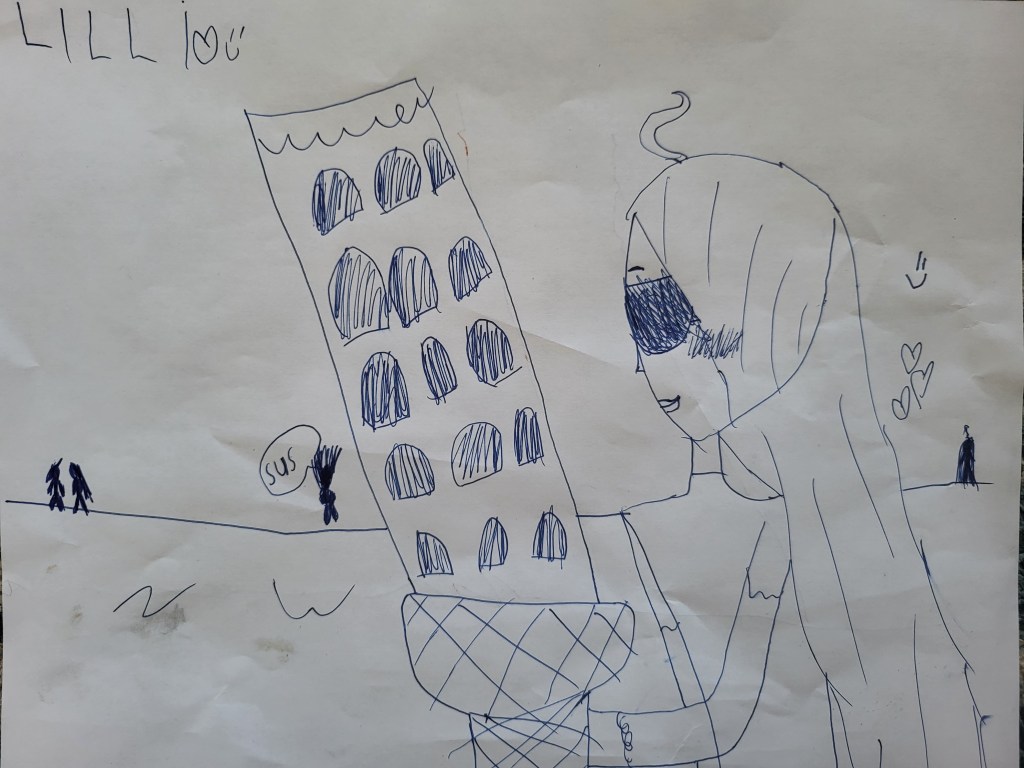
A fox girl with wings holding the tower by Lizzie
The Tilt
Cause of the Lean: The tilt began during construction, due to the soft, unstable ground beneath the tower, which consists of a mix of clay, fine sand, and shells. This ground couldn’t support the tower’s weight evenly.
Angle: The tower’s tilt reached about 5.5 degrees before modern restoration efforts reduced it to about 3.97 degrees.
Efforts to Stabilize: Over the centuries, many efforts have been made to stabilize the tower, including adding weights to the opposite side and reinforcing the foundation.
Cultural Significance
Symbol of Pisa: The Leaning Tower is a symbol of Italy and the city of Pisa, recognized worldwide for its unique architecture and history.
UNESCO World Heritage Site: The tower, along with the cathedral, baptistery, and cemetery in the Piazza dei Miracoli, is part of a UNESCO World Heritage Site.
Tourism: Millions of tourists visit the Leaning Tower of Pisa every year, and it has become a popular spot for fun photos that play with the tower’s tilt.
Fun Fact
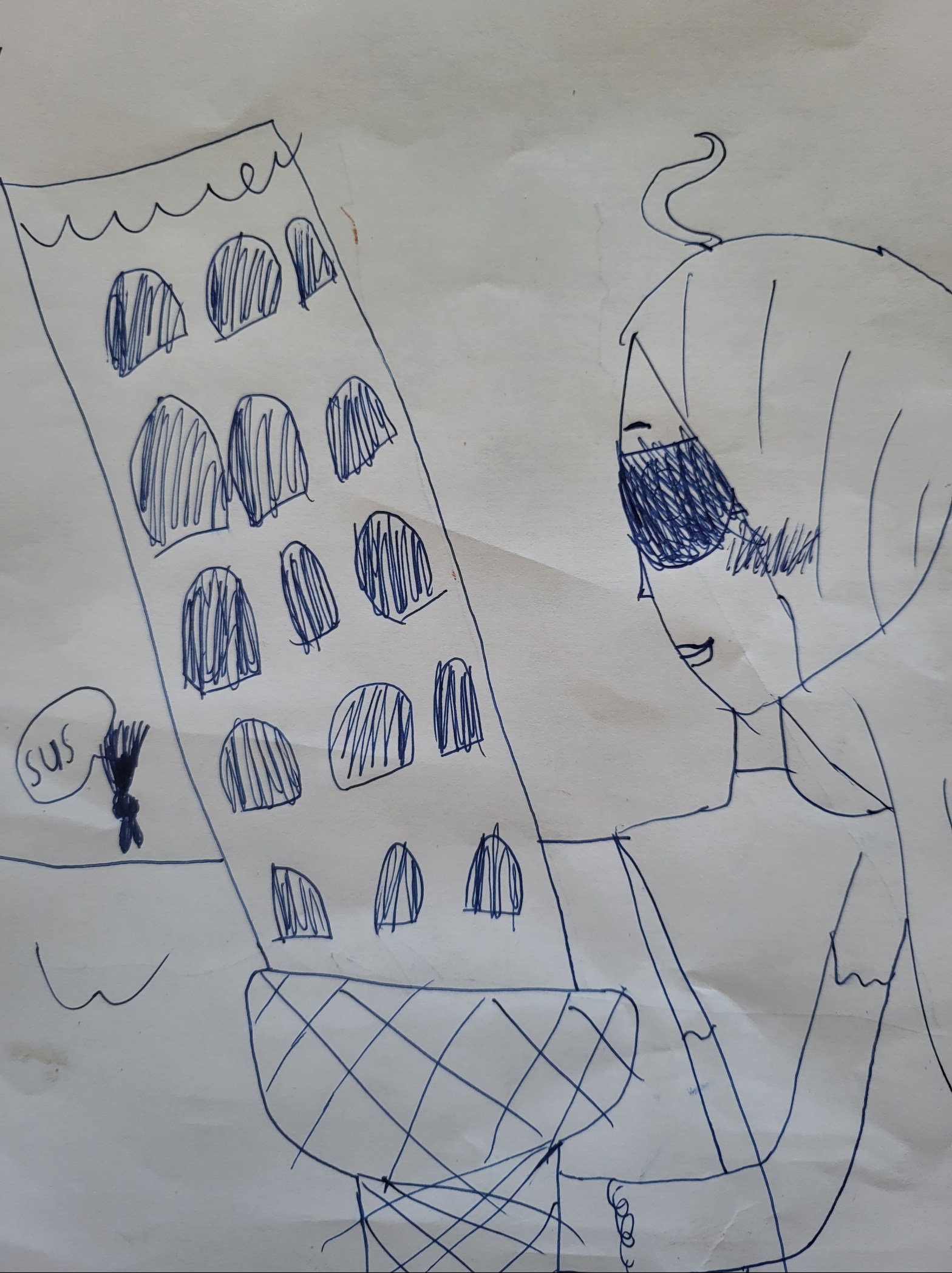
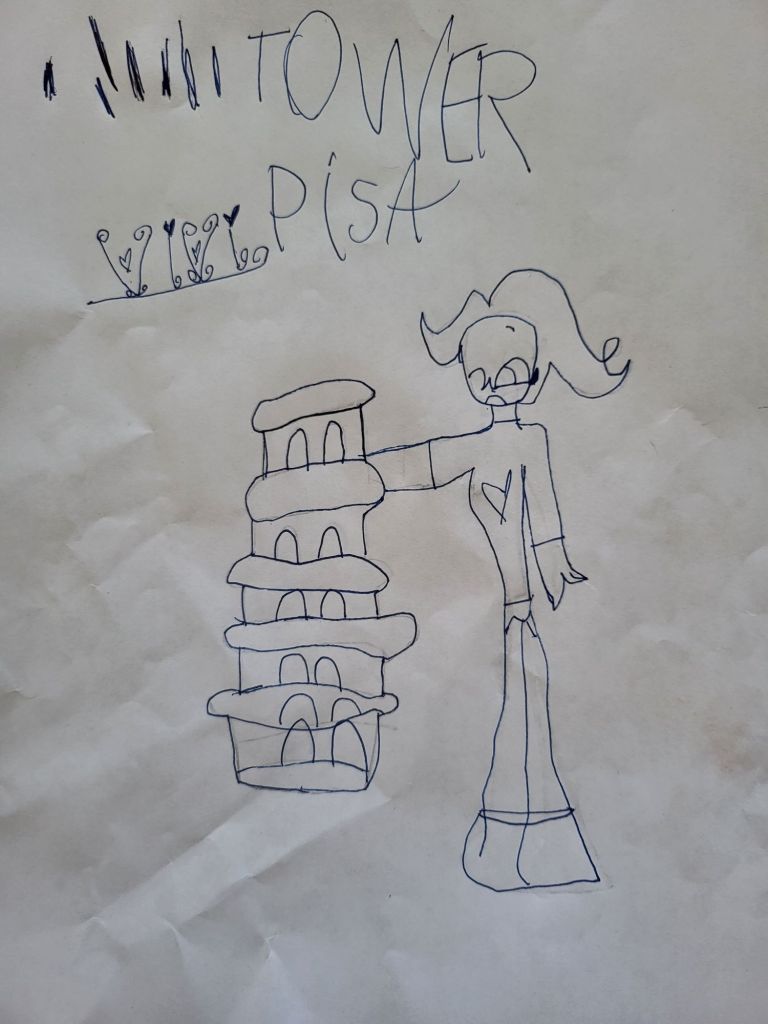
A girl standing far in front of the tower, making her really big in comparison by Vivi
The tower was originally intended to stand vertically, like other bell towers, but its tilt has made it far more famous than it might have been otherwise. The lean has become a part of its charm, and today, it’s celebrated as an iconic historical and architectural marvel.
Then we searched the fun pictures and found many cool ones on Pinterest of people holding, pushing, or eating the tower which are super cool and inspirational. This inspired their currect art project. See the pictures I shared on my Homeschool Pinterest board, they inspired my kids Leaning tower art:
Pinterest: Leaning Tower of Pisa. Intro for children
This serves as history, culture, architecture, geography, and language, I strudy Italian so I take any chance to learn and speak, currently I am listening to Italian music.
This was fun for us,
If you created art inspired by this, please share with us,
The Pythia, mysterious figures of ancient lore. Not myth, though.
Did you know
There were several Pythias.
The Pythias are said to have been poetesses
The Pythia spoke in cryptic messages translated by priests
She would have been a teenager, unmarried young woman, or woman past childbearing age.
Alexander the Great and many kings visited the Pythia
The Pythia influenced state, kings, and citizens with her prophecies
Pythia’s Whisper, a poem
Pythia’s Whisper
In Delphi’s sacred shadow, she speaks, Veiled in mist of ancient dreams, A breath of earth and smoke she seeks, Where truth in whispered echoes streams.
Her voice, a tremor through the veil, Glimmers of the gods, their will, In trance she rides the hidden gale, To prophesy with fervent thrill.
The chasm breathes its mystic air, A sigh of fate, a quiver deep, She dances in the temple’s lair, Where ancient secrets softly seep.
In every riddle, cosmic dance, A glimpse of truth, both fierce and sweet, The Pythia, in fleeting trance, Unfolds the world’s concealed heartbeat.
Short version
In Delphi’s shadow, veiled in mist, She breathes the gods’ ethereal kiss, In trance, her voice through secrets weaves, Prophecies in whispered leaves.
This information is from my mind, from too much reading.
The book Alexandros (this was the Spanish name, but this is my favorite book, I’ll buy this book) of his visit to Pythia.
A philologist I follow (who is not safe for home education) speaks of her poetry.
Last night, my two older daughters and I went on a deep dive of influential women of the ancient past. It was enlightening and inspirational. I had to hopefully inspire someone else. I would love to talk more about this.
Ancient influecial women
Welcome to an exciting journey through ancient history, where we’ll discover amazing women who changed the world in Greece, Egypt, and Rome. These remarkable figures were more than just pretty faces; they were pioneers in education, the arts, and leadership. Let’s dive into their inspiring stories and explore some fun activities to learn about them!
1. Sappho: The Poetess of Lesbos
Sappho was a Greek poetess known for her beautiful and emotional poetry. Her poems celebrated love, friendship, and the beauty of the world. She was a teacher and led a school of young women who were also poets.
Activity Idea: Write Your Own Poem
Encourage your child to write a short poem about something they love. It could be about their favorite place, a beloved pet, or a special memory. Help them use descriptive words and emotions like Sappho did.
2. Cleopatra: The Wise Queen of Egypt
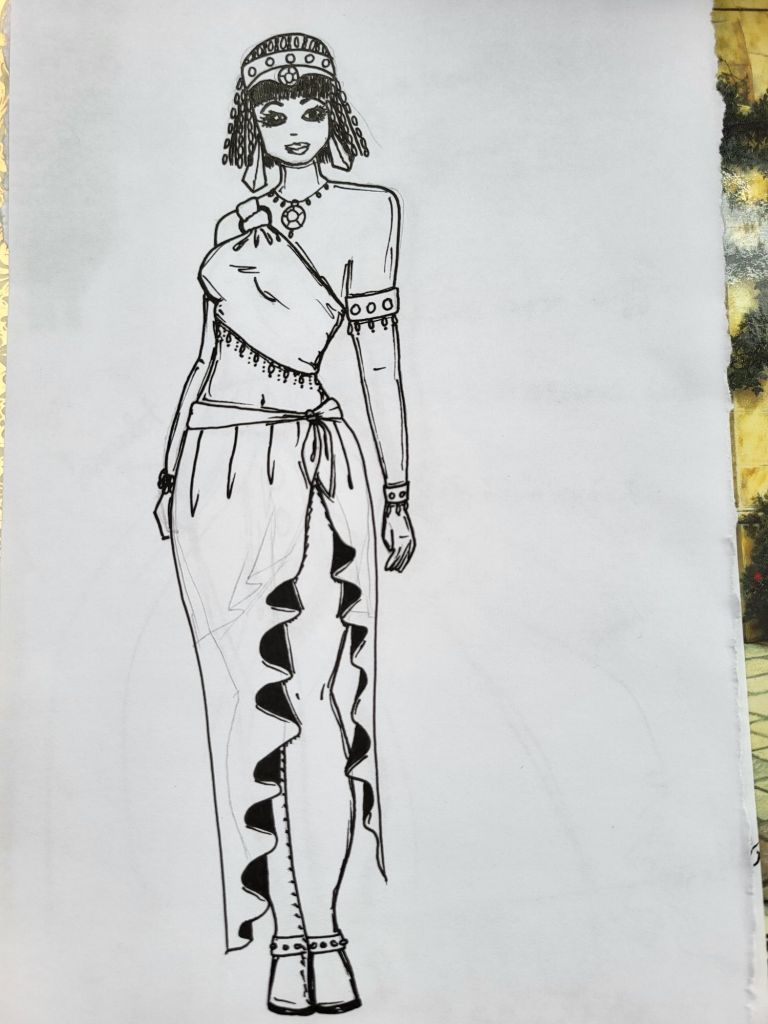
I have not finished this Cleopatra. I made this as a paper doll for a Cleopatra game that I also have yet to finish. Yes, I am a bit of a fan, of course not of her beauty or treasure, but because of the 7 languages she spoke.
Cleopatra VII was a queen of Egypt known for her intelligence and political skill. She spoke several languages and was a patron of the arts and sciences. Cleopatra worked to improve Egypt’s economy and establish strong alliances.
Activity Idea: Create a Royal Crown
Have your child design and make a royal crown using craft materials. As they create their crown, discuss how Cleopatra was a powerful leader and what qualities made her an important figure in history.
3. Hypatia of Alexandria: The Scholar
Hypatia was a Greek mathematician and philosopher in Alexandria, Egypt. She was one of the first women to teach mathematics and astronomy. Hypatia’s work helped advance scientific knowledge and she was admired for her wisdom and learning.
Activity Idea: Stargazing and Simple Astronomy
Set up a stargazing session with your child. Use a star map to identify constellations and discuss the wonders of the night sky, just as Hypatia would have.
4. Livia Drusilla: The Influential Roman Empress
Livia Drusilla was a powerful Roman empress who played a key role in the politics of Rome. She was known for her influence over her husband, Emperor Augustus, and later her son, Emperor Tiberius. Livia was also a patron of literature and the arts.
Activity Idea: Build a Roman Villa
Create a model of a Roman villa using clay or building blocks. Discuss how Livia contributed to the arts and education, and how Roman villas were centers of learning and culture.
5. Art Prompt: Ancient Influence Collage
Encourage your child to create a collage that represents the influence of these ancient women. They can draw, cut out pictures, and use other craft materials to showcase the contributions of Sappho, Cleopatra, Hypatia, and Livia.
Poem Inspired by Ancient Wisdom
Here’s a short poem to inspire young minds:
In ancient lands, where wisdom grew, Great women shone with knowledge true. With poems, crowns, and stars so bright, They taught us to reach for the light.
Sources for Further Learning
Books for Kids: Look for children’s books about ancient history and influential women, such as “Women in Science: 50 Fearless Pioneers Who Changed the World” by Rachel Ignotofsky.
Educational Websites: Explore websites like National Geographic Kids and History for Kids for fun and interactive content on ancient civilizations. My readings yesterday were off Britannica online.
Museums and Online Resources: Many museums offer virtual tours and resources about ancient history and influential figures.
These activities and stories will not only make history come alive but also inspire your child to appreciate the contributions of women throughout time. Enjoy exploring and learning together!
If you enjoyed this, let me know so I can create more content like this.
Let us talk about Socrates, the ancient Athenian philosopher.
First, I’ll include an essay for adults, and coming soon, I’m going to share a free lesson plan for home education parents, just in case you’re looking for educational materials. If you’re a homeschooling parent, and this was helpful, let me know, I’ll be sure to create more like this.
The soon to come lesson plan will be completely free, as my gift to parents. I will continue to develop this lesson plan for use with my kids. I’ll then go about creating materials for my future lesson plan, one that will be complete. This will take a lot of time, but I’ll share a lot of sources for your studies if you’re interested in introducing your children to Ancient Philosophy. Stay tuned.
The free Lesson will include
A lesson plan to introduce kids to Ancient Philosophy and Socrates
The lesson will be tailored for children 8 -12 ( my oldest learners)
Several simple poems for reading and comprehension materials
Socrates. Valor and Fearlessness
Socrates said in his famous trial (the result of which was the Athenians killing him) that the god Apollo had prophesied that there was no wiser man than him.
Socrates went on to inspire wisdom in a level that has not been matched. His student Plato would go on to be the father of philosophy, and Plato’s student, Aristotle (Alexander the Great’s famous teacher), was the father of universities, per this course I listed below.
Source:
Listen to Famous Greeks by J. Rufus Fears, The Great Courses on Audible.
“No honest man can survive in your democracy. It is so corrupt!” Were hos words to his Athenian oppressors proving his valor and fearlessness
Murdered by the Athenians for inpiety
Socrates: The Paragon of Virtue and Philosophy
Socrates, one of the most influential figures in Western philosophy, lived in ancient Athens during the 5th century BCE. His contributions to philosophy, characterized by his commitment to virtue and his fearless stance against the political establishment, have left a lasting legacy.
Legacy and Ideas
Socrates is renowned for his contributions to ethics and epistemology. Unlike his predecessors, who often engaged in speculative and metaphysical inquiry, Socrates focused on practical ethics and the nature of human virtue. His philosophy was grounded in the belief that understanding the nature of virtue was essential for leading a good life. This approach is most famously encapsulated in his assertion that “the unexamined life is not worth living.”
Central to Socratic thought is the Socratic Method, a form of dialectical questioning that aims to stimulate critical thinking and expose contradictions. Through this method, Socrates sought to challenge assumptions and encourage deeper understanding. This approach involves asking a series of questions to help individuals arrive at their own conclusions, rather than providing them with answers. The goal is to foster clarity of thought and promote self-awareness.
Socrates also introduced the concept of “Socratic irony,” where he professed ignorance to draw out the knowledge of others. This tactic allowed him to reveal the ignorance of those who claimed to possess knowledge, thus promoting a deeper exploration of truth.
Valor and Fearlessness
Socrates’ valor and fearlessness are perhaps most evident in his interactions with Athenian politicians and his eventual trial. Socrates lived during a time of significant political turmoil in Athens. His commitment to questioning the status quo and challenging the moral and intellectual complacency of the time often put him at odds with powerful figures.
One of Socrates’ most notable acts of courage was his refusal to abandon his principles, even in the face of severe consequences. During the Peloponnesian War, Athens was under the influence of a series of politically charged events and shifts in power. Socrates remained steadfast in his commitment to questioning the moral and ethical conduct of the politicians and leaders, despite growing hostility.
Socrates’ fearlessness culminated in his trial and subsequent execution. In 399 BCE, Socrates was charged with impiety and corrupting the youth of Athens. He was sentenced to death by drinking poison hemlock. Despite the gravity of his situation, Socrates faced his fate with remarkable composure, continuing to question and discuss philosophical issues up until his final moments. His willingness to accept death rather than compromise his beliefs is seen as a testament to his commitment to truth and virtue.
Conclusion
Socrates’ legacy endures through his profound impact on philosophy and his embodiment of intellectual courage. His method of questioning, dedication to virtue, and resistance to political pressure have inspired countless individuals to seek truth and live a life of moral integrity. Socrates’ life and teachings continue to be a beacon for those who value wisdom, ethical rigor, and the courage to stand up for one’s beliefs. His unwavering pursuit of truth in the face of adversity exemplifies the highest ideals of philosophical inquiry and personal virtue.
If this was inspiring or helpful, let me know, I would love to do more like this.
Stay tuned for an upcoming free lesson plan to introduce children to Socrates and Athenian philosophy,
Are you a poetry lover or an educator who uses poetry?
I am studying the history of poetry. Thank you for embarking on this journey with me.
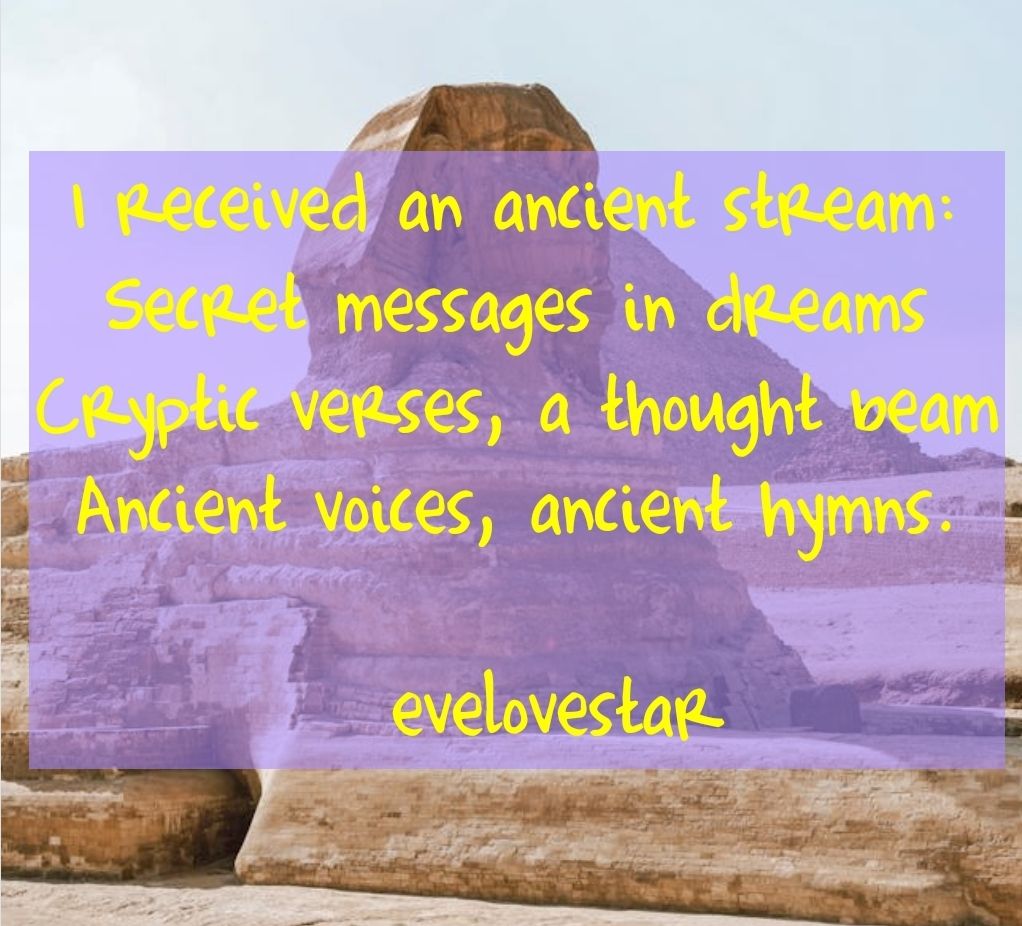
“The Ancient Stream” the beginning of the poetry collaboration on Twitter/ X.
In my home education journey, I am still working to get my children more involved with poetry. My oldest agreed to take a class about poetry. She also studied Shakespeare.
Previously, when we tried online school, I helped my two oldest kids write poems for classes. My oldest kid won second place in a poetry competition. They have created their own poems after watching me write many poems of my own.
Previous to attempting to teach my kids the history of poetry, I have to learn more about it myself.
As I researched this topic to create something solid, I learned so much that I didn’t know about the power of poetry, and I’m excited to share.
Eventually, I’ll collect all this information together into an ebook – presentation for my kids to study when they’re ready.
This material is advanced, not for kids. This could be useful to teenagers, young adults, poets, writers, and teachers/ homeschool parents.
Why I study poetry
I see poetry as the king of language.
I study poetry more than for its beauty. I can’t even express why. All I can say is that poetry is in my DNA. I feel certain word combinations deeply. Poetry that resonates with me has the potential to be more than inspirational. It can be life changing.
Studying poetry and its rich history and tradition offers numerous gifts, including:
1. **Cultural Insight**: Poetry provides a window into the values, beliefs, and societal norms of different cultures throughout history.
2. **Language Mastery**: Analyzing poetry enhances language skills, including vocabulary, syntax, and figurative language comprehension.
3. **Emotional Expression**: Poetry explores complex human emotions and experiences in ways that prose often cannot, fostering empathy and emotional intelligence.
4. **Historical Context**: Poems reflect historical events, movements, and perspectives, offering unique insights into the past.
5. **Aesthetic Appreciation**: Studying poetry develops an appreciation for the beauty of language, imagery, rhythm, and sound.
6. **Critical Thinking**: Analyzing poetry sharpens critical thinking skills by requiring interpretation, evaluation of themes, and exploration of multiple meanings.
7. **Creativity and Imagination**: Writing and studying poetry encourage creative expression and imaginative thinking.
8. **Personal Growth**: Engaging with poetry promotes self-reflection, mindfulness, and personal growth through introspection and exploration of universal themes.
9. **Literary Tradition**: Understanding the history of poetry connects us to a rich literary tradition spanning millennia, influencing modern literature and culture.
10. **Cross-Cultural Connections**: Poetry transcends borders and languages, facilitating cross-cultural understanding and appreciation.
11. **Psychological Insight**: Poetic expression often delves into the depths of human psychology, offering insights into the human condition and psyche.
12. **Spiritual and Philosophical Exploration**: Many poems explore existential questions, spiritual beliefs, and philosophical inquiries, inviting contemplation and dialogue.
Studying poetry thus enriches our understanding of language, culture, history, and ourselves, making it a valuable pursuit across educational, personal, and professional realms.
**Introduction:Unraveling the Mysteries of Poetry**
Poetry, as an art form, transcends time and culture, serving as a medium of expression, storytelling, and cultural preservation. Delving into its origins leads us into the realms of ancient oral traditions and mythology.
**Section 1: Origins in Oral Tradition**
Poetry emerges from the dawn of human language, intertwining with oral traditions passed down through generations. Before the advent of written language, early societies relied on oral poetry to convey history, myths, rituals, and moral lessons. These poetic narratives were crafted with rhythmic patterns and mnemonic devices, aiding in their memorization and transmission across cultures.
Scholars believe that the origins of poetry are deeply entwined with the development of language itself, evolving from primitive chants and incantations into structured forms that encapsulated the essence of human experience. While the exact beginnings remain obscured by the mists of prehistory, archaeological evidence and comparative linguistic studies offer glimpses into the ancient roots of poetic expression.
**Section 2: Poetry and Mythology**
In the era of early civilizations, poetry and mythology were intricately woven together. Mythological narratives often found their voice in poetic forms, serving as a means to explain natural phenomena, celebrate heroes, and uphold societal values. Examples abound across ancient cultures, from the epic hymns of Sumerian mythology to the lyrical odes of Greek legends.
These mythopoetic traditions not only preserved cultural identity but also provided a medium for exploring existential questions and the mysteries of the human condition. Through poetry, ancient peoples forged connections with their ancestors, gods, and the cosmos, creating narratives that resonated through time and space.
**Conclusion: Poetry as a Gateway to Human History**
The origins of poetry, rooted in oral tradition and mythology, underscore its fundamental role in shaping human consciousness and cultural evolution. While the precise moment of its inception eludes us, poetry’s enduring legacy as a conduit of expression and cultural memory remains indisputable.
As we embark on a journey through the annals of poetic history, we unravel not only the mysteries of our past but also rediscover the timeless power of language and creativity. Poetry, in its myriad forms and voices, continues to inspire, provoke, and illuminate the human experience, inviting us to explore the depths of our collective heritage.
Excerpt from “The Ancient Stream” an ongoing poetry collaboration on Twitter/ X.
Homer. The Illiad and the Odyssey
Homer, believed to be the author of the epic poems “The Iliad” and “The Odyssey,” composed these works during a time when writing was not yet prevalent in ancient Greece. Instead, these monumental epics were passed down orally, generation after generation, through skilled storytellers. Historians don’t know much about Homer.
This oral tradition not only preserved the narratives of heroic deeds and mythological tales but probably also added layers of improvisation and embellishment with each retelling.
There was potential for alterations and adaptations over time, as oral transmission is inherently susceptible to changes influenced by cultural shifts and the storyteller’s interpretative lens. Despite these challenges, Homer’s epics endure as masterpieces of ancient literature, showcasing the power of oral tradition in preserving and transmitting cultural heritage.
I wonder what these epics were like when they were transmitted orally.
In modern times, we know all about The Illiad and The Odyssey. We have read translations, watched movies, and documentaries about it. What we can appreciate is the language it was written in, the ancient Greek form of poetry, which largely differed from modern poetry. I don’t think it’s possible to recreate that kind of poetry in English.
Sources for our continued study
Here are some sources and references that we can use for further study on the origins of poetry and its connections to mythology:
1. **Books:** – *The Power of Myth* by Joseph Campbell and Bill Moyers – Explores the role of mythology in human culture and storytelling. – *The Poetics* by Aristotle – Classical work on the principles of poetry and drama. – *The Epic of Gilgamesh* – An ancient Mesopotamian epic poem, one of the earliest known literary works. – *The Odyssey* and *The Iliad* by Homer – Classic examples of epic poetry from ancient Greece.
2. **Articles and Academic Papers:** – JSTOR is a database that provides access to various scholarly articles on ancient poetry and mythology.
3. **Websites and Online Resources:** – Ancient History Encyclopedia – Provides articles and resources on ancient civilizations and their literary traditions.
– Theoi Greek Mythology (https://www.theoi.com/) – A comprehensive resource on Greek mythology, including myths often conveyed through poetry. – Internet Sacred Text Archive (https://www.sacred-texts.com/) – Offers a collection of texts from ancient and modern religions, including poetic works and mythological narratives.
These sources provide a solid starting point for readers interested in exploring the origins of poetry and its connections to mythology in greater depth. They cover a range of perspectives from academic studies to literary classics, ensuring a well-rounded approach to understanding this foundational aspect of human culture.


You must be logged in to post a comment.