Update on my learning Italian using music: Words I learned exclusively from music.
I learned these words completely from music. I searched all these words in the dictionary. For some I had an idea what they meant, some I simply became familiar with the word enough that once I could recall it, I searched it for the correct spelling and meaning.
Collaboration with Lilli (9), who helped me create the lesson, game, graphics, and learned alongside me.
I saved many Athena photos, illustrations, and more to this Pinterest board. For inspiration click and see the different Athena goodies with links to more Athena content.
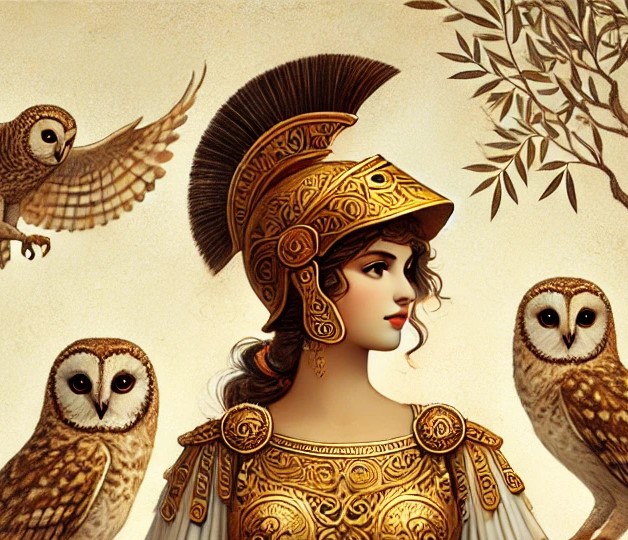
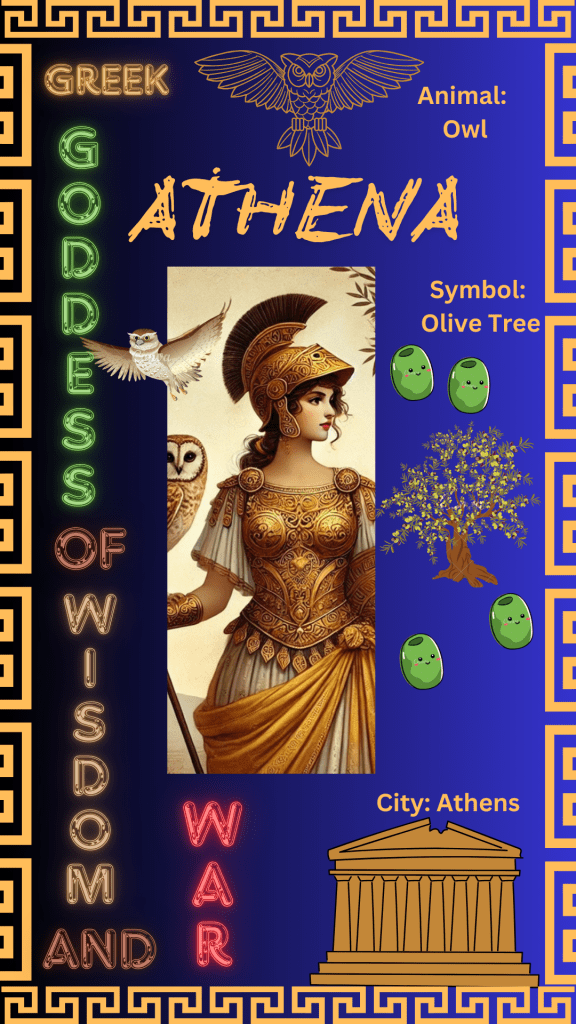
Athena was the Ancient Greek goddess of war and wisdom
Athena Symbols: Olive tree and owls
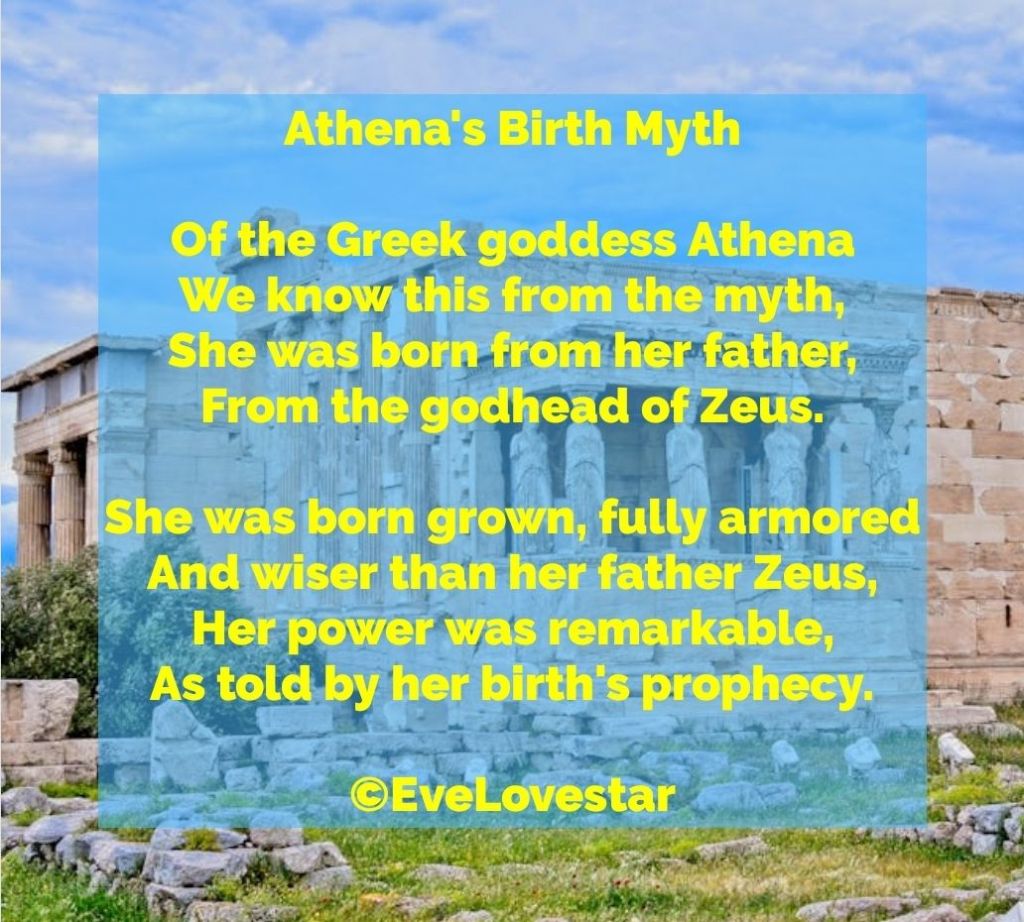
Athena was born fully grown in armor
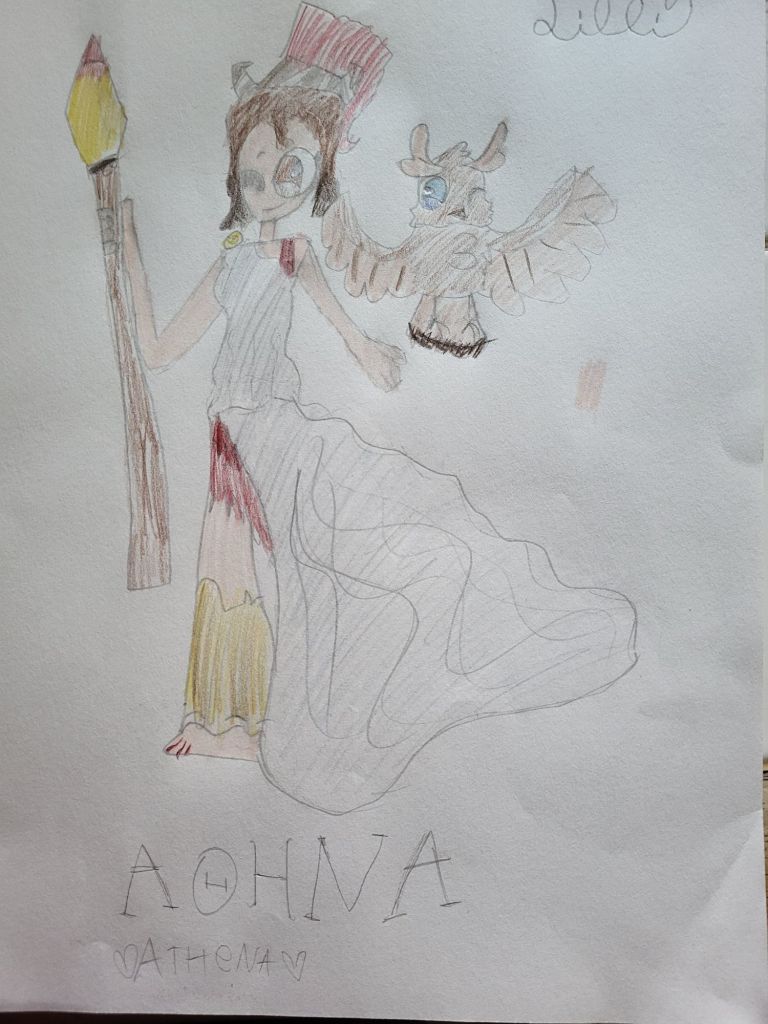
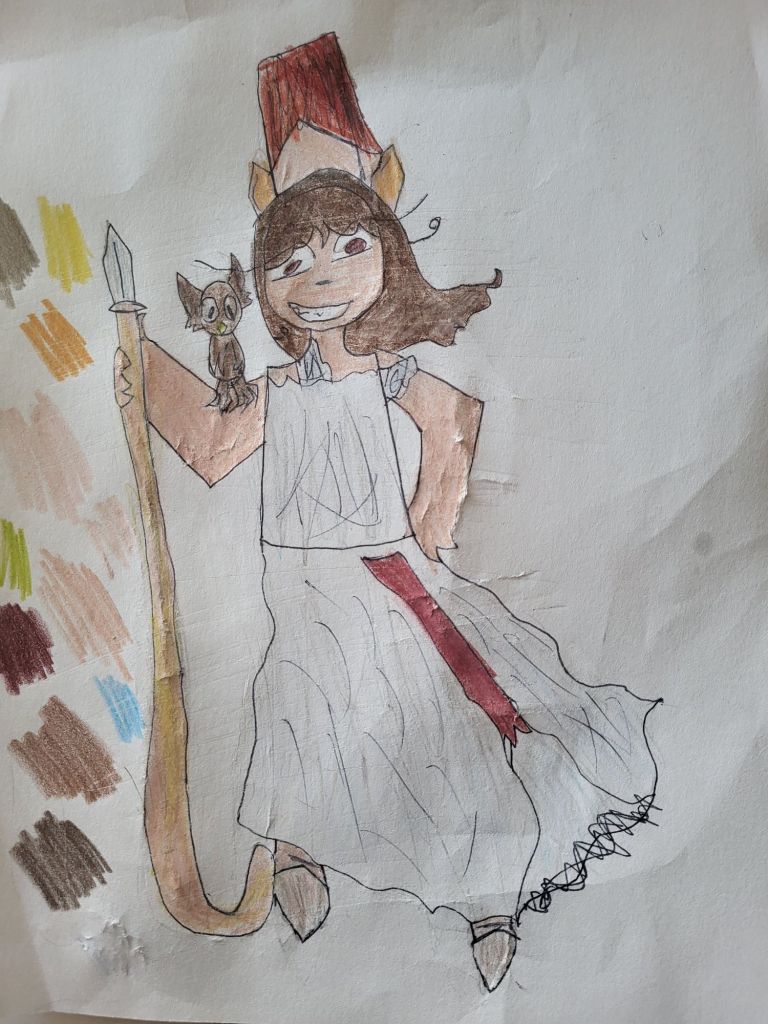
Lilli’s Athena art with her ancient Greek name in capital letters.
Lesson Plan (7 to 9 year olds) Introduction to Athena in Greek Mythology
Here’s an Introduction Lesson Plan about Athena for children ages 7 to 9. It’s designed to be fun and creative, involving hands-on activities like making a paper doll, storytelling, and a coloring project to keep kids engaged while learning about Greek mythology.
Lesson Plan: Athena, the Greek Goddess of Wisdom and War
Age Group: 7-9 years old Duration: 60-90 minutes Objective: Students will learn about Athena, her role in Greek mythology, and express creativity through art, storytelling, and crafts.
Materials Needed:
Printable Athena paper doll template (with Greek dress, armor, and owl accessories)
Markers, crayons, colored pencils
Scissors, glue
Construction paper for comic book creation
Copies of Athena myth stories (simplified versions)
Athena coloring pages
Whiteboard/Chalkboard (for brainstorming)
Lesson Breakdown:
1. Introduction to Athena (10-15 minutes)
Discussion: Start the lesson by introducing Athena. Use simple language to explain that Athena is the goddess of wisdom, war, and crafts in Greek mythology. Mention that she is famous for her intelligence, bravery, and protection of the city of Athens.
Ask Questions:
What do you think a goddess of wisdom and war would do?
Why do you think people respected her so much?
Fun Fact: Share that her favorite animal is the owl because it symbolizes wisdom.
2. Create a Paper Doll (15-20 minutes)
Activity: Hand out a printable paper doll template of Athena. This template should include:
A basic doll figure (Athena)
Traditional Greek clothing (a flowing dress, armor)
Accessories like an owl, helmet, spear, and shield
Lizzie’s Athena
Instructions:
Have students color the doll and clothing, then cut out the pieces.
Glue or attach the clothing onto the doll to create their own mini Athena.
Discussion While Working:
Talk about why Athena wore armor even though she was peaceful and loved wisdom.
3. Read a Short Myth about Athena (10-15 minutes)
Storytelling: Read aloud a simplified myth about Athena. You could choose:
Athena’s Birth: How she was born from Zeus’ head.
Athena and the City of Athens: How she gave the olive tree to Athens.
Interactive Discussion:
Ask them: What was your favorite part of the story?
How do you think Athena felt when she helped the city of Athens?
4. Create a Story or Comic Book (15-20 minutes)
Activity: Provide each child with construction paper to create a simple 3-4 panel comic strip or short story. The prompt could be:
“Athena Goes on an Adventure”: Have the children imagine a fun adventure for Athena, like her helping a hero or solving a tricky problem using her wisdom.
Steps:
Draw pictures of Athena and her adventure.
Add speech bubbles or a few sentences to describe what’s happening.
Encourage Creativity: Allow the kids to come up with their own ideas, such as Athena talking to animals or meeting other gods.
5. Coloring Time (10-15 minutes)
Activity: Hand out Athena coloring pages that depict her with owls, a spear, or in her flowing gown.
Optional Discussion: While they color, discuss how Greek gods and goddesses were often drawn or sculpted in ancient times.
6. Class Sharing (10 minutes)
Share Creations: Let each student show their paper doll and comic strip or story to the class.
Encouragement: Praise their creativity and highlight fun details in their stories or drawings.
Wrap-Up:
Review: Ask them to name one thing they learned about Athena today.
Closing: End with a question to spark curiosity for next time: “If you could meet Athena, what would you ask her?”
Follow-Up Activity for Home:
Encourage students to research more about Greek mythology with their parents or continue coloring and creating new stories about Athena.
This lesson plan balances learning with creative play, making it a fun and memorable introduction to Athena and Greek mythology for younger children!
Athena Creation Myth
Creative Athena Activity Ideas
Color Athena coloring pages
Create an Athena paper doll and learn about the Ancient Greek costumes
Create a story with Athena as a character
Write an Athena song or poem
Dress up as Athena
Athena Trivia Game: Simple
Here’s a fun and easy Athena Trivia Game for children, designed to teach them about the Greek goddess in a playful way! Each question includes simple multiple-choice options to keep it engaging and interactive.
Scroll down to review your answers.
Athena Trivia Game
Question 1: Who is Athena the goddess of?
A) The Sea
B) Wisdom and War
C) Music
Question 2: What is Athena’s favorite animal, which represents wisdom?
A) Owl
B) Lion
C) Snake
Question 3: Which city in Greece is named after Athena?
A) Sparta
B) Athens
C) Crete
Question 4: What weapon does Athena usually carry in battles?
A) Bow and Arrow
B) Sword
C) Spear
Question 5: Athena was born fully grown from the head of which god?
A) Zeus
B) Hades
C) Poseidon
Question 6: What is Athena’s special tree, often associated with peace?
A) Apple Tree
B) Oak Tree
C) Olive Tree
Question 7: Which hero did Athena help in his journey to slay Medusa?
A) Perseus
B) Hercules
C) Theseus
Question 8: Athena is known for her wisdom. What does she often wear on her head as a symbol of this?
A) A crown
B) A helmet
C) A laurel wreath
Question 9: Athena never married and stayed focused on her duties. What is she often called because of this?
A) The Brave Warrior
B) The Wise Queen
C) The Virgin Goddess
Question 10: In one myth, Athena competed with Poseidon to become the patron of Athens. What gift did she give to win?
A) A magical horse
B) An olive tree
C) A golden shield
Bonus Activity:
After the quiz, encourage kids to draw their version of Athena or make up a new adventure where Athena helps a hero. This keeps them creatively engaged!
This game is simple, fun, and educational, perfect for children learning about Greek mythology!
Answers
Athena
Answer: B) Wisdom and War
Answer: A) Owl
Answer: B) Athens
Answer: C) Spear
Answer: A) Zeus
Answer: C) Olive Tree
Answer: A) Perseus
Answer: B) A helmet
Answer: C) The Virgin Goddess
Answer: B) An olive tree
Sources
Here’s a list of sources where you can learn about Athena for free, perfect for children or general mythology enthusiasts:
These sources offer a mix of simplified content for children and in-depth articles for older students or adults who want to explore Athena’s mythology further.
I will be using these to inspire my children to create stories with me.
Here’s a list of 12 immersive and fun creative writing prompts for children, designed to spark their imagination and encourage playful storytelling. Each prompt includes character ideas, inspiration, and fun questions to fuel their creativity:
1. The Day My Pet Could Talk
Inspiration: One morning, your pet wakes up and starts talking! But they have an important message to tell you.
Character Ideas: A wise-talking dog, a sassy cat, or a shy hamster who knows a secret.
Fun Questions: What does your pet sound like? What’s the first thing they say? What secret have they been hiding all this time?
2. A Trip to a Candy Planet
Inspiration: You discover a hidden rocket ship in your backyard that takes you to a planet made entirely of candy.
Character Ideas: A candy-loving alien, a chocolate river guide, or a gingerbread scientist.
Fun Questions: What does everything taste like? How do you get around on a candy planet? What’s the biggest danger in a world made of sweets?
3. The Invisible Friend
Inspiration: You make an invisible friend who helps you with school and adventures, but only you can see them.
Character Ideas: A mischievous ghost, a friendly shadow, or a tiny, invisible fairy.
Fun Questions: How do you introduce them to others? What do you and your invisible friend do together? What happens when they accidentally cause trouble?
4. A Dragon Moves In Next Door
Inspiration: A family of dragons moves into the house next to yours, and they need your help fitting into human life.
Character Ideas: A fire-breathing dragon with stage fright, a baby dragon who loves making pancakes, or a grumpy grandparent dragon.
Fun Questions: How do the dragons hide their wings and tails? What jobs do they get in the neighborhood? What happens when they accidentally breathe fire?
5. The Secret Library in the Attic
Inspiration: You find a secret door in your attic that leads to a magical library filled with books that come to life.
Character Ideas: A talking book that gives you advice, a librarian wizard, or a knight from a fairy tale who’s tired of fighting dragons.
Fun Questions: Which book do you open first? What happens when a character from a story steps out of the pages? Can you create your own story-world?
6. Superhero School
Inspiration: You discover you have superpowers and get invited to a school for young superheroes.
Character Ideas: A kid who can turn invisible, someone who can talk to animals, or a hero who controls the weather but sneezes and makes tornadoes.
Fun Questions: What’s your superhero name? What’s your first mission? How do you balance saving the world with homework?
7. The Mysterious Box
Inspiration: One day, you find a mysterious box on your doorstep with a note that says, “Do not open until midnight.”
Character Ideas: A curious inventor, a sneaky detective, or a magical creature hiding inside the box.
Fun Questions: Do you open the box early? What’s inside? Does it lead to an adventure or bring a surprise visitor?
8. Lost in a Maze of Giant Toys
Inspiration: You get lost in a life-size toy store where all the toys are gigantic—and they come to life!
Character Ideas: A helpful stuffed bear, a bossy robot, or a teddy bear who’s afraid of heights.
Fun Questions: How do you find your way out? What’s the most amazing giant toy you meet? What happens when a toy decides it wants to be your friend forever?
9. The Treehouse Time Machine
Inspiration: You build a treehouse in your backyard and discover it’s secretly a time machine that can take you anywhere in history.
Character Ideas: A daring time-traveling squirrel, a kid inventor from the future, or a pirate from the past who got stuck in the wrong time.
Fun Questions: Where do you travel first? Who do you meet? What happens if you accidentally change something important in history?
10. My Life as a Tiny Person
Inspiration: One day, you wake up and you’ve shrunk to the size of a bug!
Character Ideas: A talking ladybug guide, a friendly ant army, or a wise old beetle who knows the way back.
Fun Questions: How do you get around now that you’re tiny? What everyday things are now giant-sized obstacles? How do you get back to normal?
11. The Magical Market
Inspiration: You stumble upon a hidden marketplace where magical creatures sell enchanted objects and potions.
Character Ideas: A potion-brewing witch, a friendly gnome shopkeeper, or a mischievous talking cat selling magic beans.
Fun Questions: What magical item do you buy? What does it do? Does it lead to an unexpected adventure or a big mistake?
12. Underwater Adventure
Inspiration: While swimming at the beach, you find a secret underwater kingdom that needs your help to solve a mystery.
Character Ideas: A playful dolphin, a royal sea turtle, or a jellyfish with a glowing map.
Fun Questions: How do you breathe underwater? What is the mystery you need to solve? What magical sea creatures do you meet along the way?
These prompts offer a blend of imagination, adventure, and mystery, giving kids fun characters and scenarios to build creative short stories from!
Ideas to include the natural world as inspiraion or setting for learning. These are ideas for me, rather than things I already do.
1.Nature Journals
Activity: Encourage kids to observe their surroundings and document plants, animals, weather patterns, or seasonal changes in a nature journal.
Inspiration: Create sketches of plants, press flowers or leaves, and write descriptive passages or poetry based on what they observe.
2.Outdoor Reading Sessions
Activity: Set up a cozy outdoor reading nook where your kids can read books, poetry, or historical texts while surrounded by nature.
Inspiration: Choose nature-themed books, like Walden by Thoreau or poetry by Robert Frost, to enhance the connection between the environment and the lesson.
3. Eco-Art Projects
Activity: Collect natural materials (leaves, stones, twigs) to create art projects such as collages, sculptures, or land art.
Inspiration: Teach about land artists like Andy Goldsworthy, and let kids create their own nature-based installations.
4.Botanical Studies and Garden Projects
Activity: Study local plants or grow a homeschool garden, teaching kids about botany, plant life cycles, and sustainable gardening practices.
Inspiration: Let them grow herbs, fruits, or vegetables and document their growth. Connect lessons to ancient herbal practices or mythology related to plants (like Demeter’s story).
5. Nature-Inspired Poetry and Writing
Activity: Use the natural world to inspire creative writing or poetry. Have children write poems or short stories based on their outdoor experiences.
Inspiration: Use prompts such as “Describe the feeling of the wind,” “Write a poem from the perspective of a tree,” or “Tell a story about a day in the life of a bird.”
6. Science Experiments in Nature
Activity: Conduct outdoor science experiments, such as studying the water cycle with evaporation bowls, or testing soil pH levels in different parts of the yard.
Inspiration: Discuss the role of the elements in ancient philosophy or how natural processes were understood by early civilizations.
7. Forest School or Nature Walks
Activity: Take learning outside by exploring local forests, parks, or beaches. Use these environments to study ecosystems, geology, and wildlife.
Inspiration: Teach map reading, track animal footprints, or explore ancient pathways and relate them to historical events if possible.
8. Stargazing and Astronomy
Activity: Set up a stargazing night where children can learn about constellations, planets, and the movement of celestial bodies. I use a star tracker app and follow astronomical news to stay informed.
Inspiration: Connect the stars to mythology, teaching about ancient star-gazers and their interpretations of the cosmos (e.g., Greek myths behind constellations).
9.Outdoor Problem-Solving Challenges
Activity: Use nature to create puzzles or challenges. Build a simple outdoor shelter, use the sun to tell time, or create a natural scavenger hunt with clues that teach about local plants and animals.
Inspiration: Encourage teamwork by incorporating lessons from early survival techniques used by indigenous peoples or explorers.
10. Barefoot Earthing and Sensory Exploration
Activity: Have your children explore nature barefoot to connect with the earth through sensory experiences. Encourage them to describe the different textures and sensations of the ground, plants, and water.
Inspiration: Discuss the benefits of grounding and mindfulness practices. Pair it with a nature meditation session or reflective writing about how the earth feels beneath them.
11. Birdwatching and Wildlife Observation
Activity: Set up a birdwatching station or take field trips to observe animals in their natural habitats. Teach about local wildlife, animal behavior, and ecosystems. Set up a hummingbird feeding station. We feed the birds in our yard.
Inspiration: Encourage drawing or note-taking on bird species, and perhaps connect to the ancient Greek fascination with augury (bird-watching for omens).
12.Weather and Climate Studies
Activity: Teach about weather patterns and climate by observing cloud formations, measuring rainfall, or tracking temperature changes. Make it fun by having the kids draw the different weather patterns. We love to draw the sun.
Inspiration: Build a simple weather station, then discuss the importance of weather in historical events or mythology (like Zeus’s control over thunder and storms).
Nature offers endless opportunities for rich, multi-disciplinary learning! You can combine these lessons with mythology, literature, or philosophy for a holistic approach to your homeschool experience.
Other ideas:
Make a fairy garden
Start a rock collection
Volunteer at a farm
Decorate your yard
Paint rocks for the garden or a path
Start composting
Create a rock garden
Decorate for Halloween
Go camping
Make a vegetable soup ehile teaching the children about vegetables
English is my second language. learned it as an adult. Since I love to learn properly, grammar has been my best friend.
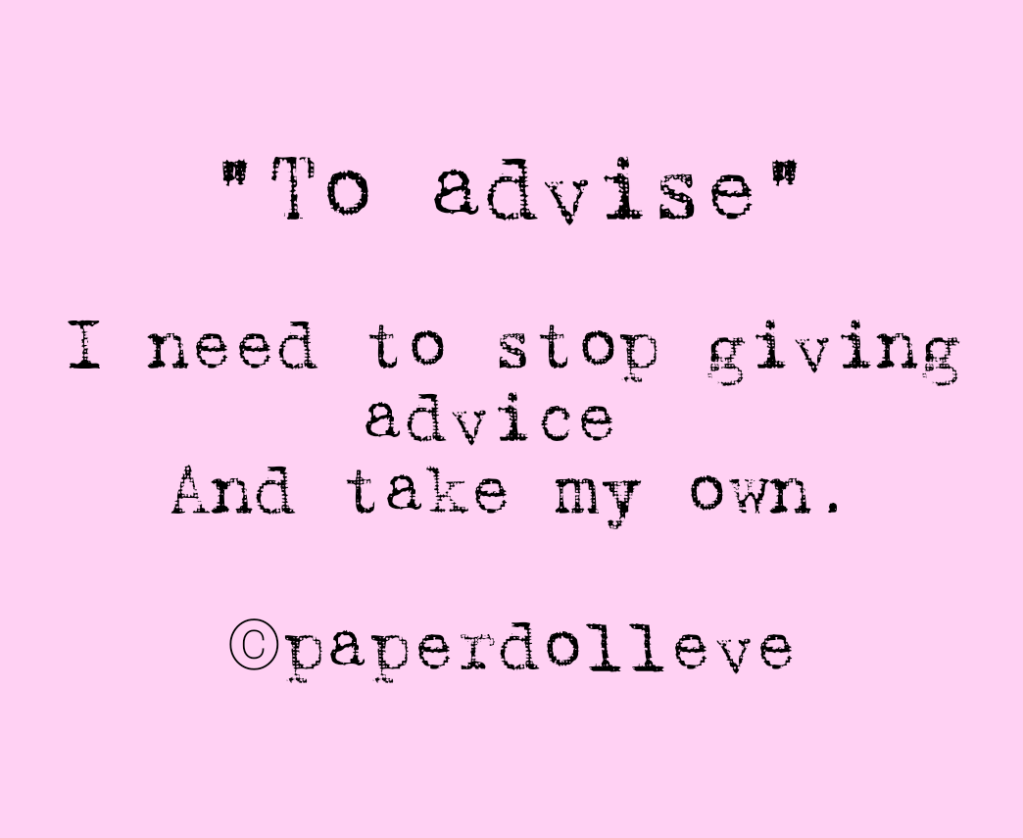
With this short poem, I was trying to make the distinction between advice and advise after I realized I had used the improper spelling of the word. Actually, I thought it was only one word long ago.
When you write, you learn. My advise if you are trying to make a distinction between the two words is to use them in writing. I know now, before, while I was confused and knew I could make a mistake, I would search the difference and find help from a blog post like this one or an article.
Difference between advice and advise
The difference between advise and advice is simple:
Advice is a noun, meaning a suggestion or recommendation. Example: “She gave me great advice.”
Advise is a verb, meaning to offer a suggestion. Example: “I advise you to listen carefully.”
Tip: Use “advice” when you’re talking about the suggestion itself, and use “advise” when you’re talking about giving or offering that suggestion.
To advice is a verb or a word that refers to action. The action is advising. The word is spelled with an s whenever you say TO ADVISE or ADVISING because these refer to the verb or the action of advising another.
A noun is a thing, wether a physical thing like a table or a non physical thing such as advice
Sentences and examples
When someone is giving a suggestion or recommendation, the action is called advising. So, “advising” is the act of offering advice.
Advice is the thing: the words or suggestions and to advise is the action of saying the advice.
For example:
Verb: “The teacher is advising the students to study.”
Noun: “The advice she gave was helpful.”
Just remember: the action of giving advice = advising!
Here are a few simple sentences for children to help them remember the difference between advise and advice:
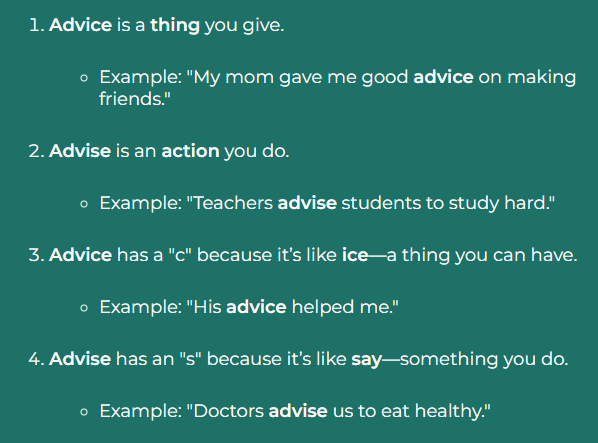
Advice is a thing you give.
Example: “My mom gave me good advice on making friends.”
Advise is an action you do.
Example: “Teachers advise students to study hard.”
Advice has a “c” because it’s like ice—a thing you can have.
Example: “His advice helped me.”
Advise has an “s” because it’s like say—something you do.
Example: “Doctors advise us to eat healthy.”
These can make it fun and easier for children to remember the difference!
Was this helpful?
Feel free to use my poem in your lesson or class or as a reminder.
Please tell me if you would like to see more like this,
I was putting my then baby, the now 4 year old Alex to sleep. He was maybe 3 months old and wasn’t going to sleep.
I started singing and I was looking out the window, so I started singing about the moon and everything I could come up wiht.
After singing for the longest time ever, this is the only part of that original song that sounded good and I remembered afterwards.
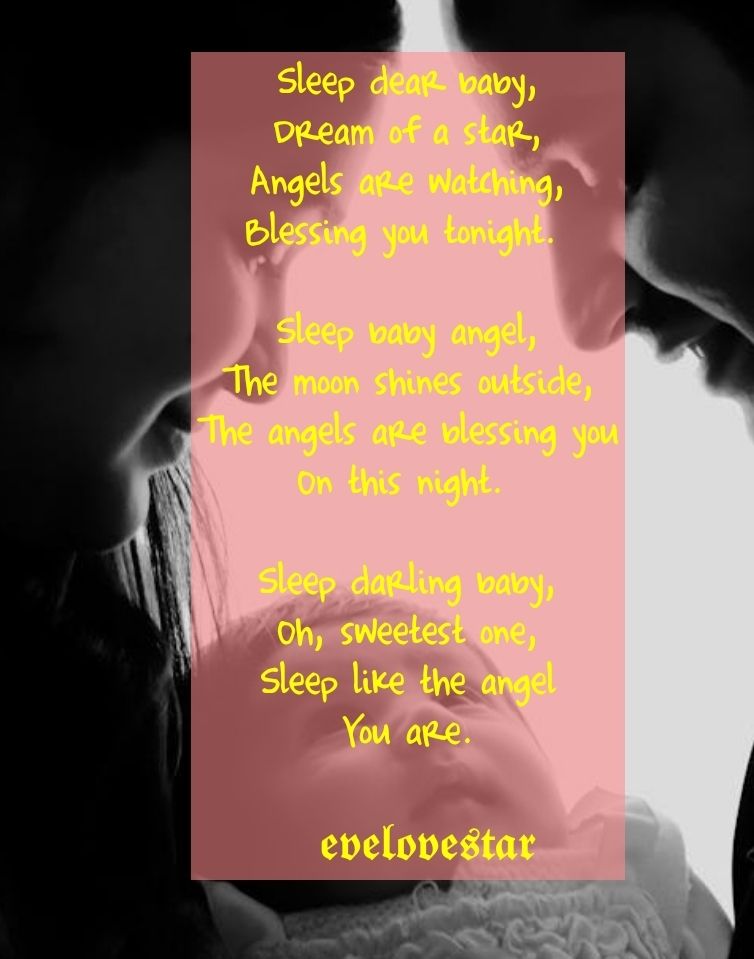
Fast forward to today, and I miraculously found this image.
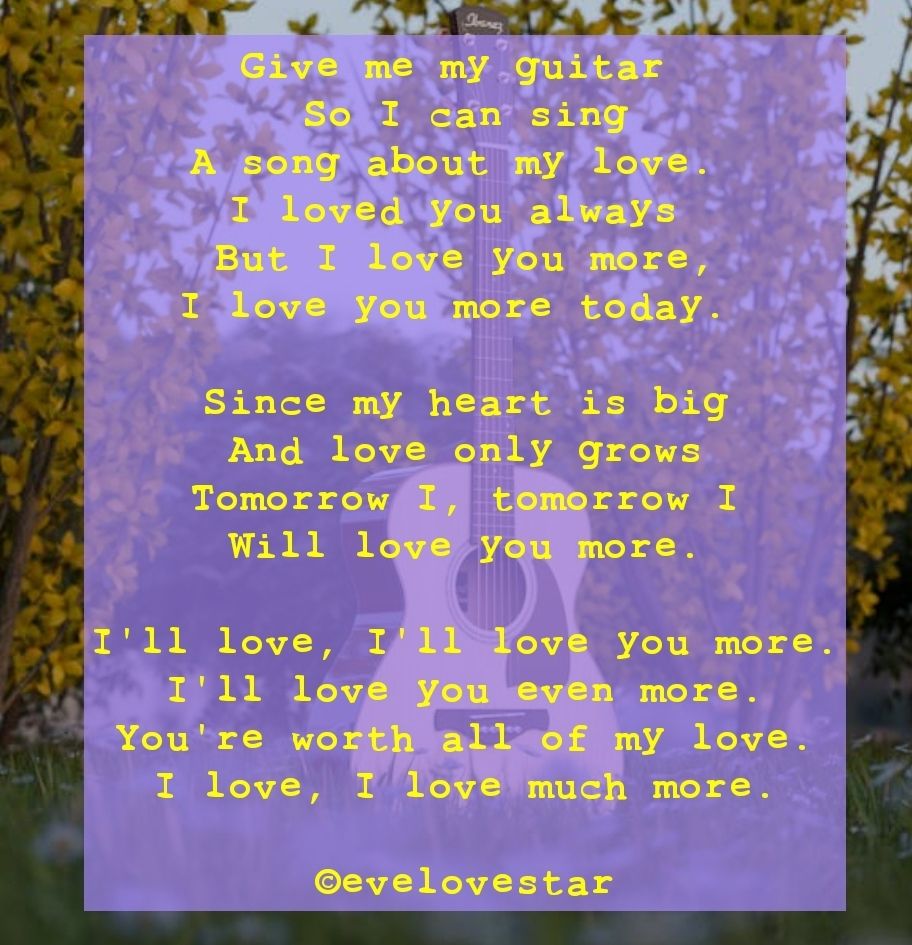
As soon as I found this image, I knew I had to make the song longer and I knew it was meant to be sung. By the way, I just remembered I wrote another song many years ago: “Bring me my guitar”….
Angel Baby Lullaby Lyrics
AI music for this song (If you do not like AI, that is ok with us, please read our poetry instead)
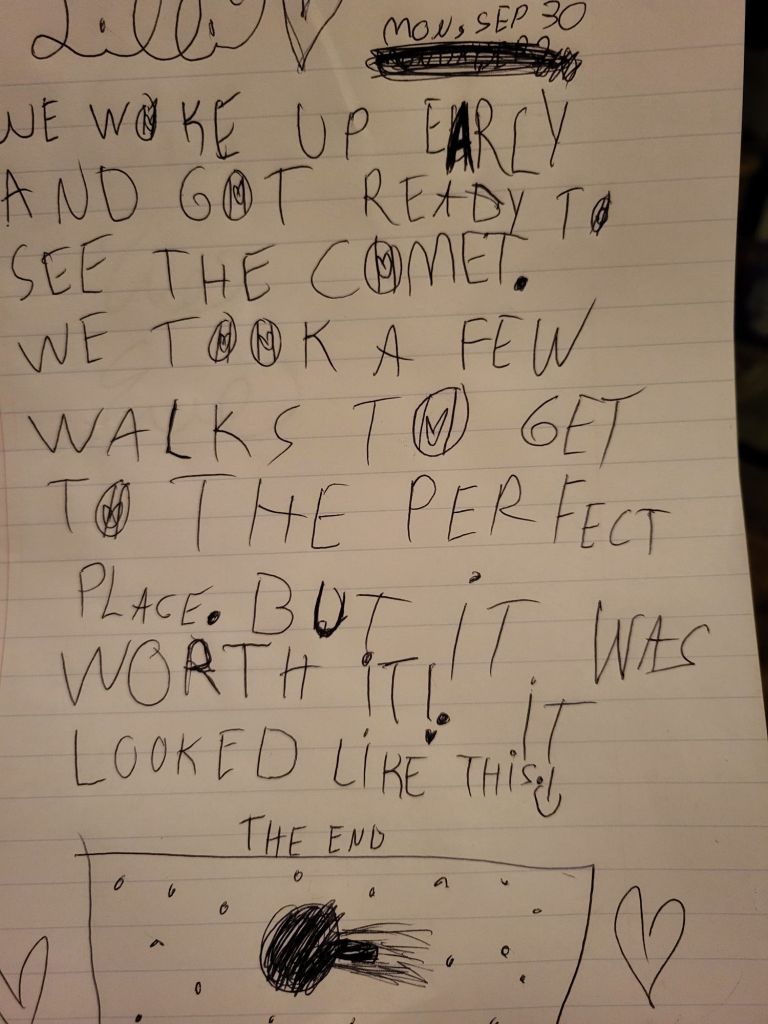
This week we woke up our kids very early and took to the darkness outside looking for the comet A3. We saw it, too. It was an amazing sight even though it only lasted a few seconds and we all saw it (except for the two toddlers).
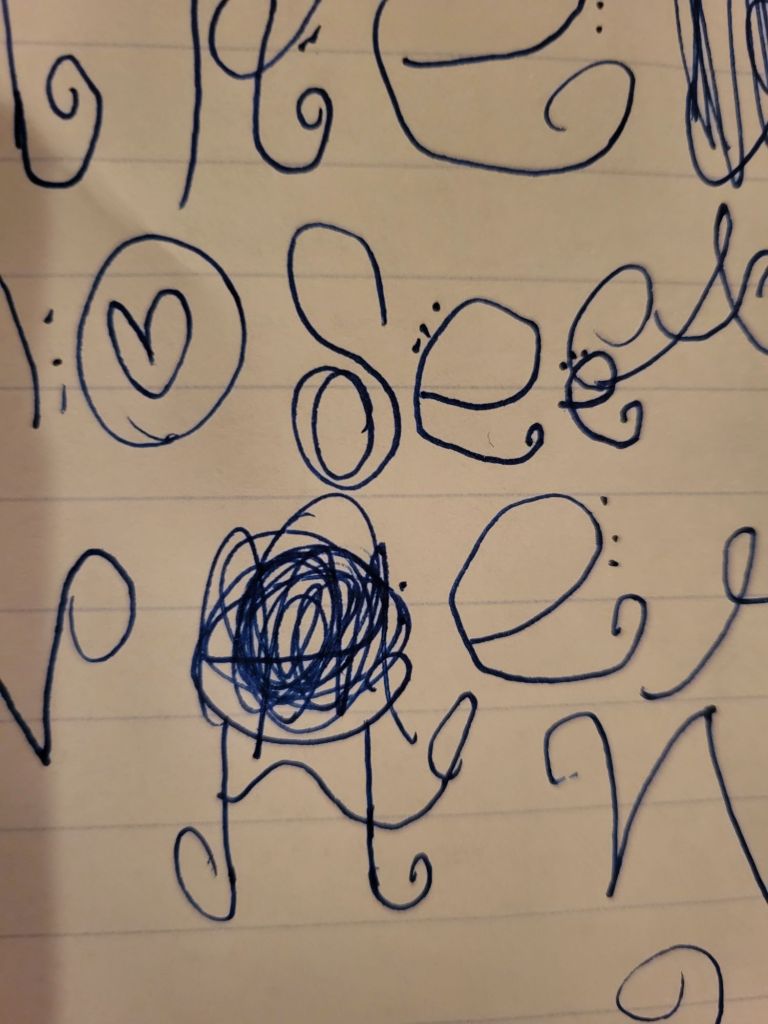
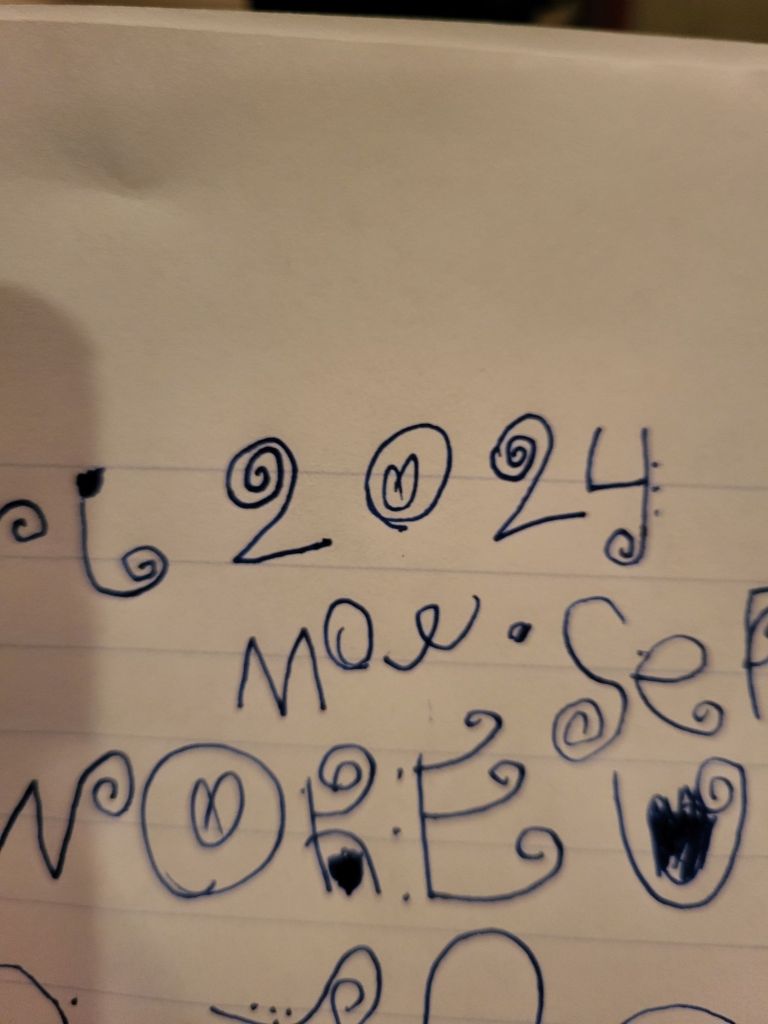
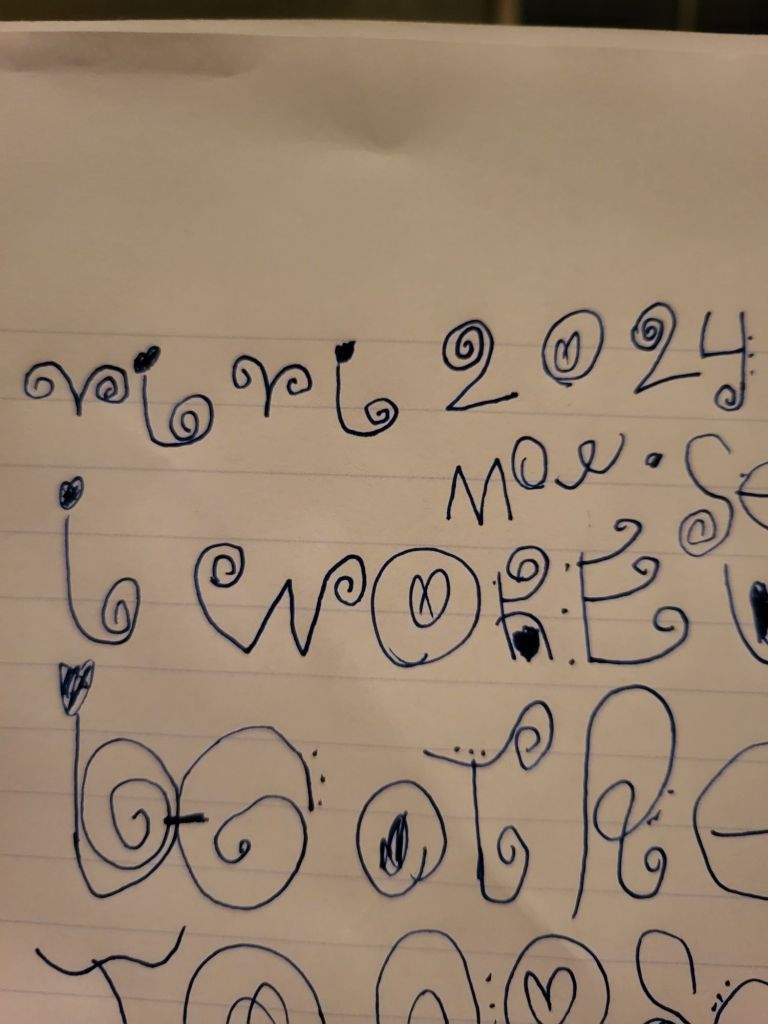
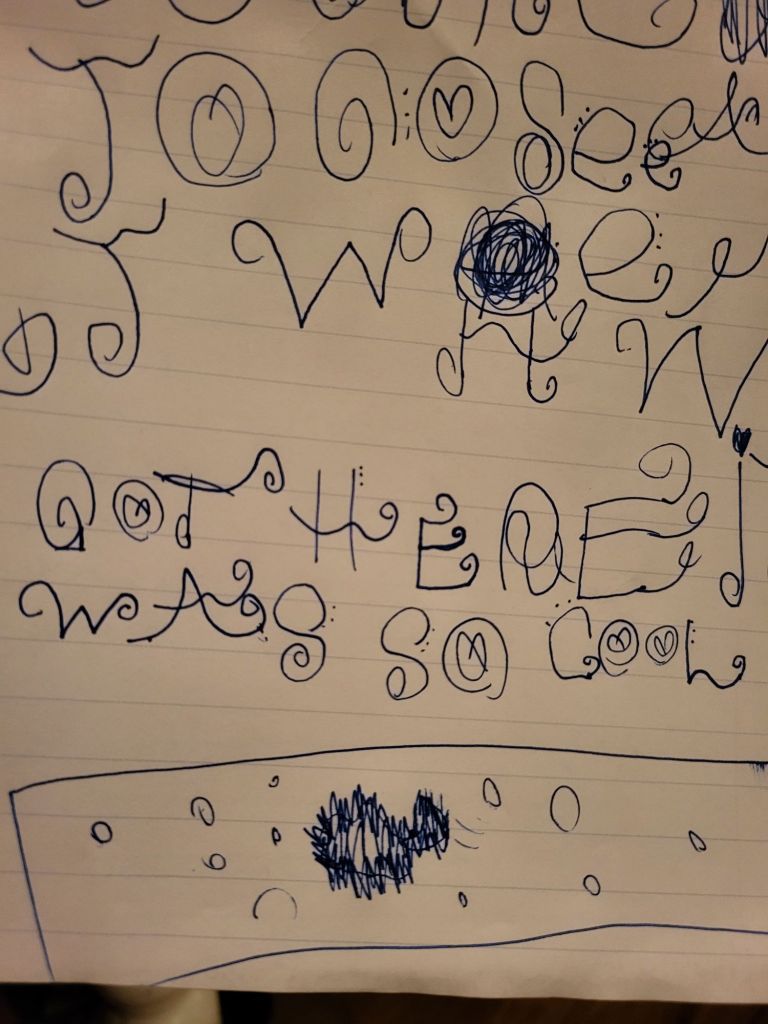
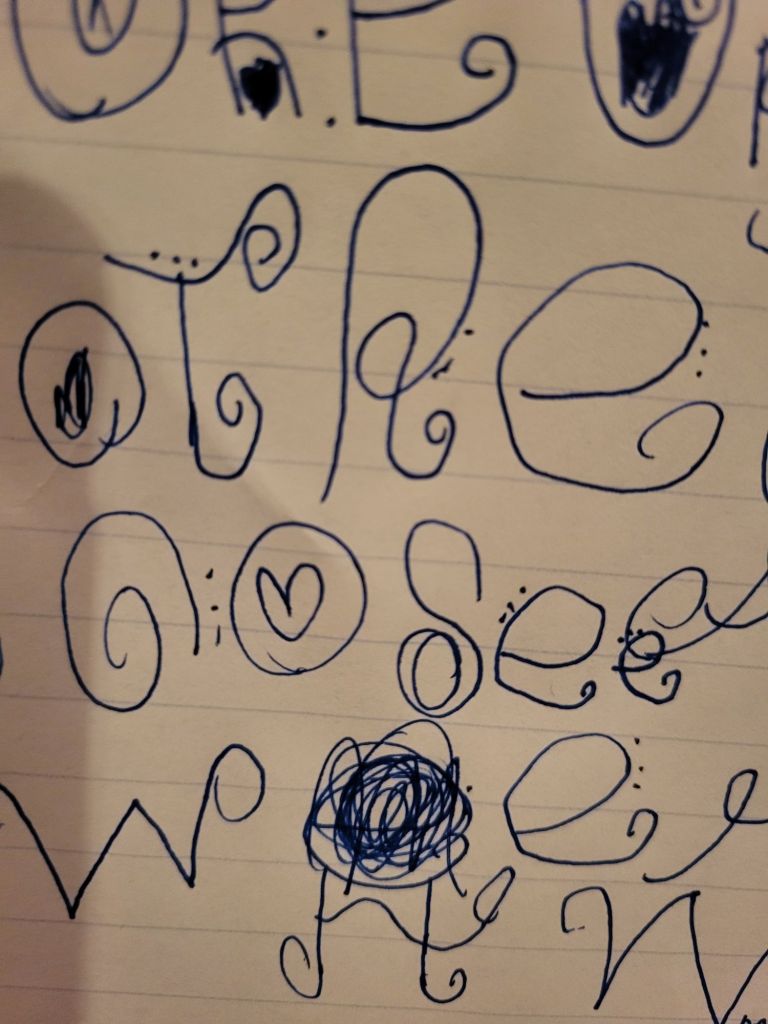
Lilli and Vivi wrote journal entries about it. Lilli, a perfect memory with 0 errors or need for improvement. Vivi in gorgeous letters. She needs to work on the legibility of her writing, but she has chosen incredibly beautiful decorated letters, which I love and I told her, I will have to copy some of her incredible letters.
My focus will be on practicing with Vivi so she can improve the legibility of her writing while keeping her wonderful letter design. I enjoyed her work so much and I was full of pride.
Lilli researched and taught us what a comet as well as a, meteor shower is, wrote this in her journal.
Both Lilli and Vivi drew the comet.
Home Education Log: Learning activities with our kids
This is not an entire list.
We discussed our ancestry, DNA, DNA tests related to ancestry, neanderthal DNA in humans in research, history of our families which interested and intrigued our oldest kid.
We did Halloween inspired art and crafts.
Alex drew a ghost and many more cool drawings. He was inspired by documentaries and videos we watched on the history of Halloween.
We watched documentaries about the history of Halloween, kids stories, and more on this topic.
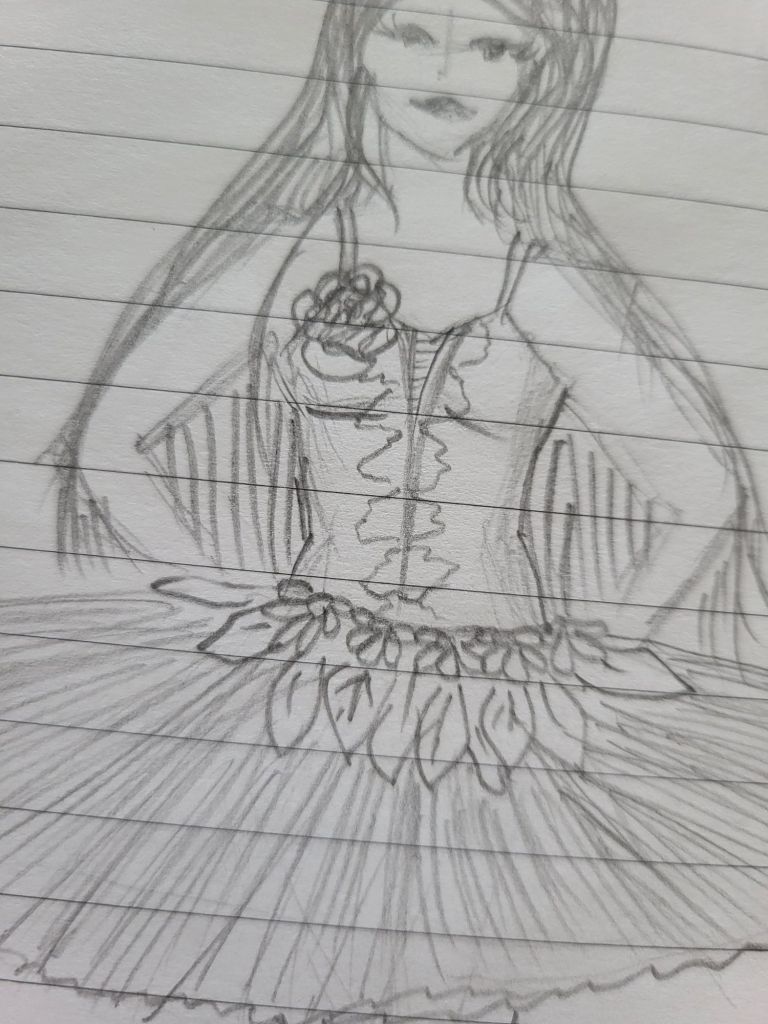
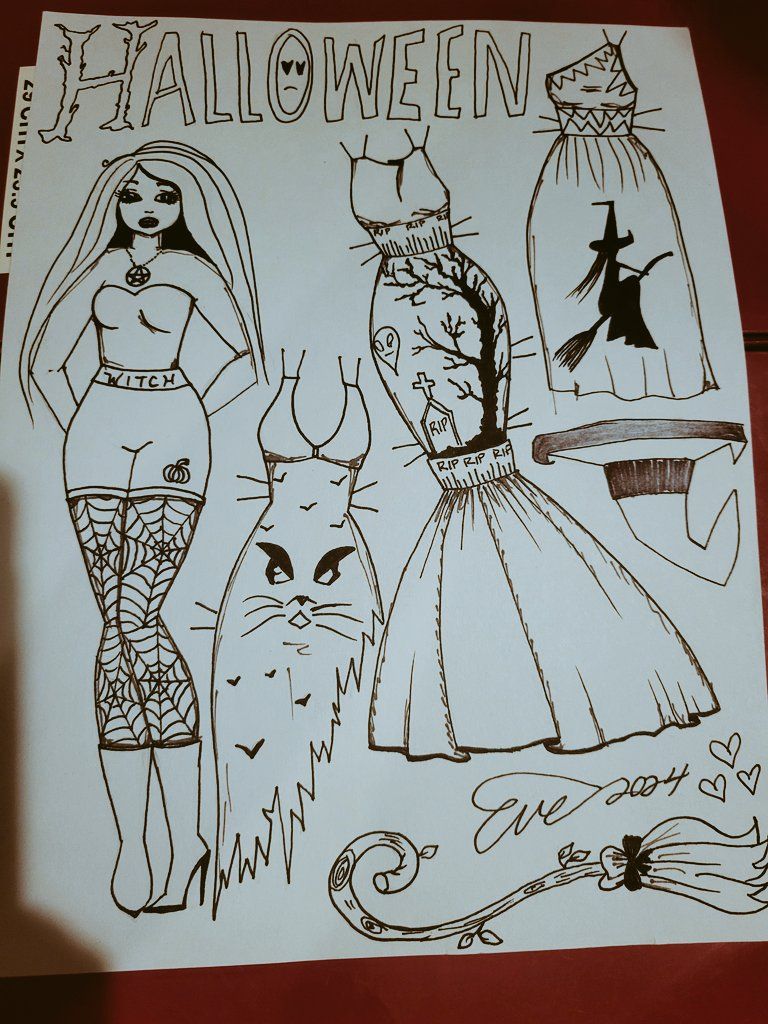
I finished a Halloween paper doll: I love fashion illustration and I incorporate it into our art activities.
This lovely fashion witch was designed in 2014. Back then my illustration skills were beginner level, but the dress designs were gorgeous. With my new skills, I drew a new doll and copied the same exact dresses, added the witch hat and broom.
We found old art of mine and discussed my art progress at which point I took advantage and gave a speech about improving one’s skill. I allowed the kids to see my bad beginner art that I am ashamed to show today and explained how I learned to draw figures by watching experts and used that fuel to inspire them by assuring them they too will be much better in their art.
I helped the kids finish Math worksheets they did not finish during their week.
We studied the Celts, specially regarding our own Celtic roots.
Lilli and I did Math: skip counting, addition, multiplication, and division.
Vivi and I worked on addition.
The kids have been sick, so we have not been to Jiu-jitsu class. They have been playing in the yard and “working in the garden”.
The kids read children’s books.
Lizzie and I wrote a poem together (she created the story) and she did the ending in prose using many words that start with g. Then she wrote the poem by hand. Her intention was to improve her handwriting of the letter g and she succeeded, her g was beautiful after such practice. She will be choosing her next letter to work on and we will repeat this exercise.
Lilli started the new Duolingo Music course.
Lilli returned to her Duolingo Spanish course.
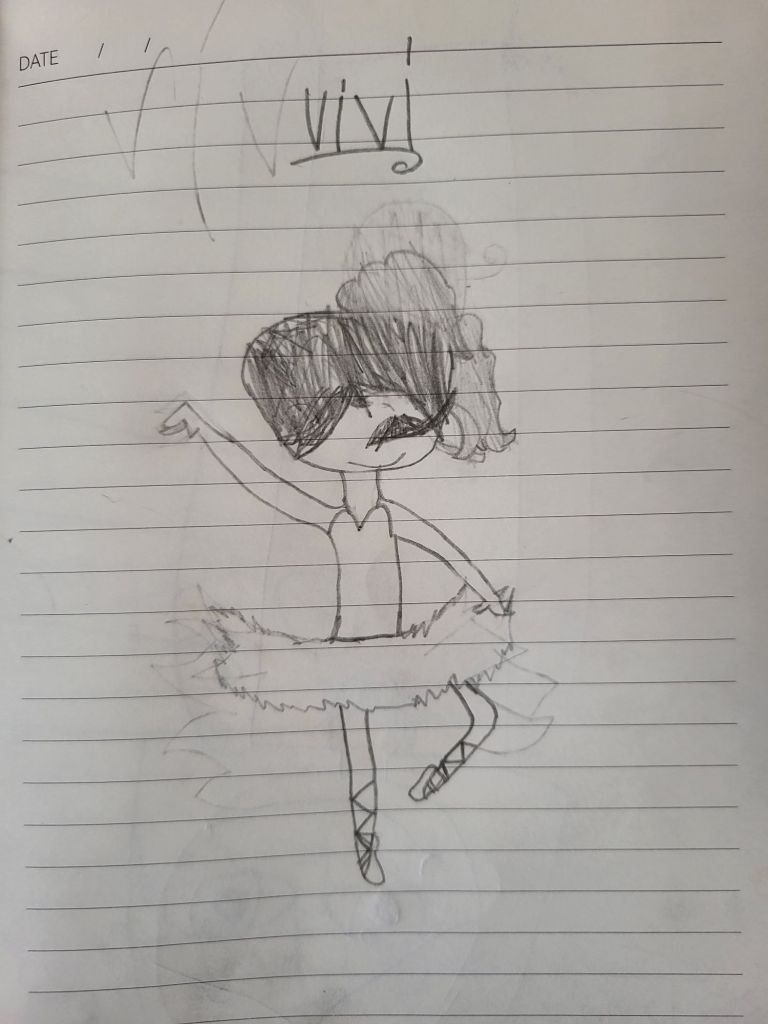
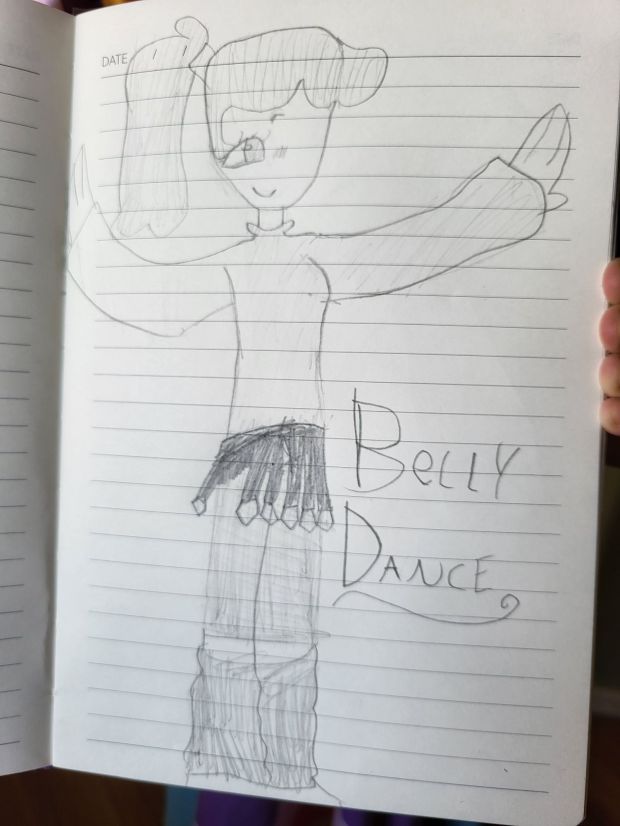
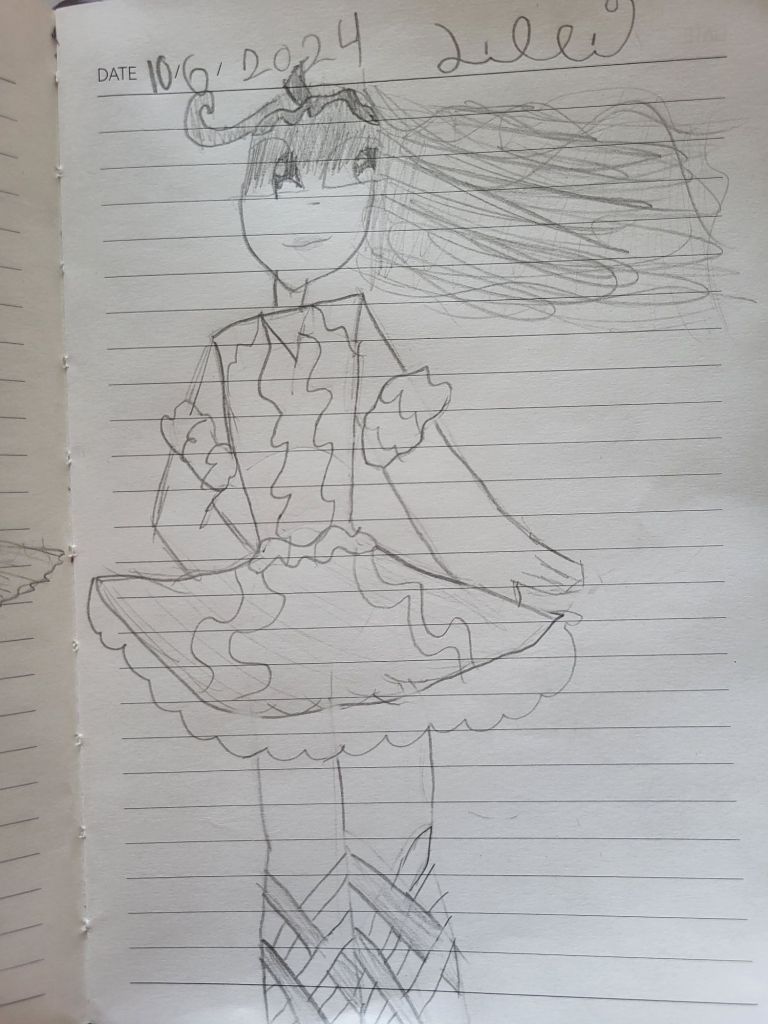
I created children’s songs inspired by Lilli. Lilli created pictures to go with the song. I added AI music to the songs. We sung and sung and danced.
Lizzie decided to write a song. She created a story and we will be working on turning it into a song.
Lilli, Lizzie, Vivi worked on Math, Science, Grammar, Art on Outschool.



You must be logged in to post a comment.