Dear Lovestar, I started learning Greek and I tried listening to Greek music but my ffamily did not like it. I study Italian and for learning, I listen to Italian music and do Italian karaoke. But the Greek music was a huge no for them, but I liked it. Anyway, while I was on the […]
The Leaning Tower of Pisa, one of the most famous architectural landmarks in the world, known for its tilt. Located in Pisa, Italy, the tower is actually the freestanding bell tower, or campanile, of the cathedral of the city.
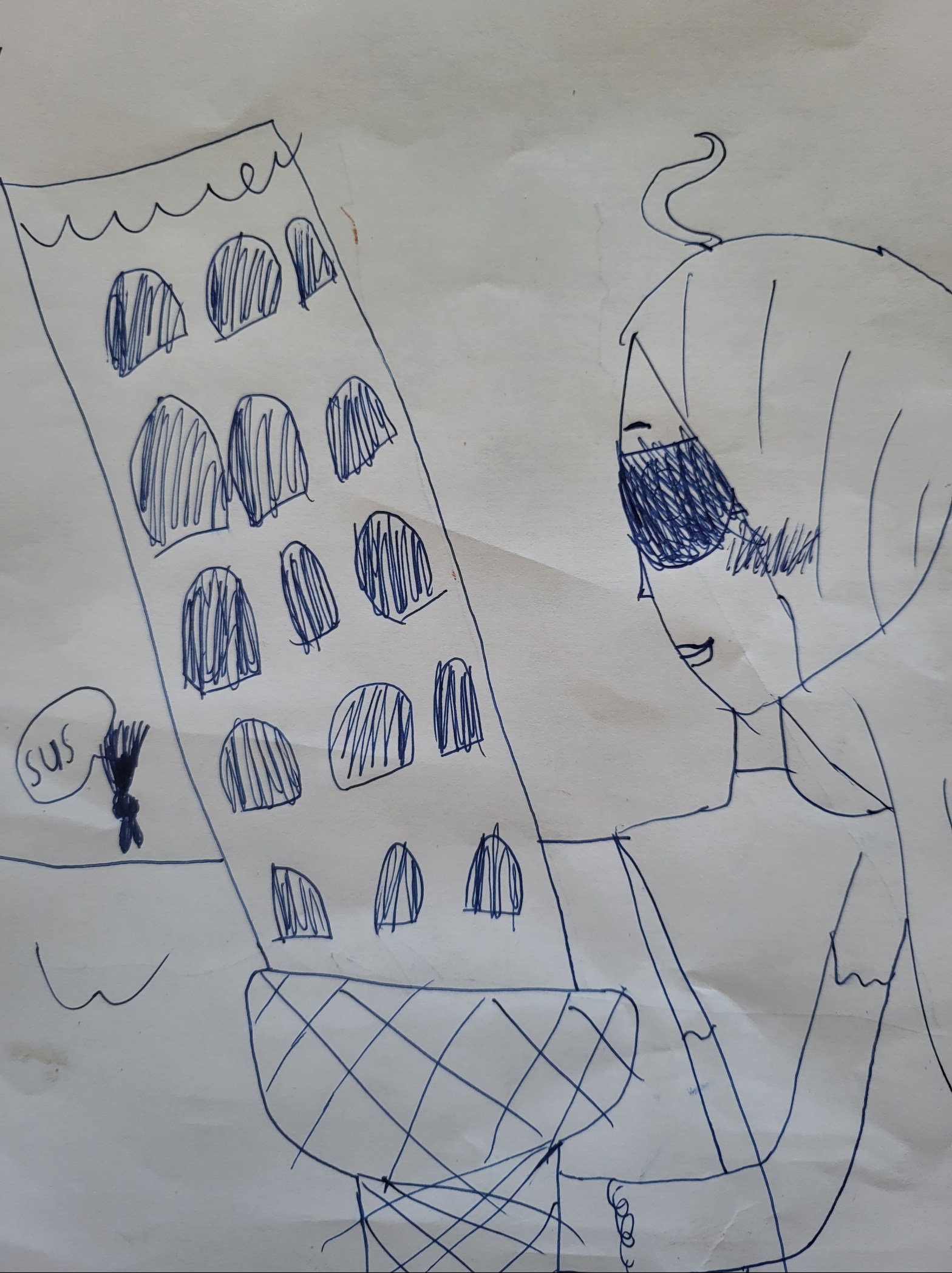
Ice Cream tower
History and Construction
Construction Began: August 9, 1173.
Architect: The exact identity of the architect is still debated, but the project was overseen by Bonanno Pisano.
Construction Duration: The construction took about 200 years, with several interruptions due to wars and engineering challenges.
Height: Approximately 56 meters (183 feet) on the higher side.
Material: The tower is constructed primarily of white and grey marble.
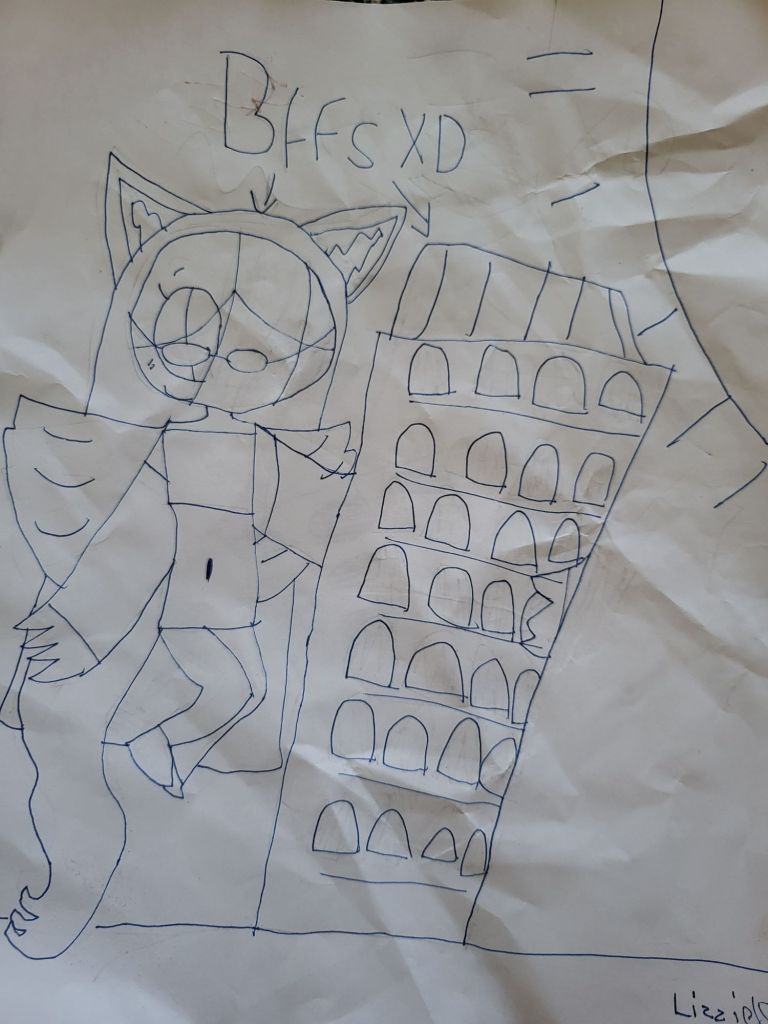
A fox girl with wings holding the tower by Lizzie
The Tilt
Cause of the Lean: The tilt began during construction, due to the soft, unstable ground beneath the tower, which consists of a mix of clay, fine sand, and shells. This ground couldn’t support the tower’s weight evenly.
Angle: The tower’s tilt reached about 5.5 degrees before modern restoration efforts reduced it to about 3.97 degrees.
Efforts to Stabilize: Over the centuries, many efforts have been made to stabilize the tower, including adding weights to the opposite side and reinforcing the foundation.
Cultural Significance
Symbol of Pisa: The Leaning Tower is a symbol of Italy and the city of Pisa, recognized worldwide for its unique architecture and history.
UNESCO World Heritage Site: The tower, along with the cathedral, baptistery, and cemetery in the Piazza dei Miracoli, is part of a UNESCO World Heritage Site.
Tourism: Millions of tourists visit the Leaning Tower of Pisa every year, and it has become a popular spot for fun photos that play with the tower’s tilt.
Fun Fact
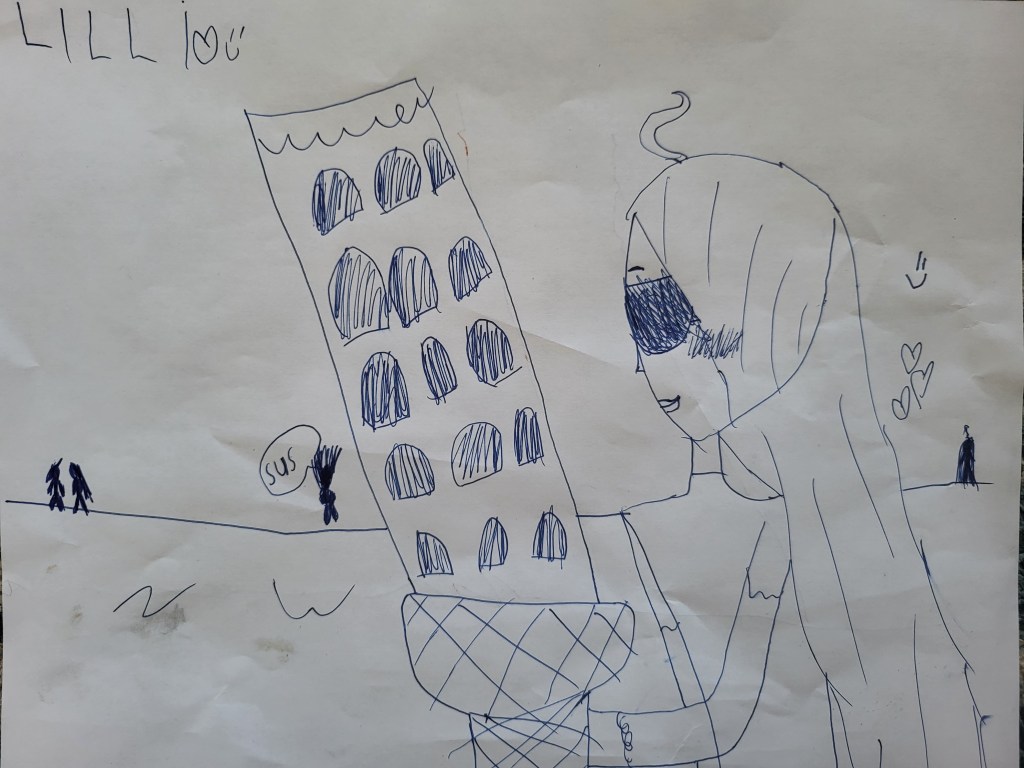
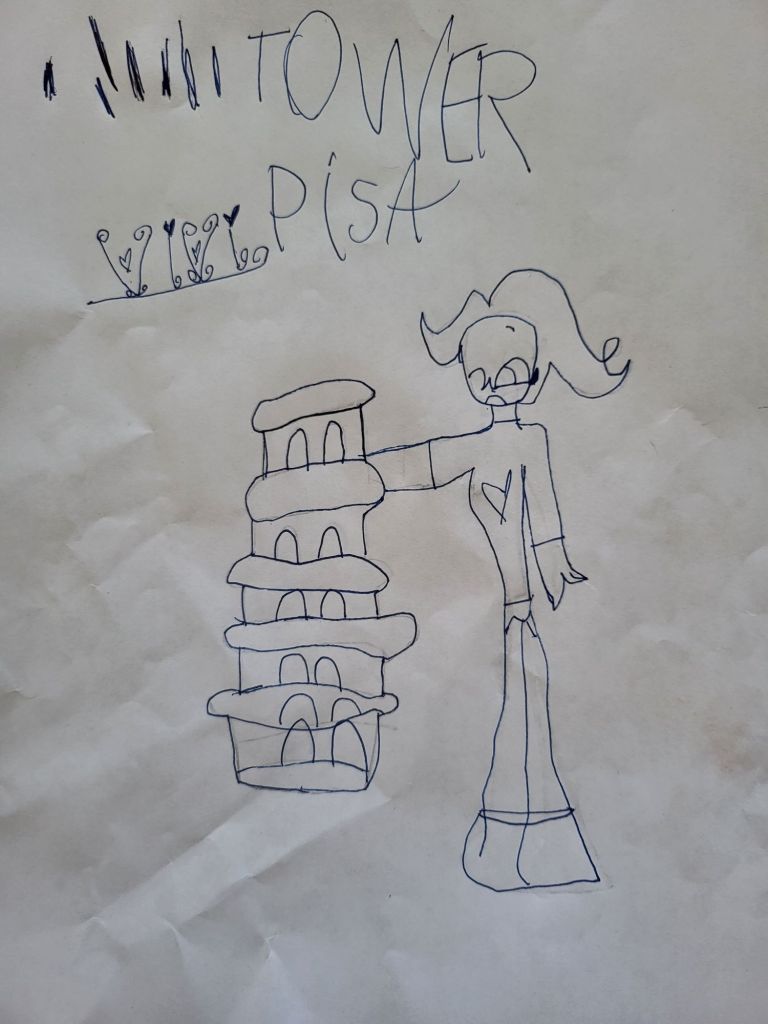
A girl standing far in front of the tower, making her really big in comparison by Vivi
The tower was originally intended to stand vertically, like other bell towers, but its tilt has made it far more famous than it might have been otherwise. The lean has become a part of its charm, and today, it’s celebrated as an iconic historical and architectural marvel.
Then we searched the fun pictures and found many cool ones on Pinterest of people holding, pushing, or eating the tower which are super cool and inspirational. This inspired their currect art project. See the pictures I shared on my Homeschool Pinterest board, they inspired my kids Leaning tower art:
Pinterest: Leaning Tower of Pisa. Intro for children
This serves as history, culture, architecture, geography, and language, I strudy Italian so I take any chance to learn and speak, currently I am listening to Italian music.
This was fun for us,
If you created art inspired by this, please share with us,
The Pythia, mysterious figures of ancient lore. Not myth, though.
Did you know
There were several Pythias.
The Pythias are said to have been poetesses
The Pythia spoke in cryptic messages translated by priests
She would have been a teenager, unmarried young woman, or woman past childbearing age.
Alexander the Great and many kings visited the Pythia
The Pythia influenced state, kings, and citizens with her prophecies
Pythia’s Whisper, a poem
Pythia’s Whisper
In Delphi’s sacred shadow, she speaks, Veiled in mist of ancient dreams, A breath of earth and smoke she seeks, Where truth in whispered echoes streams.
Her voice, a tremor through the veil, Glimmers of the gods, their will, In trance she rides the hidden gale, To prophesy with fervent thrill.
The chasm breathes its mystic air, A sigh of fate, a quiver deep, She dances in the temple’s lair, Where ancient secrets softly seep.
In every riddle, cosmic dance, A glimpse of truth, both fierce and sweet, The Pythia, in fleeting trance, Unfolds the world’s concealed heartbeat.
Short version
In Delphi’s shadow, veiled in mist, She breathes the gods’ ethereal kiss, In trance, her voice through secrets weaves, Prophecies in whispered leaves.
This information is from my mind, from too much reading.
The book Alexandros (this was the Spanish name, but this is my favorite book, I’ll buy this book) of his visit to Pythia.
A philologist I follow (who is not safe for home education) speaks of her poetry.
Edit: My children loved the class and printable worksheet and requested more classes like this. Follow for the next classes coming up in the same fun but in-depth manner.
I have been pitching the idea everywhere that poetry is an excellent tool for language learning as reading materials. And now I will prove by creating the most creative Spanish lesson ever.
The full lesson, including a printable worksheet and test for children is available if you need additional help with this material:
Here’s why poetry is amazing for language learning:
Culture
Deep learning through complexity of poetry
Fun content that is memorable
Rhyming and rhythm helps with memorization
Spanish: 1st level. Lesson 1
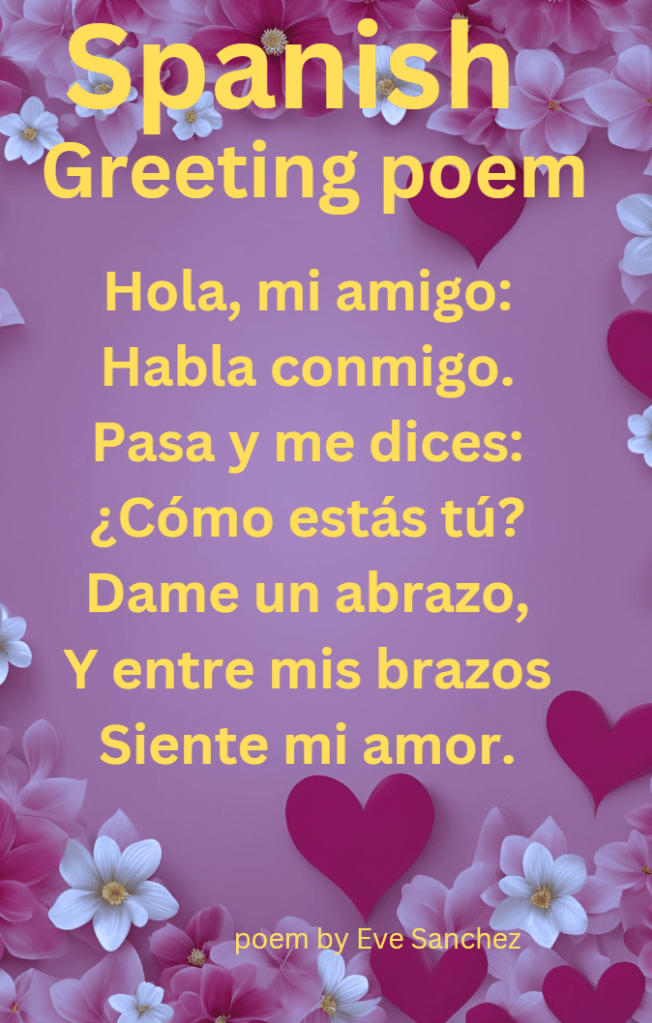
Hola mi amigo (Hello my friend) poem by Eve. Read further, and I’ll explain every word and phrase.
This poem is appropriate for a level 1 learning. It uses simple language and common phrases, making it accessible for beginners. This is a little more intense than the usual level 1 dialog, but it is also much more memorable, and I bet you can engage with this content more than with the usual language class dialog.
The main points for teaching are:
Basic Vocabulary: The words and expressions are straightforward and familiar, suitable for early learners.
Simple Sentence Structure: The poem’s structure is uncomplicated, which helps learners grasp basic sentence formation and concepts.
Easy to memorize: I do not attempt to memorize vocabulary anymore. That is the “boring” learning style that many of us reject. I like to engage with the reading content. However, poetry is naturally easier to memorize than prose or conversations. You will find yourself remembering without trying, especially if you do it with fun in mind and without judging your learning speed.
Lesson Plan. Feel free to use this for personal use/ homeschooling
(For more learning, I’m collecting all this into an ebook, return, and you will see additional lesson posts totally free)
If you’re a teacher and wish to use this material, let me know.
Welcome to my unique language lesson, where we explore the beauty of poetry as a tool for learning. Poetry is more than just a form of artistic expression; it’s a gateway to deep emotional understanding and linguistic mastery. By delving into poetry, you’ll not only enhance your language skills but also gain insight into the cultural and emotional nuances of Spanish.
Why poetry? It offers a fun and engaging way to learn, transforming the study of vocabulary and grammar into a creative and immersive experience. Poetry often includes complex structures and rich imagery, which challenges learners to think critically and understand the language on a deeper level. Many native speakers might not fully grasp the subtleties of poetry, but by engaging with it, you’ll achieve a profound and sophisticated understanding of the language.
In this class, we’ll use carefully selected poems to guide our learning journey. You’ll explore themes, emotions, and linguistic intricacies that will elevate your understanding of the language. Let’s embark on this poetic adventure together and discover the power of language through the art of verse.
Poem translation
Hello my friend, Talk to me, Come in, and tell me, How are you? Give me a hug And between my arms Feel my love.
Last night, my two older daughters and I went on a deep dive of influential women of the ancient past. It was enlightening and inspirational. I had to hopefully inspire someone else. I would love to talk more about this.
Ancient influecial women
Welcome to an exciting journey through ancient history, where we’ll discover amazing women who changed the world in Greece, Egypt, and Rome. These remarkable figures were more than just pretty faces; they were pioneers in education, the arts, and leadership. Let’s dive into their inspiring stories and explore some fun activities to learn about them!
1. Sappho: The Poetess of Lesbos
Sappho was a Greek poetess known for her beautiful and emotional poetry. Her poems celebrated love, friendship, and the beauty of the world. She was a teacher and led a school of young women who were also poets.
Activity Idea: Write Your Own Poem
Encourage your child to write a short poem about something they love. It could be about their favorite place, a beloved pet, or a special memory. Help them use descriptive words and emotions like Sappho did.
2. Cleopatra: The Wise Queen of Egypt
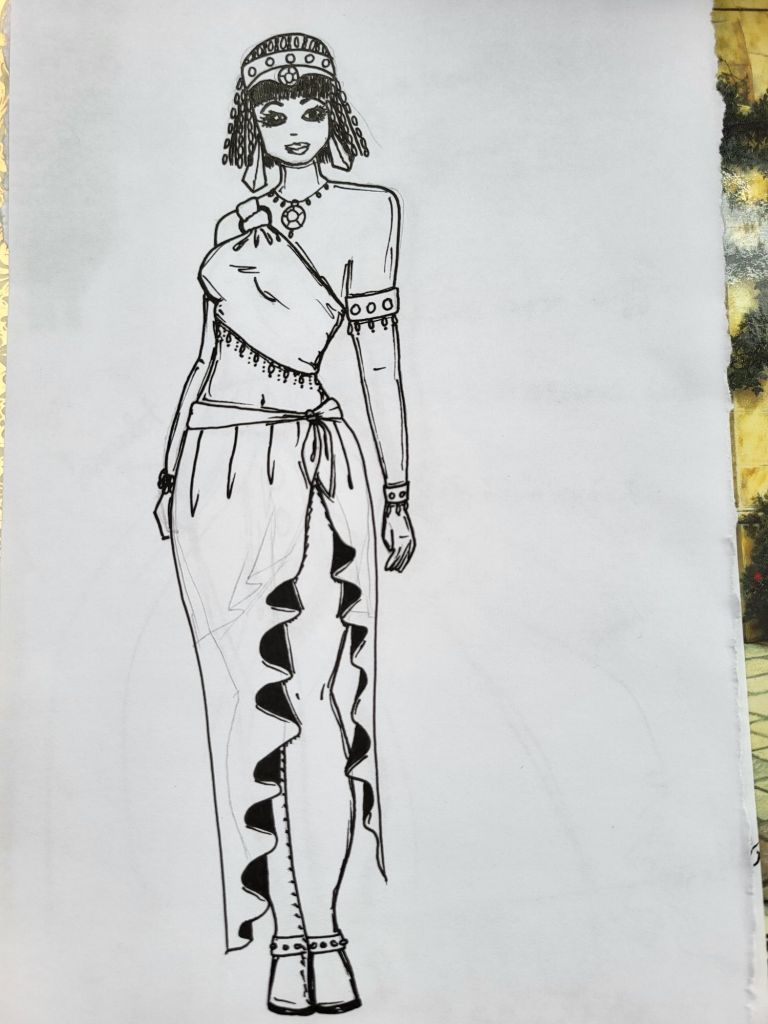
I have not finished this Cleopatra. I made this as a paper doll for a Cleopatra game that I also have yet to finish. Yes, I am a bit of a fan, of course not of her beauty or treasure, but because of the 7 languages she spoke.
Cleopatra VII was a queen of Egypt known for her intelligence and political skill. She spoke several languages and was a patron of the arts and sciences. Cleopatra worked to improve Egypt’s economy and establish strong alliances.
Activity Idea: Create a Royal Crown
Have your child design and make a royal crown using craft materials. As they create their crown, discuss how Cleopatra was a powerful leader and what qualities made her an important figure in history.
3. Hypatia of Alexandria: The Scholar
Hypatia was a Greek mathematician and philosopher in Alexandria, Egypt. She was one of the first women to teach mathematics and astronomy. Hypatia’s work helped advance scientific knowledge and she was admired for her wisdom and learning.
Activity Idea: Stargazing and Simple Astronomy
Set up a stargazing session with your child. Use a star map to identify constellations and discuss the wonders of the night sky, just as Hypatia would have.
4. Livia Drusilla: The Influential Roman Empress
Livia Drusilla was a powerful Roman empress who played a key role in the politics of Rome. She was known for her influence over her husband, Emperor Augustus, and later her son, Emperor Tiberius. Livia was also a patron of literature and the arts.
Activity Idea: Build a Roman Villa
Create a model of a Roman villa using clay or building blocks. Discuss how Livia contributed to the arts and education, and how Roman villas were centers of learning and culture.
5. Art Prompt: Ancient Influence Collage
Encourage your child to create a collage that represents the influence of these ancient women. They can draw, cut out pictures, and use other craft materials to showcase the contributions of Sappho, Cleopatra, Hypatia, and Livia.
Poem Inspired by Ancient Wisdom
Here’s a short poem to inspire young minds:
In ancient lands, where wisdom grew, Great women shone with knowledge true. With poems, crowns, and stars so bright, They taught us to reach for the light.
Sources for Further Learning
Books for Kids: Look for children’s books about ancient history and influential women, such as “Women in Science: 50 Fearless Pioneers Who Changed the World” by Rachel Ignotofsky.
Educational Websites: Explore websites like National Geographic Kids and History for Kids for fun and interactive content on ancient civilizations. My readings yesterday were off Britannica online.
Museums and Online Resources: Many museums offer virtual tours and resources about ancient history and influential figures.
These activities and stories will not only make history come alive but also inspire your child to appreciate the contributions of women throughout time. Enjoy exploring and learning together!
If you enjoyed this, let me know so I can create more content like this.
I bring you more Socrates materials for our learning as parents and, soon, tools (including a free Lesson Plan) to introduce this master of questioning to our children.
Below, you will find 2 of my poems about Socrates, which can be used as materials for reading and comprehension, links to philosophy classes, a free class link (using it will be though because they have too many good choices, take your time to find your favorite class), and links for Socrates study.
Poetry is great for the Socratic Method, actually.
Plato: student of Socrates, teacher of Aristotle, who was the teacher of Alexander the Great: some of the most famous names in history and wisdom.
To be able to home educate or homeschool, we must educate ourselves first. Also, by learning, we inspire our children to do the same.
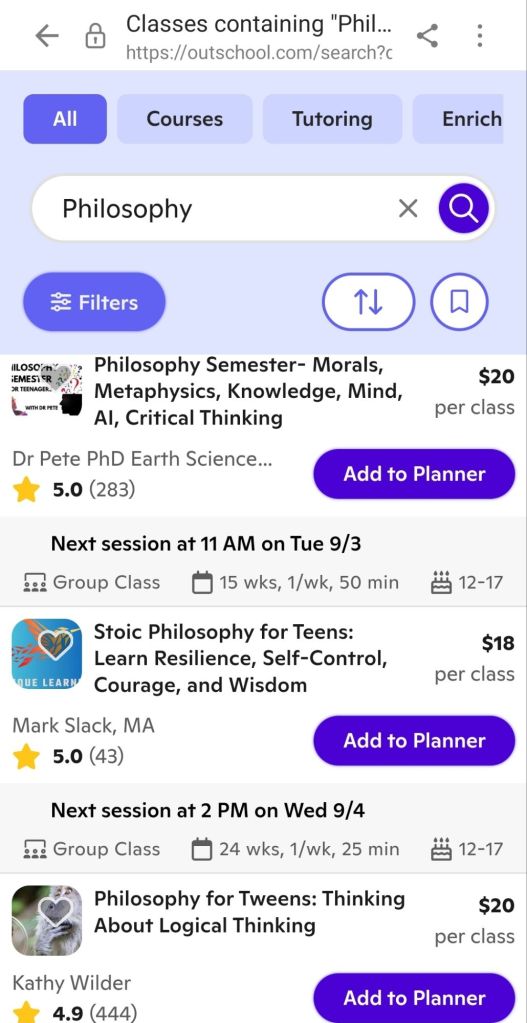
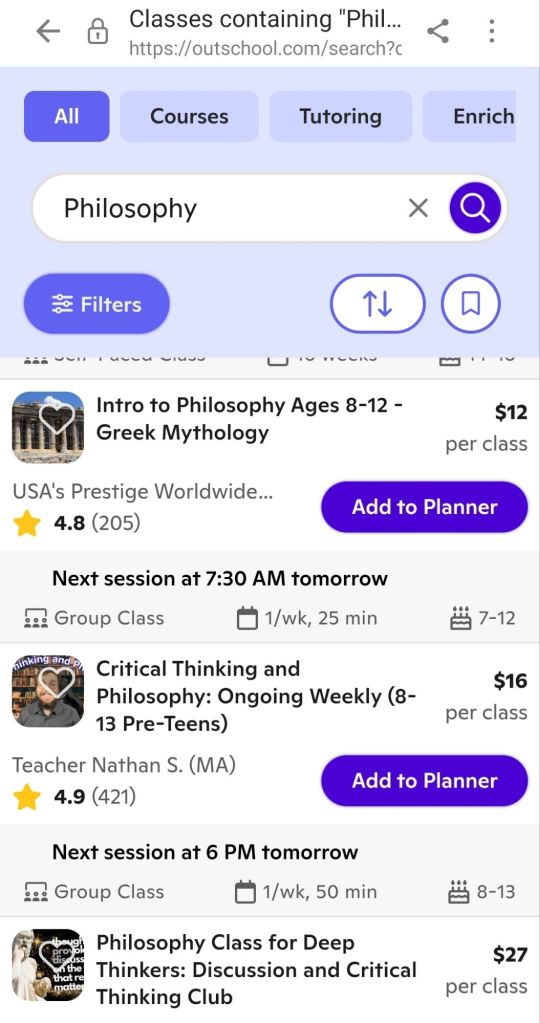
Related Outschool Classes and Tutors. Scroll to get your free class!!!
Outschool is my preferred tutor program, and my three oldest daughters have had many Outschool classes. We enjoy the program so much that I became an ambassador for them. This means I share the classes and teachers I love, and they pay me in free class credits at no cost to you.
Outschool has a bunch of classes for everything. They do not have a class on Socrates, but they have loads of ancient history classes, and I just found too many philosophy classes to share. Outschool is international and likely in your country as well.
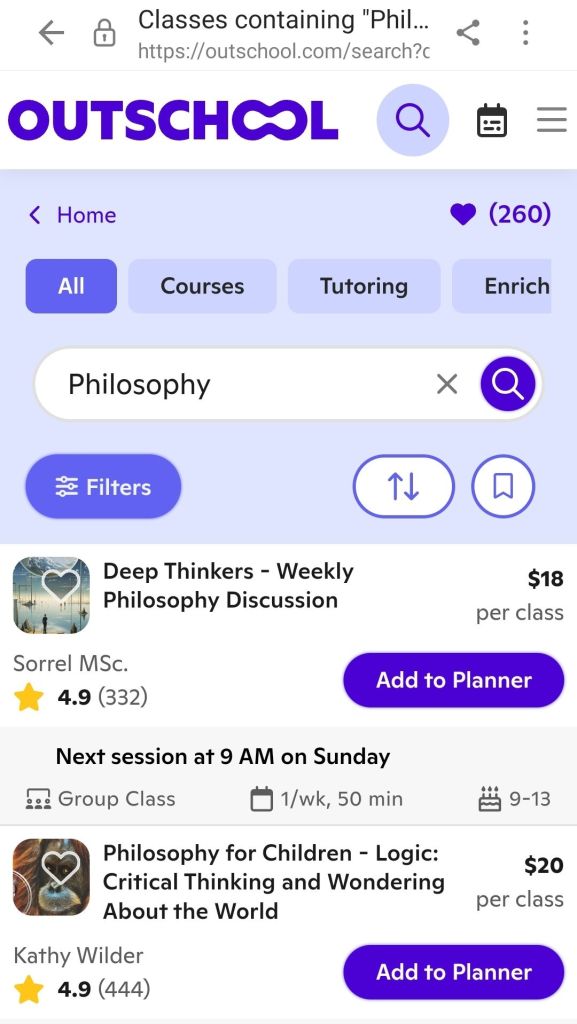
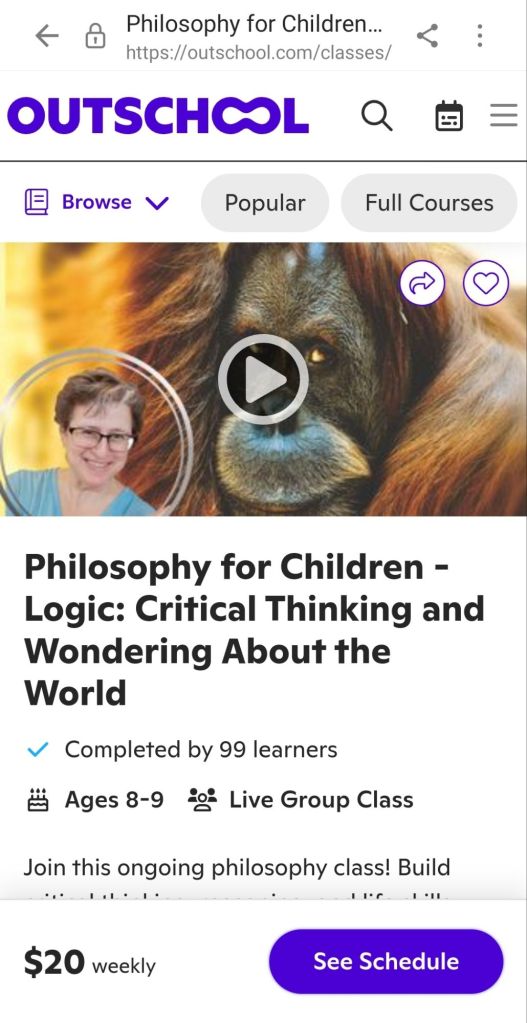
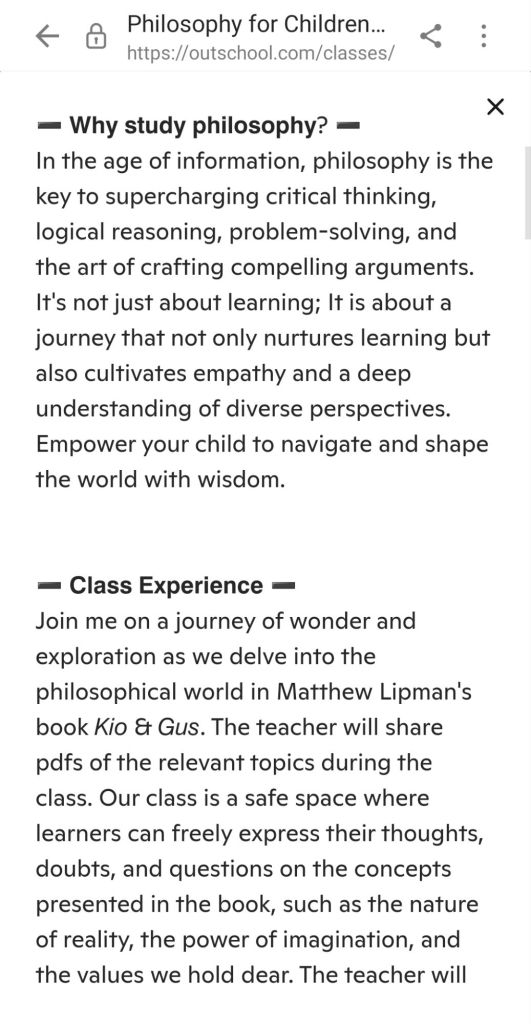
Philosophy classes for children on OutschoolPhilosophy classes on Outschool Philosophy classes on Outschool
Deep Thinkers – Weekly Philosophy Discussion
US Grade 4 – 7 Explore the world of ideas and challenge your perceptions in ‘Deep Thinkers,’ a unique online philosophy class designed specifically for young minds.
This isn’t your typical classroom experience; here, we delve into life’s biggest questions and the mysteries of existence in a fun, interactive, and engaging manner.
Through engaging discussions and thought-provoking exercises, students will journey through a diverse range of philosophical concepts, from understanding the abstract concept of time to discussing human nature and even delving into fascinating ideas like simulation theory. But don’t be intimidated by these ‘big’ topics. Each idea is broken down and presented in a way that’s both accessible and relevant to our students’ experiences.
Outschool lets your kids’ curiosity run wild with classes on any topic you can imagine. If you’re new to Outschool, you’ll get $20 USD referral credit with this link:
If you sign up for an Outschool class, tell them I sent you by adding my code at check out
STAR2024
AZ’s ESA covers the cost of these classes if you have one. I believe ESAs from other states such as Florida cover the costs as well.
Socrates, a poem.
Socrates in the Shadows
In the quiet halls where shadows lie, A thinker walks ‘neath a boundless sky, His breath a whisper in ancient wind, A voice of reason, fierce and thin.
He stands where darkness cloaks the land, A world enslaved by iron hand, The political woes, a heavy yoke, Yet in his heart, no fear awoke.
“Do you not see?” he calls with grace, “The chains that bind, the darkened space, Are but illusions, thin and frail, For wisdom’s light shall never pale.”
With valor bold, he questions all, The gods above, the shadows’ call, He seeks the truth where others flee, In courage fierce, his mind roams free.
He strides through doubts and silent fears, His voice a beacon through the years, He asks of us: “What makes us wise? Is it in gold or in the skies?”
“No,” he says, “it’s in the soul, In questioning the tyrant’s role, In seeking truth where shadows play, In daring to defy the fray.”
For in the face of cruel despair, When tyrants’ lies fill up the air, It’s in the quest for wisdom’s grace, That we reclaim our rightful place.
“Rise above the darkened gloom,” He whispers in the dim-lit room, “Embrace the light, the questions bold, And let your wisdom break the mold.”
In every mind, his spirit sows, A seed of courage, wisdom grows, In questioning, we find the key, To break the chains and set us free.
So heed the call of Socrates, In every shadow, find the peace, For in the search for truths untold, We find the courage to be bold.
Sources for further study: free, online: I’ll offer additional sources soon.
Stay tuned for more coming on this topic, including the free Lesson Plan for our children.
If this helped or inspired you, let me know so I can do more like this. I loved it, but I’ll share more if you like it, too.
If you have questions about Outschool tutoring, let me know in the comments
Note: This was a quick poem that I will most definitely edit when I complete the final Lesson Plan on this subject (the whole package I’m preparing which will take me some time, because I don’t want to rush it.
With the intention to inspire learning, thinking, and questioning,
Let us talk about Socrates, the ancient Athenian philosopher.
First, I’ll include an essay for adults, and coming soon, I’m going to share a free lesson plan for home education parents, just in case you’re looking for educational materials. If you’re a homeschooling parent, and this was helpful, let me know, I’ll be sure to create more like this.
The soon to come lesson plan will be completely free, as my gift to parents. I will continue to develop this lesson plan for use with my kids. I’ll then go about creating materials for my future lesson plan, one that will be complete. This will take a lot of time, but I’ll share a lot of sources for your studies if you’re interested in introducing your children to Ancient Philosophy. Stay tuned.
The free Lesson will include
A lesson plan to introduce kids to Ancient Philosophy and Socrates
The lesson will be tailored for children 8 -12 ( my oldest learners)
Several simple poems for reading and comprehension materials
Socrates. Valor and Fearlessness
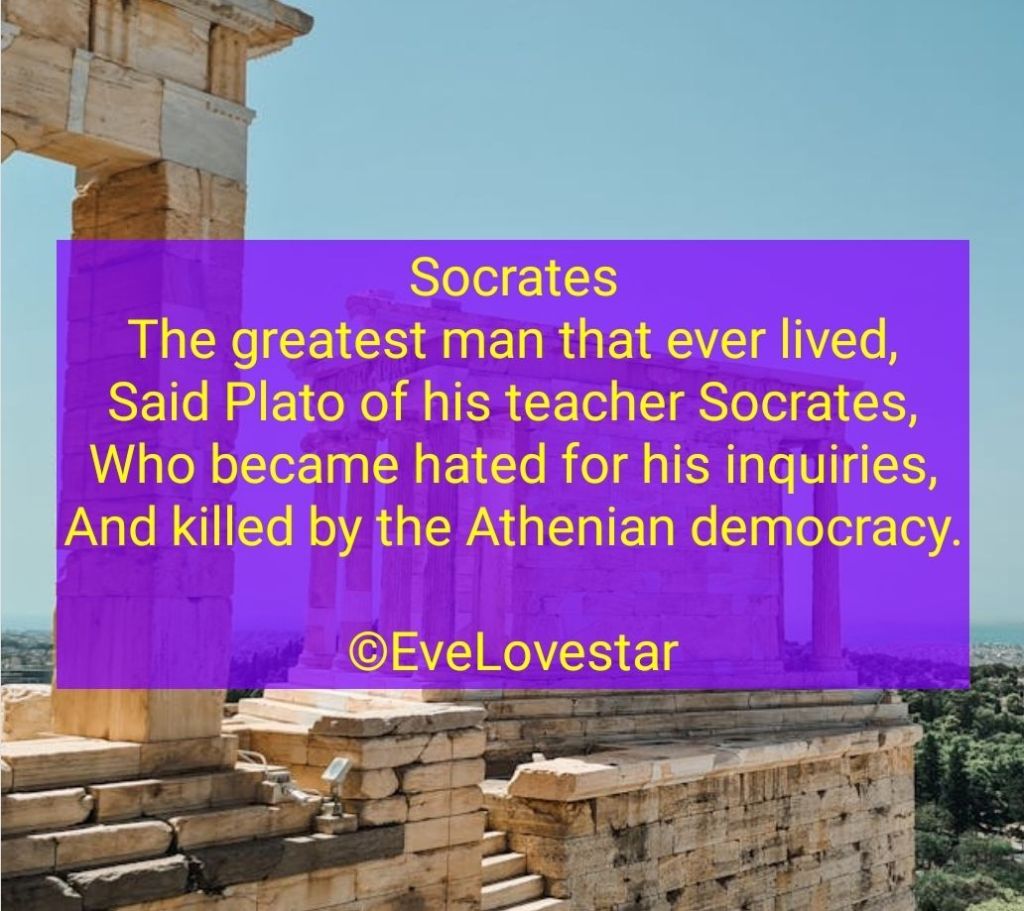
Socrates said in his famous trial (the result of which was the Athenians killing him) that the god Apollo had prophesied that there was no wiser man than him.
Socrates went on to inspire wisdom in a level that has not been matched. His student Plato would go on to be the father of philosophy, and Plato’s student, Aristotle (Alexander the Great’s famous teacher), was the father of universities, per this course I listed below.
Source:
Listen to Famous Greeks by J. Rufus Fears, The Great Courses on Audible.
“No honest man can survive in your democracy. It is so corrupt!” Were hos words to his Athenian oppressors proving his valor and fearlessness
Murdered by the Athenians for inpiety
Socrates: The Paragon of Virtue and Philosophy
Socrates, one of the most influential figures in Western philosophy, lived in ancient Athens during the 5th century BCE. His contributions to philosophy, characterized by his commitment to virtue and his fearless stance against the political establishment, have left a lasting legacy.
Legacy and Ideas
Socrates is renowned for his contributions to ethics and epistemology. Unlike his predecessors, who often engaged in speculative and metaphysical inquiry, Socrates focused on practical ethics and the nature of human virtue. His philosophy was grounded in the belief that understanding the nature of virtue was essential for leading a good life. This approach is most famously encapsulated in his assertion that “the unexamined life is not worth living.”
Central to Socratic thought is the Socratic Method, a form of dialectical questioning that aims to stimulate critical thinking and expose contradictions. Through this method, Socrates sought to challenge assumptions and encourage deeper understanding. This approach involves asking a series of questions to help individuals arrive at their own conclusions, rather than providing them with answers. The goal is to foster clarity of thought and promote self-awareness.
Socrates also introduced the concept of “Socratic irony,” where he professed ignorance to draw out the knowledge of others. This tactic allowed him to reveal the ignorance of those who claimed to possess knowledge, thus promoting a deeper exploration of truth.
Valor and Fearlessness
Socrates’ valor and fearlessness are perhaps most evident in his interactions with Athenian politicians and his eventual trial. Socrates lived during a time of significant political turmoil in Athens. His commitment to questioning the status quo and challenging the moral and intellectual complacency of the time often put him at odds with powerful figures.
One of Socrates’ most notable acts of courage was his refusal to abandon his principles, even in the face of severe consequences. During the Peloponnesian War, Athens was under the influence of a series of politically charged events and shifts in power. Socrates remained steadfast in his commitment to questioning the moral and ethical conduct of the politicians and leaders, despite growing hostility.
Socrates’ fearlessness culminated in his trial and subsequent execution. In 399 BCE, Socrates was charged with impiety and corrupting the youth of Athens. He was sentenced to death by drinking poison hemlock. Despite the gravity of his situation, Socrates faced his fate with remarkable composure, continuing to question and discuss philosophical issues up until his final moments. His willingness to accept death rather than compromise his beliefs is seen as a testament to his commitment to truth and virtue.
Conclusion
Socrates’ legacy endures through his profound impact on philosophy and his embodiment of intellectual courage. His method of questioning, dedication to virtue, and resistance to political pressure have inspired countless individuals to seek truth and live a life of moral integrity. Socrates’ life and teachings continue to be a beacon for those who value wisdom, ethical rigor, and the courage to stand up for one’s beliefs. His unwavering pursuit of truth in the face of adversity exemplifies the highest ideals of philosophical inquiry and personal virtue.
If this was inspiring or helpful, let me know, I would love to do more like this.
Stay tuned for an upcoming free lesson plan to introduce children to Socrates and Athenian philosophy,
Queries lector, Hoy te presento mi poesía favorita, la poesía de José Martí el poeta Cubano (1953 – 1995). Yo soy Cubana, Martí es un ídolo para mi y mi primera influencia poética (gracias a mi papá, un maestro de Español cubano) Cultivo una rosa blancaEn Julio como en eneroPara el amigo sinceroQue me da […]




You must be logged in to post a comment.