Montezuma National Monument – Montezuma Castle

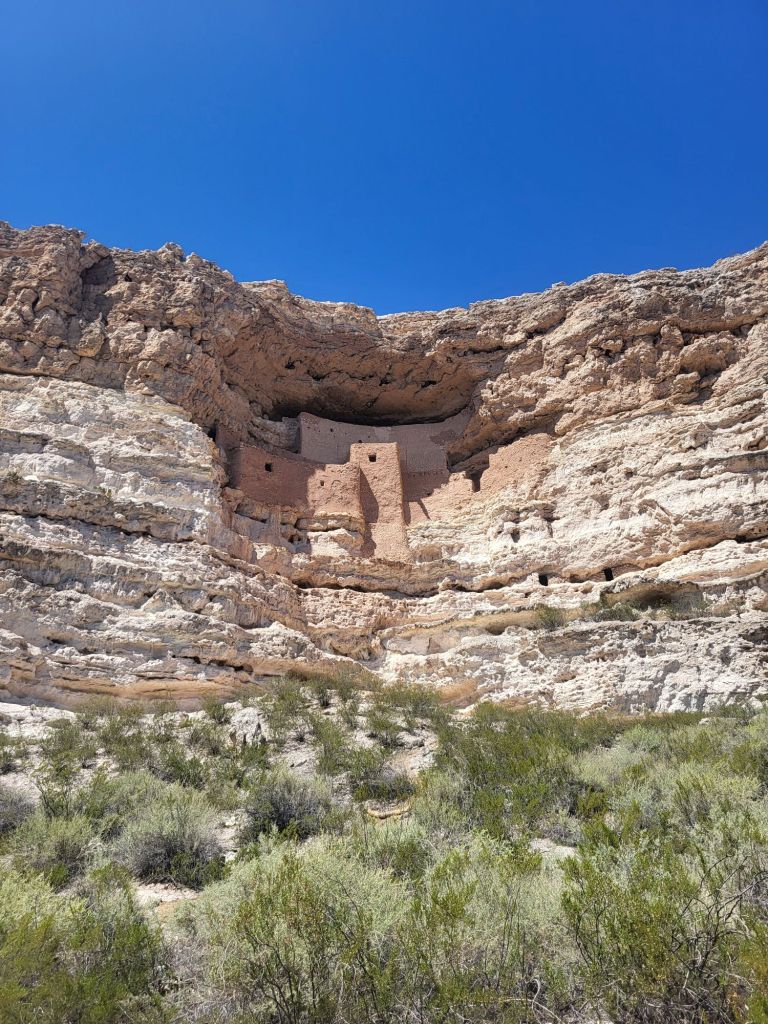
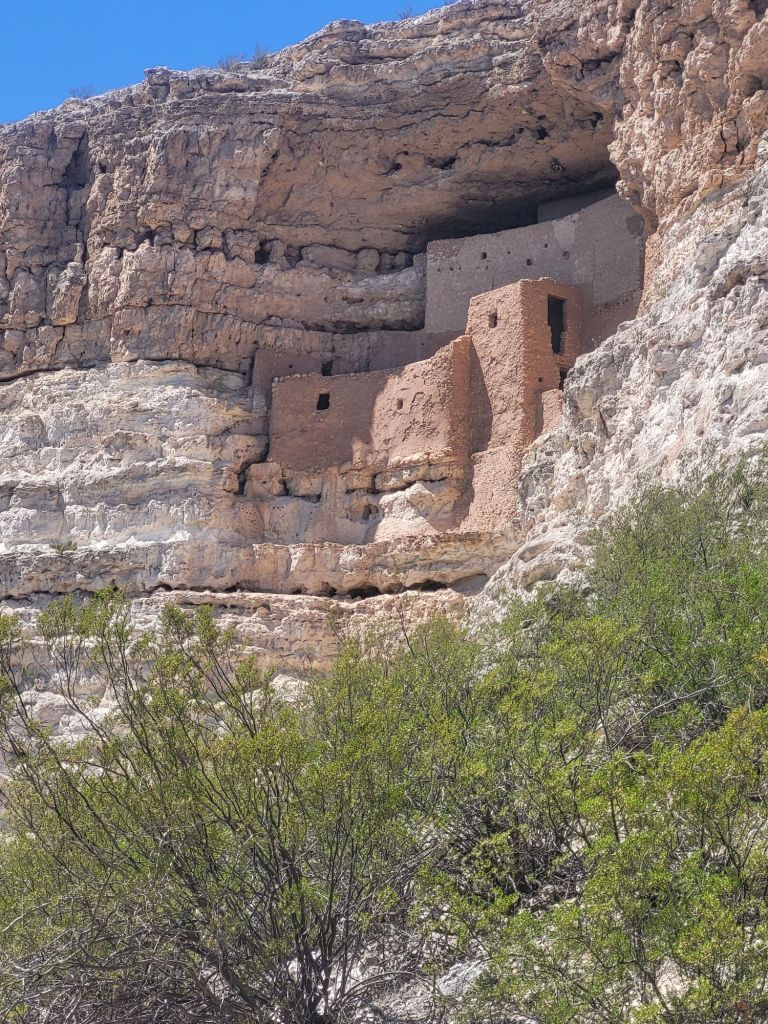
Here’s a stunning view of Montezuma Castle National Monument, a remarkable cliff dwelling in Arizona.


What’s So Special About Montezuma Castle?

1. What and Who Built It

  • Montezuma Castle is not really a castle but a prehistoric five-story, approximately 20-room “apartment complex” built by the Sinagua people, a pre-Columbian culture related to the Hohokam, between around AD 1100 and 1425, possibly over three centuries .
  • The name is a misnomer: early European-American settlers wrongly believed it was tied to the Aztec emperor Montezuma, though it was abandoned over 40 years before his birth .

2. Location and Structure

  • Carved into a limestone cliff about 90 feet (roughly 80 ft / 24 m) above Beaver Creek, it’s situated just northeast of Camp Verde in the Verde River Valley .
  • The cliff’s natural alcove shielded the structure, greatly aiding its remarkable preservation .

3. Architectural Innovation

  • Built using limestone chunks and mud-based mortar, with wooden beams (from local trees like sycamore) and thatch ceilings—walls were ~2 ft thick at the base, narrowing to ~1 ft at the top; doorways were about 5 ft tall, ceilings around 6 ft high .
  • Located high above the flood-prone valley, it offered safety from Beaver Creek’s seasonal flooding, a clever environmental adaptation .

4. Historical Importance & Protection

  • Declared one of the first U.S. National Monuments by President Theodore Roosevelt on December 8, 1906, under the Antiquities Act .
  • Listed on the National Register of Historic Places in 1966 .
  • Early visitors once climbed ladders to enter the ruins, but access was halted in 1951 to prevent further damage .
  • Restoration efforts have taken place since the late 19th century, including in 1897 and the 1930s; more recently, mid-1990s efforts addressed carpenter bee damage. Preservation uses traditional Sinagua-style techniques when possible .

5. Visitor Experience

  • The monument spans about 860 acres .
  • A 0.3-mile paved loop trail from the visitor center leads to views of the castle; over 95% of the visible structure is original .
  • Features include a museum displaying tools, grindstones (metates), bone needles, ornaments, pottery, and artifacts reflecting their craftsmanship and trade networks .
  • Castle A, another nearby cliff dwelling, is visible from the trail but closed to protect it; it suffered fire damage between 1375–1395 from conflict .

6. Natural and Cultural Legacy

  • The surrounding area hosts a rich ecosystem, where a survey recorded around 784 species, only 11% non-native including bats, birds, reptiles, mammals, and more .
  • At least 14 bat species, including endangered ones like the Western Red Bat and Townsend’s Big-eared Bat, inhabit the site. Hummingbird studies are also ongoing .

Montezuma Well: The Water Source Connection

  • Montezuma Well is a detached unit of the National Monument, located about 11 miles northeast, near Rimrock, Arizona .
  • It’s a large limestone sinkhole approximately 386 ft across and continuously fed by ~1.5 million gallons of spring water daily, even during droughts; water is highly carbonated and contains arsenic .
  • The Well supported early irrigation systems used for agriculture from as early as the 8th century, with parts still in use today .
  • Hosts endemic species, including unique snails, leeches, amphipods, and others, a biodiversity hotspot .

Amazing experience for $10 adult pass. Children enter free.

The children loved it and it was very educational.


Eve

Empowering Education Choice: Introduction to Education Scholarship Accounts (ESAs)

Dear friend,

My beloved partner and I home educate 3 children (our 2 youngest are toddlers). It is no easy task. Today, I want to express my gratitude for the funds the Arizona state provides my children for our choice of education: their ESAs, which allow us to hire amazing tutors and get the needed materials for their education.

We use these funds to get computer equipment, books, materials, pay tutors, and more. These funds help us immensely and have upgraded our home education efforts so much.


What is an ESA?

Education Scholarship Accounts (ESAs) represent a growing trend in educational policy aimed at empowering parents with greater control over their children’s education. Originally pioneered in Arizona and now available in several states across the United States, ESAs provide families with public funds that can be used to customize their children’s learning experiences beyond traditional public school offerings.

What are Education Scholarship Accounts (ESAs)?

Education Scholarship Accounts are state-funded accounts that allow parents to use allocated funds to cover various educational expenses. These accounts are flexible, allowing families to personalize their child’s education by choosing from a range of approved educational services and products. This includes private school tuition, tutoring, textbooks, online courses, special education services, and more.

How do ESAs work?

ESAs typically operate through a government-approved organization or directly through the state education department. Parents receive a portion of the state’s per-pupil funding that would have been allocated to their child’s public school education. This funding can then be used to pay for approved educational expenses. ESAs are managed by parents, giving them the ability to make decisions based on their child’s individual needs and educational goals.

Where are ESAs available?

While initially launched in Arizona in 2011, ESAs have since been adopted in various forms in other states, including Florida, North Carolina, Mississippi, Tennessee, and more recently, Oklahoma and Nevada. Each state’s ESA program may vary in eligibility criteria, funding amount, and allowable expenses, reflecting local educational priorities and policies.

Benefits of ESAs

ESAs offer several potential benefits to families:

  1. Choice and Flexibility: Parents can choose educational services and resources that best meet their child’s needs, including alternatives to traditional public schools.
  2. Customization: ESAs allow for tailored educational experiences, such as specialized tutoring or access to specific curriculum that may not be available in local public schools.
  3. Empowerment: By managing ESA funds, parents are empowered to actively participate in their child’s educational journey, fostering a more engaged and supportive learning environment.

Considerations

While ESAs provide increased educational freedom, they are not without controversy. Critics argue that diverting public funds to private education options could undermine public school funding and exacerbate educational inequalities. As such, the debate around ESAs continues to shape educational policy discussions nationwide.

In conclusion, Education Scholarship Accounts represent a significant development in education policy, offering families greater choice and flexibility in how they educate their children. As ESAs continue to evolve and expand across the country, understanding their impact and implications remains crucial for parents navigating the educational landscape.


Gratitude

Thank you to the government of AZ for creating this amazing program, and I do hope more states will allow them in the future.

We love ESAs and are not looking back to public school ever again.

No offense, of course, to families in public schools. It just doesn’t work for our family. 


Do you live in an ESA state?

Are you considering an ESA?


With love,

Eve