Empowering Education Choice: Introduction to Education Scholarship Accounts (ESAs)

Dear friend,

My beloved partner and I home educate 3 children (our 2 youngest are toddlers). It is no easy task. Today, I want to express my gratitude for the funds the Arizona state provides my children for our choice of education: their ESAs, which allow us to hire amazing tutors and get the needed materials for their education.

We use these funds to get computer equipment, books, materials, pay tutors, and more. These funds help us immensely and have upgraded our home education efforts so much.


What is an ESA?

Education Scholarship Accounts (ESAs) represent a growing trend in educational policy aimed at empowering parents with greater control over their children’s education. Originally pioneered in Arizona and now available in several states across the United States, ESAs provide families with public funds that can be used to customize their children’s learning experiences beyond traditional public school offerings.

What are Education Scholarship Accounts (ESAs)?

Education Scholarship Accounts are state-funded accounts that allow parents to use allocated funds to cover various educational expenses. These accounts are flexible, allowing families to personalize their child’s education by choosing from a range of approved educational services and products. This includes private school tuition, tutoring, textbooks, online courses, special education services, and more.

How do ESAs work?

ESAs typically operate through a government-approved organization or directly through the state education department. Parents receive a portion of the state’s per-pupil funding that would have been allocated to their child’s public school education. This funding can then be used to pay for approved educational expenses. ESAs are managed by parents, giving them the ability to make decisions based on their child’s individual needs and educational goals.

Where are ESAs available?

While initially launched in Arizona in 2011, ESAs have since been adopted in various forms in other states, including Florida, North Carolina, Mississippi, Tennessee, and more recently, Oklahoma and Nevada. Each state’s ESA program may vary in eligibility criteria, funding amount, and allowable expenses, reflecting local educational priorities and policies.

Benefits of ESAs

ESAs offer several potential benefits to families:

  1. Choice and Flexibility: Parents can choose educational services and resources that best meet their child’s needs, including alternatives to traditional public schools.
  2. Customization: ESAs allow for tailored educational experiences, such as specialized tutoring or access to specific curriculum that may not be available in local public schools.
  3. Empowerment: By managing ESA funds, parents are empowered to actively participate in their child’s educational journey, fostering a more engaged and supportive learning environment.

Considerations

While ESAs provide increased educational freedom, they are not without controversy. Critics argue that diverting public funds to private education options could undermine public school funding and exacerbate educational inequalities. As such, the debate around ESAs continues to shape educational policy discussions nationwide.

In conclusion, Education Scholarship Accounts represent a significant development in education policy, offering families greater choice and flexibility in how they educate their children. As ESAs continue to evolve and expand across the country, understanding their impact and implications remains crucial for parents navigating the educational landscape.


Gratitude

Thank you to the government of AZ for creating this amazing program, and I do hope more states will allow them in the future.

We love ESAs and are not looking back to public school ever again.

No offense, of course, to families in public schools. It just doesn’t work for our family. 


Do you live in an ESA state?

Are you considering an ESA?


With love,

Eve

Understanding Home Education: Exploring the Misconceptions and Realities

Dear reader,

I home educate my 5 children, and today I will expose some of the misconceptions and realities of homeschooling.

Home education, often referred to as homeschooling, is a practice that has gained considerable attention and popularity in recent years. While it offers flexibility and personalized learning experiences, it is also surrounded by numerous misconceptions that shape public perception. In this article, we delve into the intricacies of home education, shedding light on both the myths and the realities.

Misconception 1: Limited Socialization Opportunities

One of the most common misconceptions about home education is that it isolates children from their peers, leading to inadequate socialization. However, contrary to this belief, homeschooling allows for diverse social interactions. Families engage in community activities, co-ops, sports teams, and extracurricular classes, fostering meaningful relationships with peers of different ages and backgrounds.

Misconception 2: Lower Academic Standards

Critics often argue that homeschooling lacks rigorous academic standards compared to traditional schooling. Yet, many homeschooling families follow structured curricula aligned with national or state educational standards. Furthermore, the personalized nature of home education enables tailored approaches to learning, often resulting in academic achievements that surpass those of traditional school settings.

Misconception 3: Parental Qualifications and Time Commitment

There is a misconception that parents who homeschool must be highly educated or have teaching credentials. While some states or countries have specific requirements, many jurisdictions do not mandate formal qualifications for parents. Moreover, homeschooling families can leverage a variety of resources, including online courses and community support, to supplement their teaching efforts.

Reality 1: Customized Learning Experiences

One of the greatest strengths of home education lies in its ability to cater to the individual needs and interests of each child. Parents can adapt teaching methods and curriculum to accommodate different learning styles, allowing students to progress at their own pace and explore subjects in depth.

Reality 2: Flexibility in Scheduling and Curriculum

Unlike traditional schooling, homeschooling offers flexibility in scheduling. Families can structure their days to optimize learning based on individual rhythms and interests. Furthermore, they have the freedom to choose curricula that align with their educational goals, religious beliefs, or philosophical convictions.

Reality 3: Positive Outcomes and Success Stories

Research indicates that homeschooled students often excel academically and socially. They typically perform above average on standardized tests and exhibit high levels of self-esteem and motivation. Many colleges and universities actively recruit homeschool graduates for their diverse backgrounds and strong academic preparation.

Conclusion

In conclusion, home education is a viable educational alternative that continues to grow in popularity worldwide. While misconceptions persist regarding socialization, academic standards, and parental qualifications, the reality reveals a dynamic and enriching educational experience. By understanding and appreciating the complexities of homeschooling, we can foster informed discussions and support for families who choose this path for their children’s education.

Through ongoing research and dialogue, we can continue to explore ways to enhance educational options and outcomes for all students, whether they learn in traditional classrooms or at home.

Is home education something that interests you?

Do you or have you home educated?

Tips for learning a second language

Dear reader,

I speak two languages, and I’m learning 3 new languages right now. My study of these three new languages will be for life.

I’m going to offer tips that helped me learn English, which is my second language, and I will be using these tips to learn my three new languages (Latin, Ancient Greek, and Italian).

Tips for learning a second language

Here’s a list of effective tips for learning a second language:

1. **Immerse Yourself**: Surround yourself with the language as much as possible through media, conversations, and cultural activities.

2. **Practice Regularly**: Consistency is key. Practice speaking, listening, reading, and writing every day.

3. **Start with the Basics**: Master the fundamentals of grammar, vocabulary, and pronunciation early on.

4. **Set Realistic Goals**: Break down your learning into achievable milestones to stay motivated.

5. **Use Language Learning Apps**: Apps like Duolingo can provide structured lessons and practice.

6. **Find a Language Partner**: Practice speaking with native speakers or fellow learners to improve fluency and confidence. Or follow native speakers on YouTube, Twitter, etc.

7. **Listen and Repeat**: Mimic native speakers to improve your accent and intonation.

8. **Learn from Context**: Understand phrases and expressions within their cultural and situational context.

9. **Keep a Vocabulary Notebook**: Write down new words and review them regularly.

10. **Watch Movies and TV Shows, listen to music**: Listen to dialogue and immerse yourself in the language.

11. **Read Books and Articles**: Start with simpler texts and gradually move to more complex ones.

12. **Join Language Classes or Groups**: Formal classes or online communities can provide structure and support.

13. **Travel to a Country Where the Language Is Spoken**: Immerse yourself in the culture and practice speaking with locals.

14. **Don’t Be Afraid to Make Mistakes**: Learning from errors is an essential part of the language acquisition process.

15. **Stay Motivated**: Remind yourself why you want to learn the language and celebrate your progress along the way.

By incorporating these tips into your language learning routine, you can enhance your skills and proficiency more effectively.

Which ones have you used?

Which ones are most helpful?


Which languages do you speak or are learning?

Eve

Empowering Parents: The Case for Homeschooling

Dear reader,

Let’s discuss the benefits of home education focusing on specific research that is promising.

My daughter Lilli is very proud of this art she learned to create on Outschool, our tutoring service of choice

In recent years, the landscape of education has evolved dramatically, with an increasing number of families opting for homeschooling as an alternative to traditional schooling. This shift is driven by various factors, including the desire for greater parental involvement in a child’s education and the flexibility to tailor learning experiences to individual needs. As debates continue on the effectiveness of homeschooling, several studies highlight compelling reasons why empowering parents with more control over their children’s education can be beneficial.

**1. Personalized Learning**

One of the primary advantages of homeschooling is the ability to customize the educational experience to suit the unique learning style and pace of each child. Research by Dr. Brian Ray, founder of the National Home Education Research Institute (NHERI), suggests that personalized instruction leads to better academic outcomes and higher levels of student engagement. Parents can adapt curriculum materials, teaching methods, and schedules to match their child’s strengths, interests, and developmental stage, fostering a more effective learning environment.

**2. Stronger Family Bonds**

Homeschooling often strengthens familial relationships by providing more opportunities for meaningful interaction and shared learning experiences. A study published in the Journal of Research in Childhood Education found that homeschooling families reported closer parent-child relationships and increased communication compared to families with children in traditional schools. The collaborative nature of homeschooling encourages parents to actively participate in their child’s intellectual and emotional growth, creating a supportive and nurturing environment.

**3. Enhanced Academic Performance**

Contrary to misconceptions, research indicates that homeschooled students perform well academically and excel in standardized tests. According to a longitudinal study by Dr. Lawrence Rudner, homeschool students consistently scored above the national average on standardized achievement tests across all subjects and grade levels. This academic success is attributed to individualized attention, focused instruction, and the ability to explore subjects in greater depth based on the child’s interests and abilities.

**4. Flexible Learning Opportunities**

Homeschooling offers flexibility in terms of curriculum, scheduling, and learning environments. Parents can incorporate real-world experiences, field trips, and hands-on activities into daily lessons, enhancing practical skills and critical thinking abilities. This flexibility also accommodates diverse family lifestyles, such as travel, religious observances, or accommodating special needs, ensuring that education remains accessible and relevant to each child’s circumstances.

**5. Socialization and Community Engagement**

Concerns about socialization are often raised regarding homeschooling, but studies show that homeschooled children actively participate in community activities, sports, and social groups. Research published in the Peabody Journal of Education found that homeschool students develop strong interpersonal skills, exhibit higher levels of self-esteem, and engage positively with peers and adults in various settings. Additionally, digital platforms and homeschool co-ops provide opportunities for collaborative learning and social interaction, fostering a well-rounded educational experience.

**Conclusion**

As the landscape of education continues to evolve, homeschooling emerges as a viable option for families seeking greater autonomy and control over their children’s educational journey. Empowered by research and supported by educational resources, parents can effectively tailor learning experiences that promote academic excellence, foster strong family bonds, and nurture holistic development. While homeschooling requires commitment, dedication, and ongoing support, its potential to empower parents and enrich children’s lives remains a compelling argument in favor of parental control over education.

Do you have any interest in home education?

Eve

Homeschool Plan: Learning Latin to inspire my children to learn Spanish/ languages

Dear reader,

First of all, this is absolutely not 100 percent of my homeschooling log. Additionally, my babies have awesome tutors, and I supplement their learning.

Spanish is my first language. But I speak mostly English now. Dad speaks only English.

Our children were not interested in learning Spanish, so I didn’t force them.

Now, they’re more open since spending time with my mom and making friends who only speak Spanish that they could not understand.

My plan to practice amazing calligraphy to inspire my babies to do better (more legible and beautiful) handwriting worked, and I have pictures of their new improved handwriting to prove it. The progress happened within a week of my practice.

I decided to use the same exact tactic to inspire my kids to learn a language. Hopefully, they’ll learn Spanish, but I’m flexible and will let them choose their own language to learn.

I started learning Latin one month ago to show my studying and learning to my kids. My second daughter already practiced with me, though she thought it was boring.

I have had an interest in learning a third language for a long, long, long while, and my favorite sounding new language is Portuguese. Portuguese shares the root of Spanish, and that makes it easier for me to understand. I’m constantly trying to read Portuguese texts. (Note to self: follow Portuguese poets on Twitter)

I actually want to learn Hindi, though, because I love India, and this is a bit crazy but I want to retire in India, and I feel I have a deep connection to India and its culture. Hindi is extremely hard to learn: it has an entirely different script, so our Latin/ Greek influence will not help me there.

I did a tiny bit of Hindi and Sanskrit study just for the awareness. If I retire in India, I’ll need to know some Hindi, I’ll consider the study in the future, and I think it would be a lifelong study of that language. Their script is lovely, and my interest, of course, is to read their divine ancient texts before translation: it would be an insane amount of learning as I learned the original Sanskrit has an even older script! Learning two totally new scripts would be such a burden.

Either way. I downloaded the Duolingo app and went searching to start learning Hindi, but it wasn’t on the app, and I didn’t want to learn any of the languages available (because I’m interested in ancient texts)

But Latin was an option! I never had an interest in learning Latin. I know Spanish was developed from Latin and assumed it might be easier because of my fluent Spanish. However, I don’t like the Romans. And I don’t really care to read the Roman texts.

Latin was used to translate hieroglyphs, which I adore, and I understand there are uses. It might be the most used ancient language (that’s a total assumption). Anyway, I chose it because I’m doing this just for fun.

As soon as I chose Latin, I was happy it wasn’t Hindi! I might have abandoned Hindi studies by today because I like easy and fast progress and finding what I’m naturally good at.

I’m naturally good at learning Latin and by today, I know some vocabulary, history of the language, simple sentences, some grammar, I understand the Latin root of some English words, and got a bit comfortable in the learning process. I’m progressing fast, and I loved it. I’m really excited about it. I started learning yesterday!

My second daughter practiced a bit with me when she saw me! It was a huge success! I showed her and her older sister the Duolingo app and suggested they download it as it’s fun and perfect for children! My oldest daughter asked what vocabulary I’d learned, too.

I intend to watch Spanish videos with them and practice Spanish on Duolingo to impress them and pull them towards language learning.

Language learning is super fun, and I’m already looking for Latin poetry!

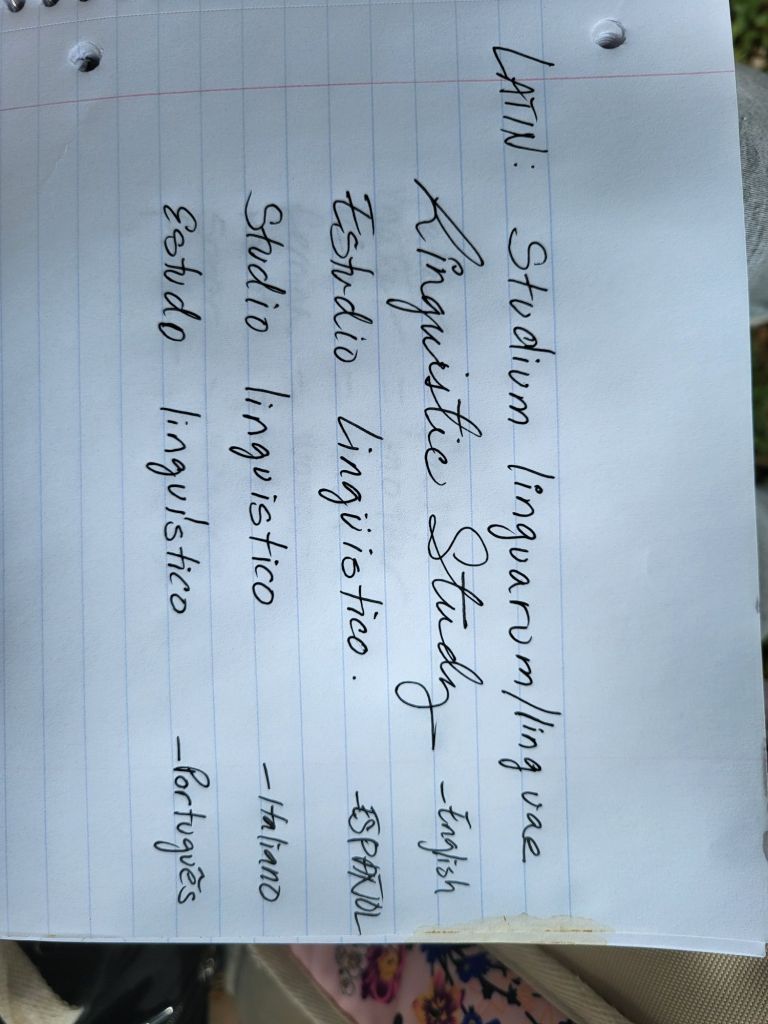
Linguistic study in Latin, English, Spanish, Portuguese, and Italian. Not about to study French any time soon.
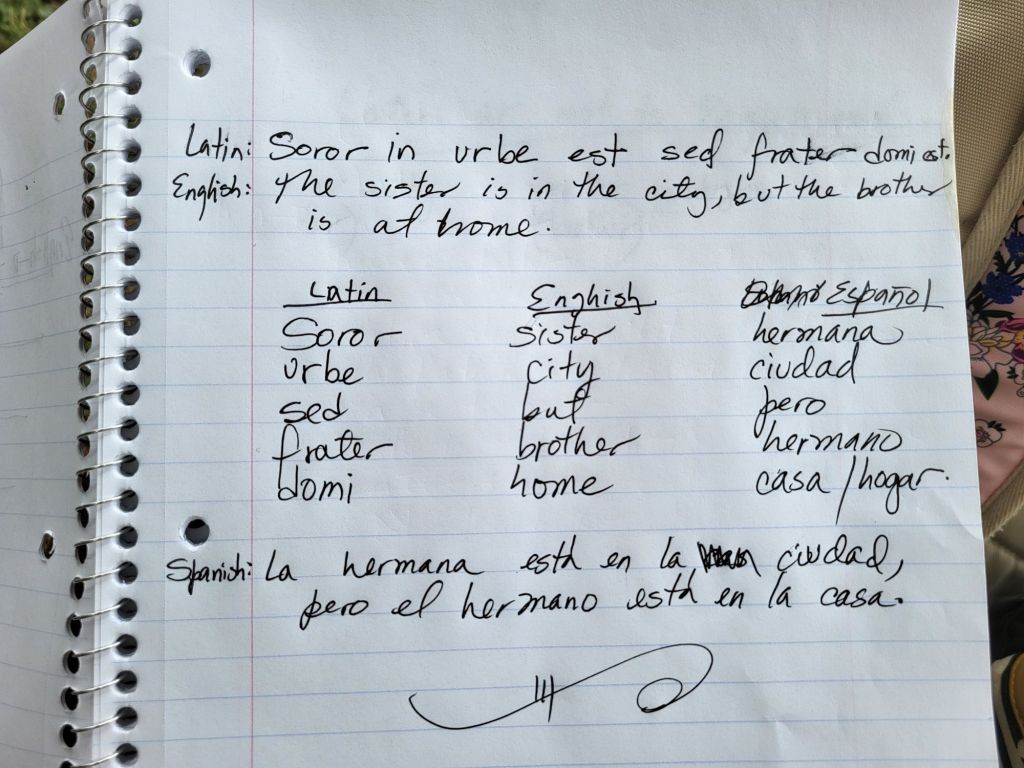
Latin to English/ Spanish sentence translation and vocabulary
Simple Latin sentences translated to Spanish and English
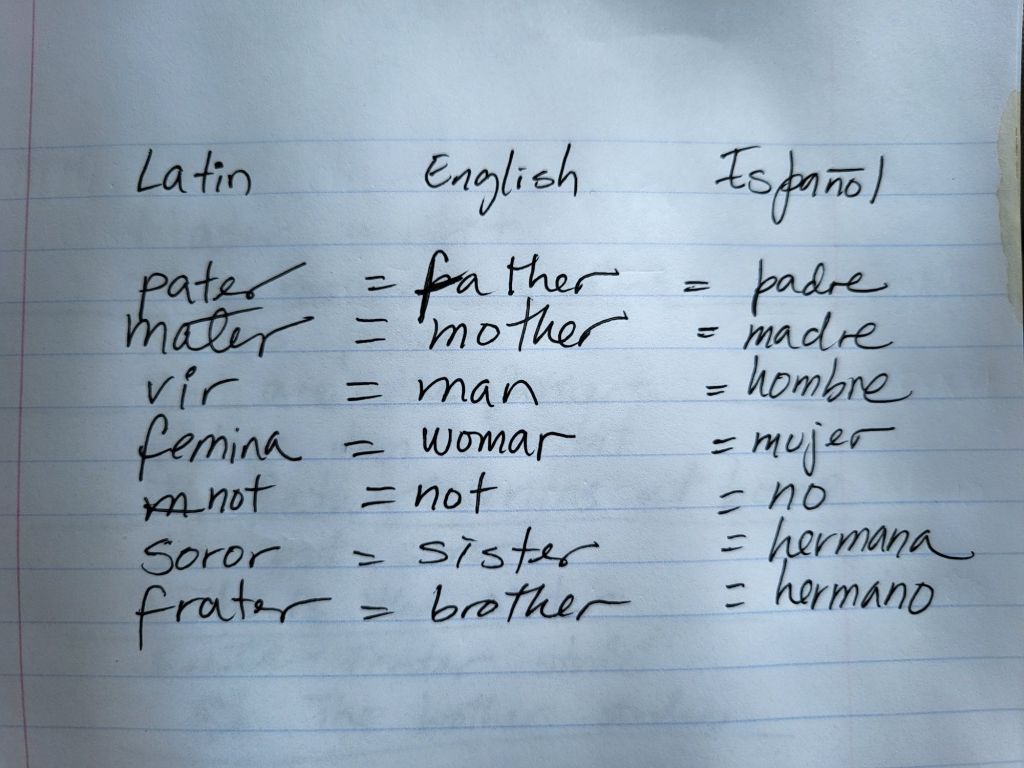
Latin – English – Spanish vocabulary

Eve

Homeschooling log: 4/14/24

The Geometry of a Heart – Symmetry

Grid Art.

What we learned is that the “perfect heart” is a symmetrical heart, and we practiced drawing symmetrical hearts.

But, we also love asymmetrical hearts.

Poetry Journal: The calligraphy

Dear Lovestar, I have been complaining about my calligraphy on this blog, which is unlikely. Not because my calligraphy is excellent but because I understand that being a beginner is the learning and growth phase. Today, I want to show you my progression in the art of calligraphy. Calligraphy Tips: I got books to learn […]

Poetry Journal: The calligraphy