The Pythia, mysterious figures of ancient lore. Not myth, though.
Did you know
There were several Pythias.
The Pythias are said to have been poetesses
The Pythia spoke in cryptic messages translated by priests
She would have been a teenager, unmarried young woman, or woman past childbearing age.
Alexander the Great and many kings visited the Pythia
The Pythia influenced state, kings, and citizens with her prophecies
Pythia’s Whisper, a poem
Pythia’s Whisper
In Delphi’s sacred shadow, she speaks, Veiled in mist of ancient dreams, A breath of earth and smoke she seeks, Where truth in whispered echoes streams.
Her voice, a tremor through the veil, Glimmers of the gods, their will, In trance she rides the hidden gale, To prophesy with fervent thrill.
The chasm breathes its mystic air, A sigh of fate, a quiver deep, She dances in the temple’s lair, Where ancient secrets softly seep.
In every riddle, cosmic dance, A glimpse of truth, both fierce and sweet, The Pythia, in fleeting trance, Unfolds the world’s concealed heartbeat.
Short version
In Delphi’s shadow, veiled in mist, She breathes the gods’ ethereal kiss, In trance, her voice through secrets weaves, Prophecies in whispered leaves.
This information is from my mind, from too much reading.
The book Alexandros (this was the Spanish name, but this is my favorite book, I’ll buy this book) of his visit to Pythia.
A philologist I follow (who is not safe for home education) speaks of her poetry.
Last night, my two older daughters and I went on a deep dive of influential women of the ancient past. It was enlightening and inspirational. I had to hopefully inspire someone else. I would love to talk more about this.
Ancient influecial women
Welcome to an exciting journey through ancient history, where we’ll discover amazing women who changed the world in Greece, Egypt, and Rome. These remarkable figures were more than just pretty faces; they were pioneers in education, the arts, and leadership. Let’s dive into their inspiring stories and explore some fun activities to learn about them!
1. Sappho: The Poetess of Lesbos
Sappho was a Greek poetess known for her beautiful and emotional poetry. Her poems celebrated love, friendship, and the beauty of the world. She was a teacher and led a school of young women who were also poets.
Activity Idea: Write Your Own Poem
Encourage your child to write a short poem about something they love. It could be about their favorite place, a beloved pet, or a special memory. Help them use descriptive words and emotions like Sappho did.
2. Cleopatra: The Wise Queen of Egypt
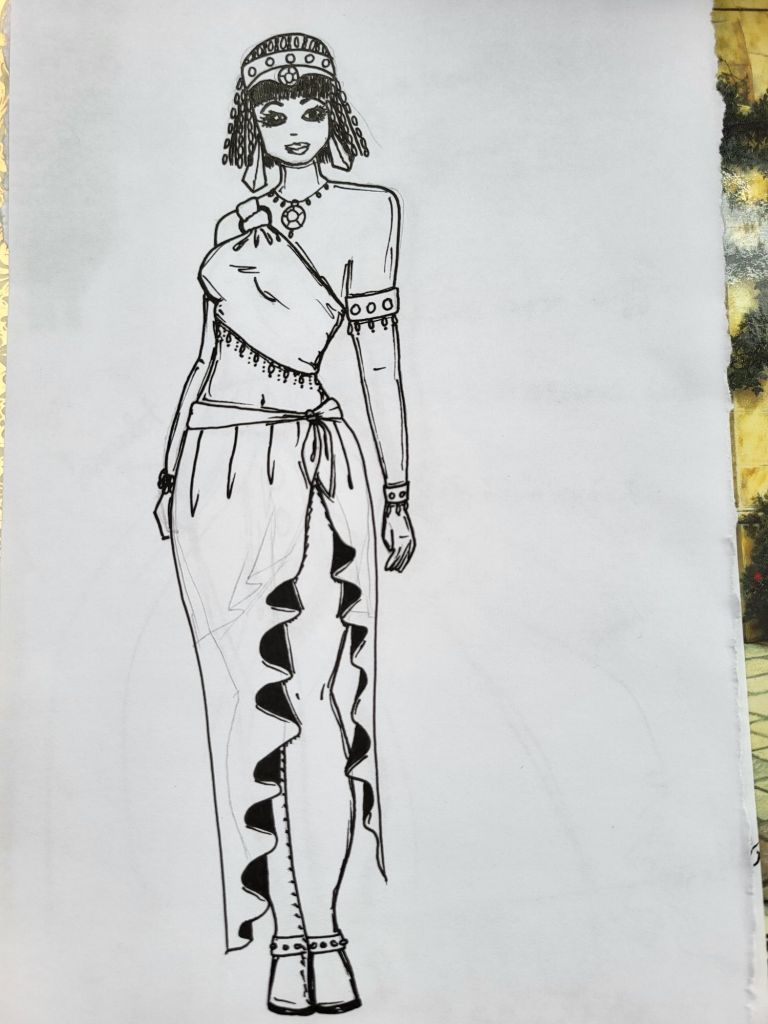
I have not finished this Cleopatra. I made this as a paper doll for a Cleopatra game that I also have yet to finish. Yes, I am a bit of a fan, of course not of her beauty or treasure, but because of the 7 languages she spoke.
Cleopatra VII was a queen of Egypt known for her intelligence and political skill. She spoke several languages and was a patron of the arts and sciences. Cleopatra worked to improve Egypt’s economy and establish strong alliances.
Activity Idea: Create a Royal Crown
Have your child design and make a royal crown using craft materials. As they create their crown, discuss how Cleopatra was a powerful leader and what qualities made her an important figure in history.
3. Hypatia of Alexandria: The Scholar
Hypatia was a Greek mathematician and philosopher in Alexandria, Egypt. She was one of the first women to teach mathematics and astronomy. Hypatia’s work helped advance scientific knowledge and she was admired for her wisdom and learning.
Activity Idea: Stargazing and Simple Astronomy
Set up a stargazing session with your child. Use a star map to identify constellations and discuss the wonders of the night sky, just as Hypatia would have.
4. Livia Drusilla: The Influential Roman Empress
Livia Drusilla was a powerful Roman empress who played a key role in the politics of Rome. She was known for her influence over her husband, Emperor Augustus, and later her son, Emperor Tiberius. Livia was also a patron of literature and the arts.
Activity Idea: Build a Roman Villa
Create a model of a Roman villa using clay or building blocks. Discuss how Livia contributed to the arts and education, and how Roman villas were centers of learning and culture.
5. Art Prompt: Ancient Influence Collage
Encourage your child to create a collage that represents the influence of these ancient women. They can draw, cut out pictures, and use other craft materials to showcase the contributions of Sappho, Cleopatra, Hypatia, and Livia.
Poem Inspired by Ancient Wisdom
Here’s a short poem to inspire young minds:
In ancient lands, where wisdom grew, Great women shone with knowledge true. With poems, crowns, and stars so bright, They taught us to reach for the light.
Sources for Further Learning
Books for Kids: Look for children’s books about ancient history and influential women, such as “Women in Science: 50 Fearless Pioneers Who Changed the World” by Rachel Ignotofsky.
Educational Websites: Explore websites like National Geographic Kids and History for Kids for fun and interactive content on ancient civilizations. My readings yesterday were off Britannica online.
Museums and Online Resources: Many museums offer virtual tours and resources about ancient history and influential figures.
These activities and stories will not only make history come alive but also inspire your child to appreciate the contributions of women throughout time. Enjoy exploring and learning together!
If you enjoyed this, let me know so I can create more content like this.

You must be logged in to post a comment.