Comet Stargazing and Home Education Log

Dear reader,

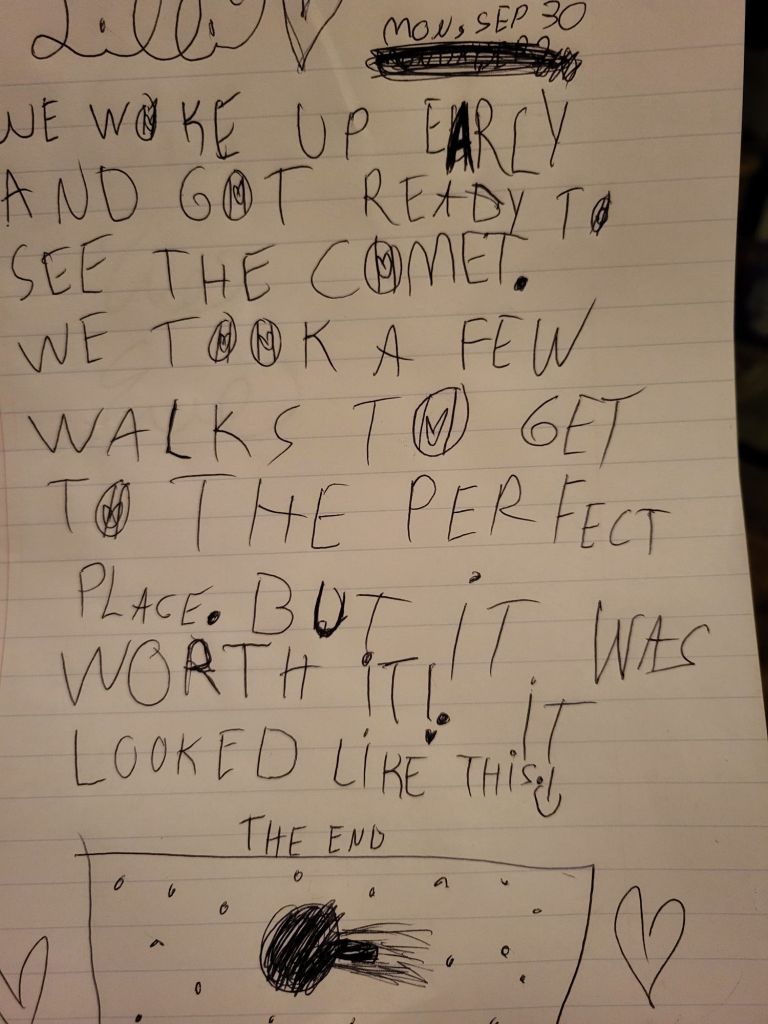
This week we woke up our kids very early and took to the darkness outside looking for the comet A3. We saw it, too. It was an amazing sight even though it only lasted a few seconds and we all saw it (except for the two toddlers).

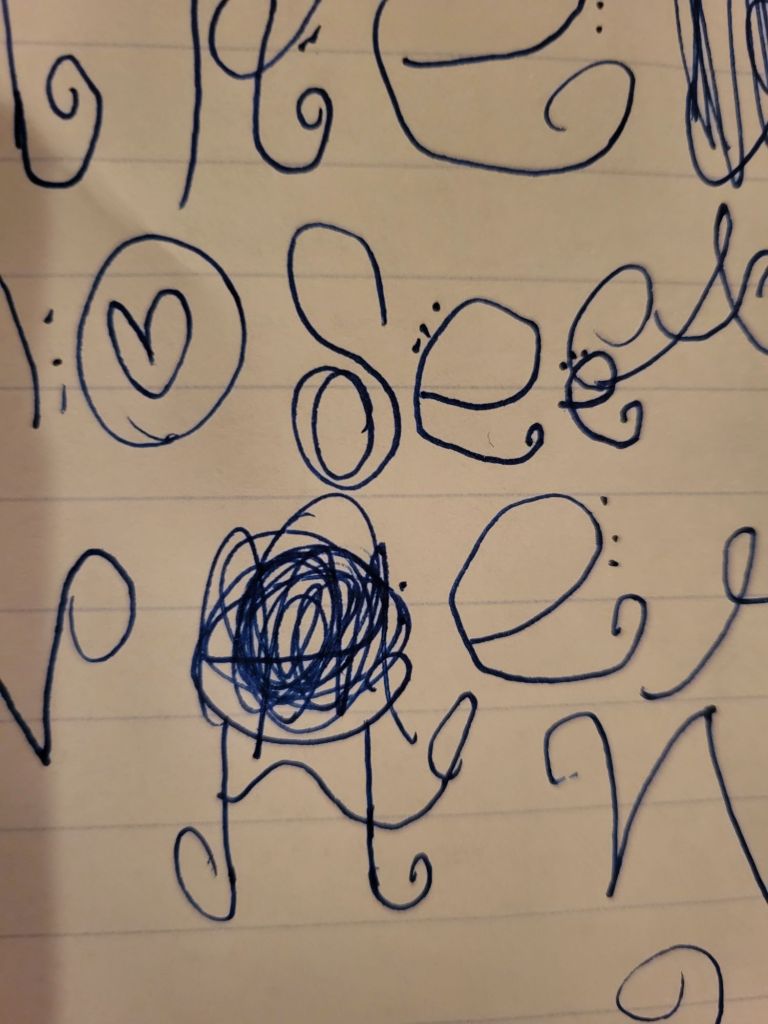
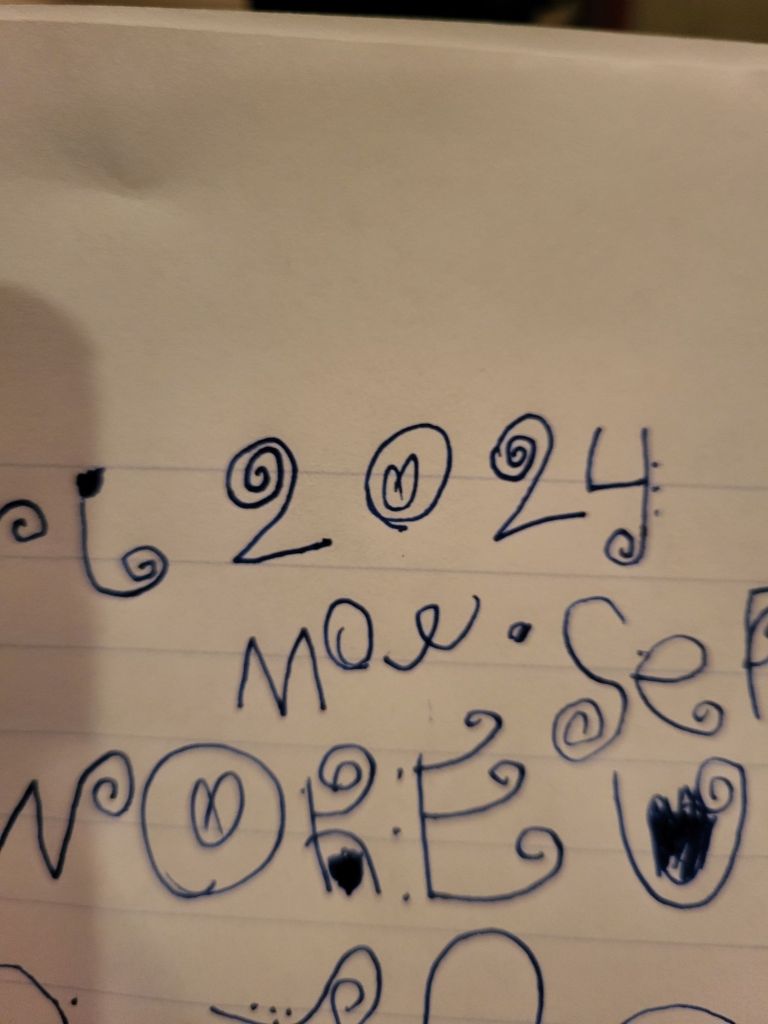
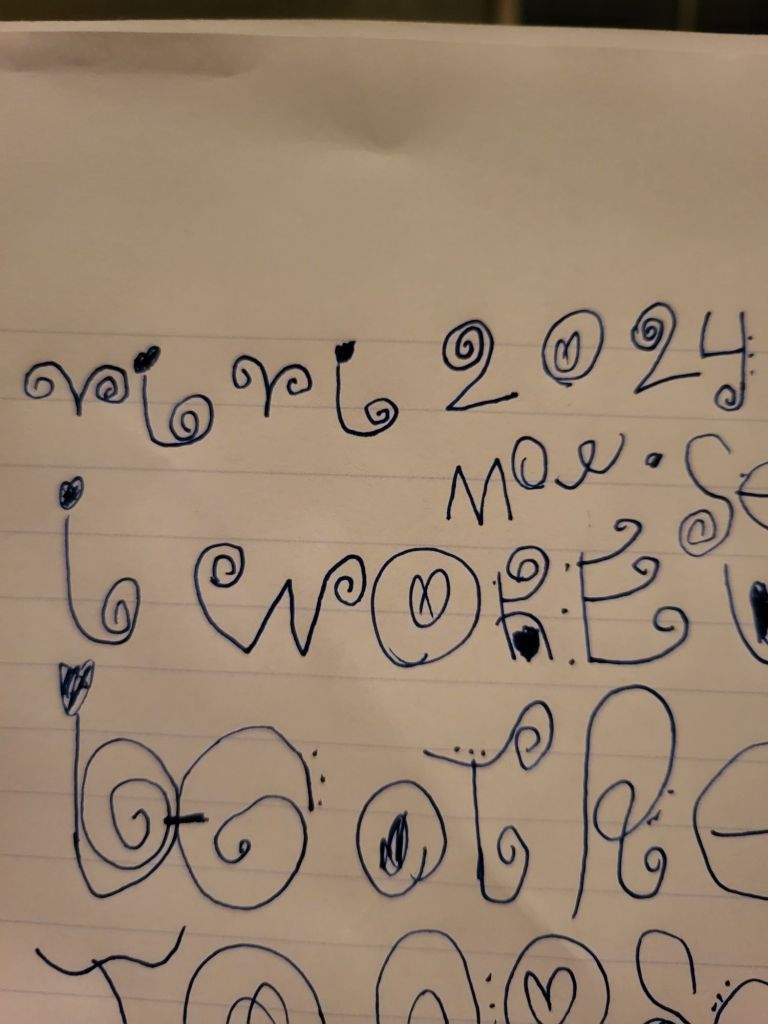
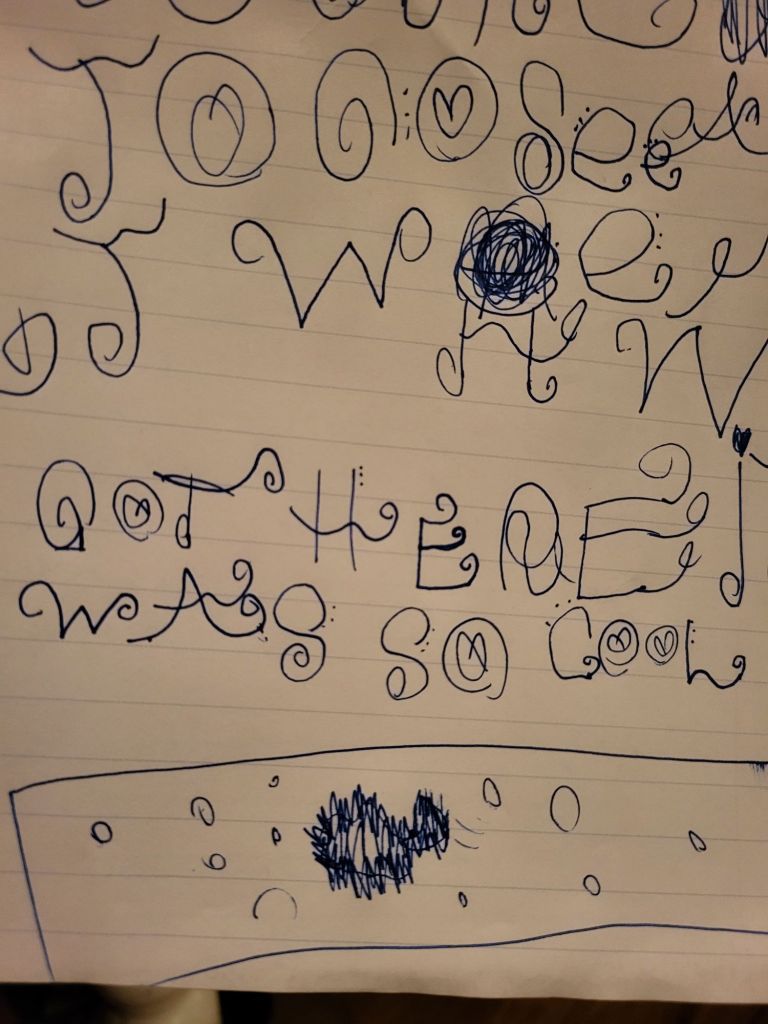
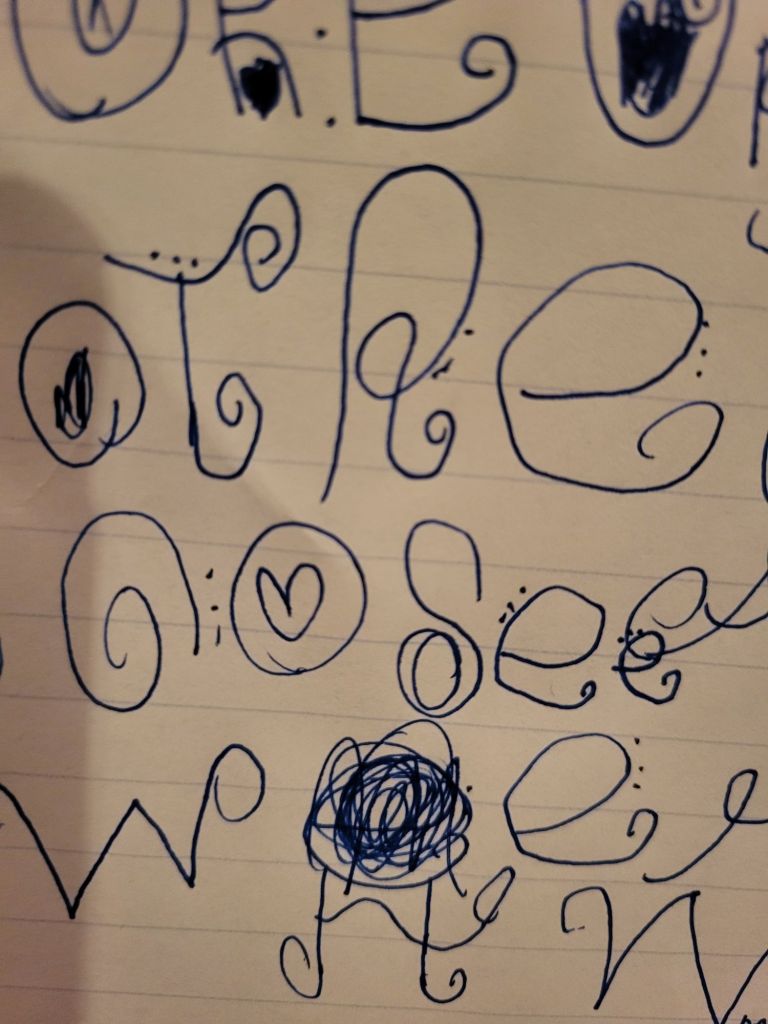
Lilli and Vivi wrote journal entries about it. Lilli, a perfect memory with 0 errors or need for improvement. Vivi in gorgeous letters. She needs to work on the legibility of her writing, but she has chosen incredibly beautiful decorated letters, which I love and I told her, I will have to copy some of her incredible letters.

My focus will be on practicing with Vivi so she can improve the legibility of her writing while keeping her wonderful letter design. I enjoyed her work so much and I was full of pride.

Lilli researched and taught us what a comet as well as a, meteor shower is, wrote this in her journal.

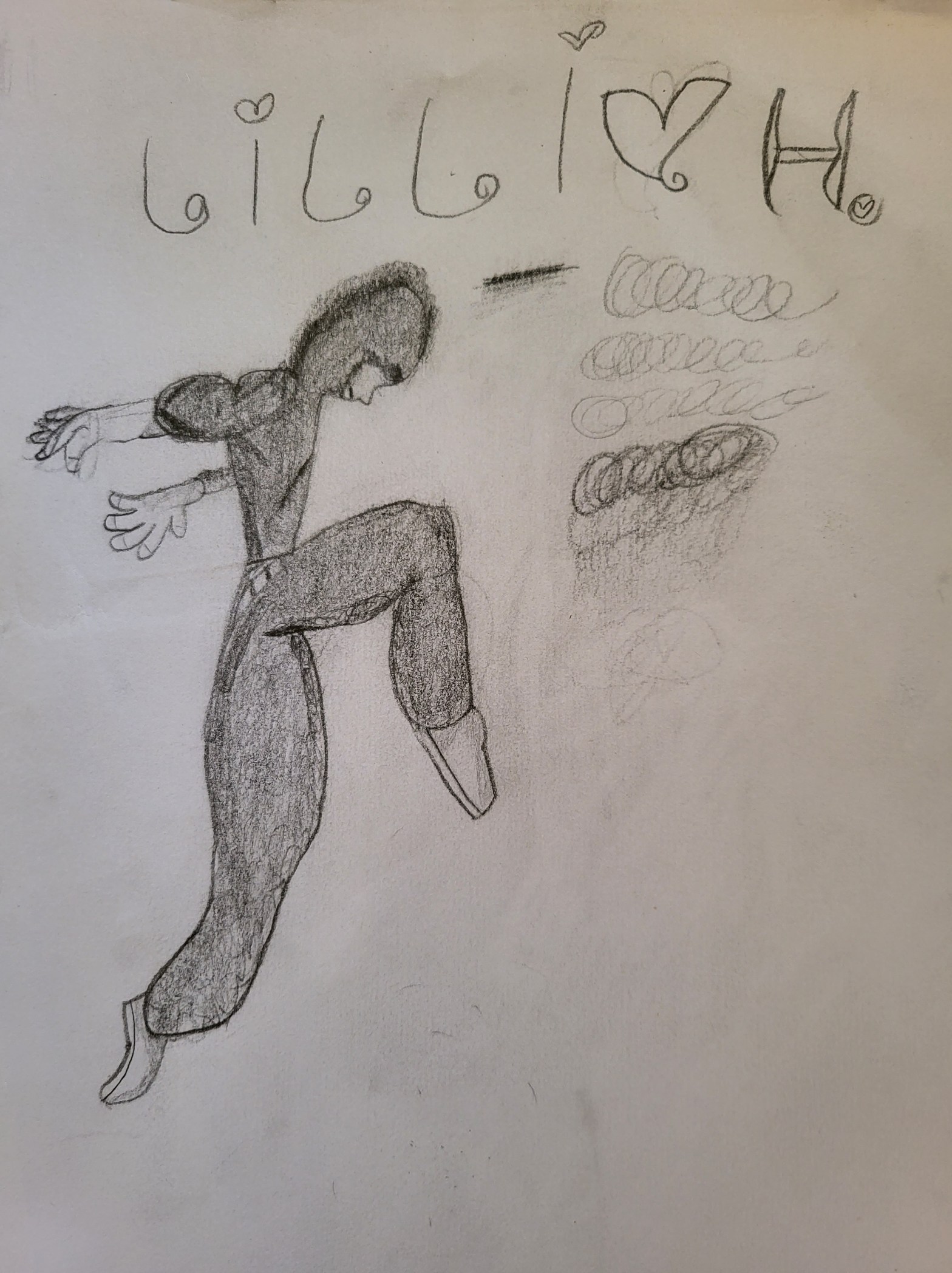
Both Lilli and Vivi drew the comet.
Home Education Log: Learning activities with our kids

This is not an entire list.

We discussed our ancestry, DNA, DNA tests related to ancestry, neanderthal DNA in humans in research, history of our families which interested and intrigued our oldest kid.

We did Halloween inspired art and crafts.
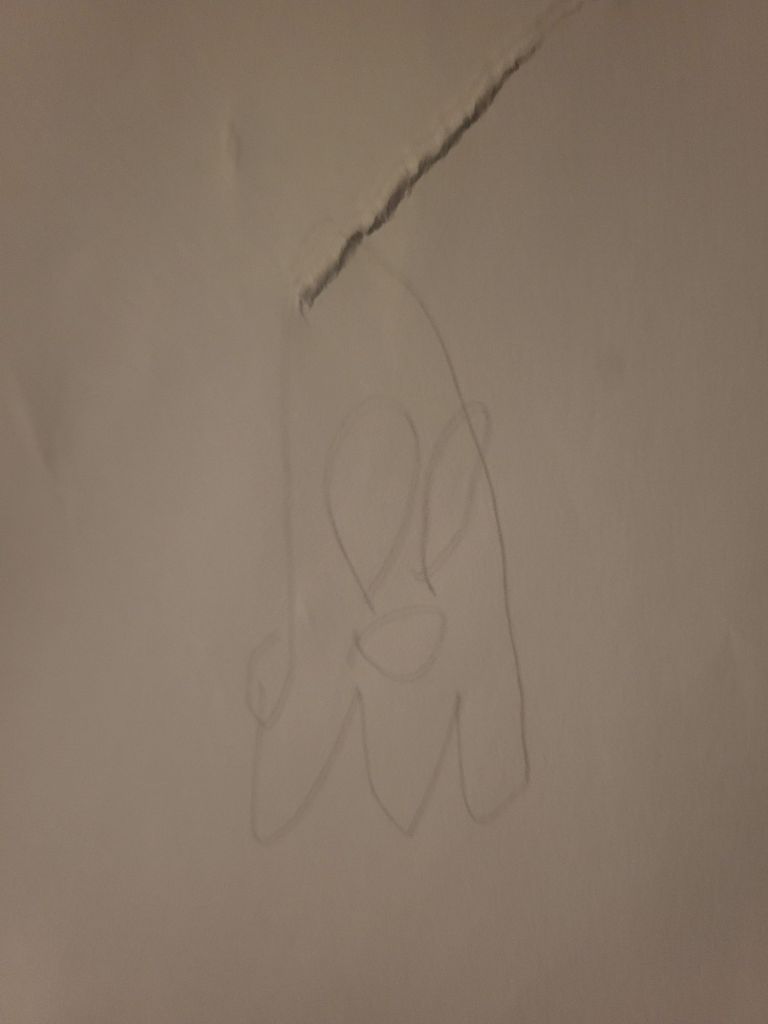
Alex drew a ghost and many more cool drawings. He was inspired by documentaries and videos we watched on the history of Halloween.

We watched documentaries about the history of Halloween, kids stories, and more on this topic.

I finished a Halloween paper doll: I love fashion illustration and I incorporate it into our art activities.
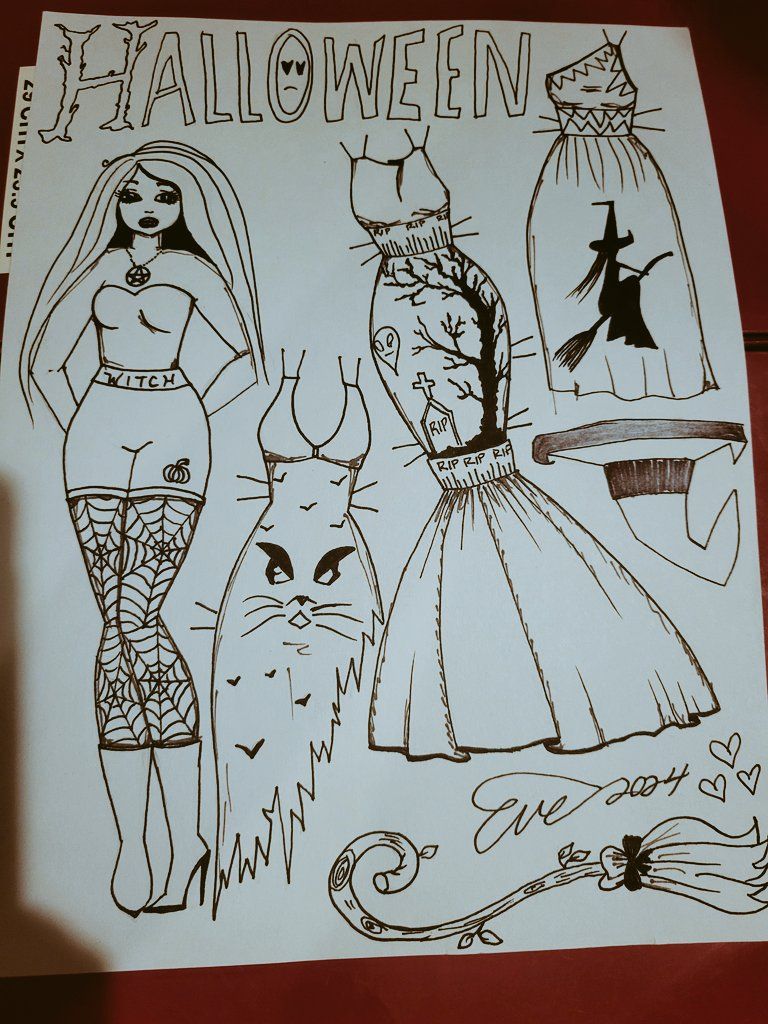
This lovely fashion witch was designed in 2014. Back then my illustration skills were beginner level, but the dress designs were gorgeous. With my new skills, I drew a new doll and copied the same exact dresses, added the witch hat and broom.

We found old art of mine and discussed my art progress at which point I took advantage and gave a speech about improving one’s skill. I allowed the kids to see my bad beginner art that I am ashamed to show today and explained how I learned to draw figures by watching experts and used that fuel to inspire them by assuring them they too will be much better in their art.

I helped the kids finish Math worksheets they did not finish during their week.

We studied the Celts, specially regarding our own Celtic roots.

Lilli and I did Math: skip counting, addition, multiplication, and division.

Vivi and I worked on addition.

The kids have been sick, so we have not been to Jiu-jitsu class. They have been playing in the yard and “working in the garden”.

The kids read children’s books.

Lizzie and I wrote a poem together (she created the story) and she did the ending in prose using many words that start with g. Then she wrote the poem by hand. Her intention was to improve her handwriting of the letter g and she succeeded, her g was beautiful after such practice. She will be choosing her next letter to work on and we will repeat this exercise.

Lilli started the new Duolingo Music course.

Lilli returned to her Duolingo Spanish course.

I created children’s songs inspired by Lilli. Lilli created pictures to go with the song. I added AI music to the songs. We sung and sung and danced.

Lizzie decided to write a song. She created a story and we will be working on turning it into a song.

Lilli, Lizzie, Vivi worked on Math, Science, Grammar, Art on Outschool.

Links

https://phys.org/news/2023-10-neanderthals-inherited-genome-now-extinct-lineage.html

https://phys.org/news/2024-09-archaeologists-ancient-neanderthal-lineage-isolated.html

And you, would you share your home education efforts with us?

With love,

Eve

Benefits of cursive and Lilli’s handwriting

Dear reader,

I was born and educated in communist Cuba and that means that I had to learn cursive handwriting.

I remember that for not connecting 2 letters on a test, a point would be removed, that is how strict that education system is. On top of that, I remember end of year notebook reviews to review the legibility and good practice of our notetaking and if we kept our notebooks neat for the entire year, we would get up to 5 additional points.

Being educated in Cuba alone was not enough for me to have legible cursive (not cute, legible, there are many levels of cursive).

However, my father was a Spanish teacher and he has amazing cursive and calligraphy. He critiziced my clumsy cursive, and I had to compete with him, he was never impressed. He was the type who would paint signs by hand.

On top of that, my childhood poet, Jose Marti, talked of handwriting. I like the old literature of the 1800s when handwriting was supreme and remember seeing lots of it.

Benefits of legible cursive writing ( my experience)

  • People assume you are more educated
  • People assume you are smart
  • People assume you are classy
  • People look at you like you are unique
  • You have better handwriting than most other people you know
  • You have a creative side, at least you can do letter art
  • You can create signs, some arts, and crafts
  • You can pivot into calligraphy which is beautiful, creative handwriting
  • You can work on legible handwriting: PS, I have earned money on my legible handwriting
  • You will probably have the best handwriting at your job and be chosen to take meeting notes
  • People will comment on your handwriting, even when you are not present
  • Some might ask you to write certain things for them
  • If you are really good, you can earn money from your calligraphy
  • People might assume you are teacher material
  • You can teach children handwriting
  • People might keep notes you wrote for them
  • Any handwriting you post online will get lots of attention because most people can’t do what you can

I have been practicing my calligraphy and I started trying digital calligraphy: It is not easy at all. But, why not: I think life is about choosing what to learn and lerning a little bit more every day.

With handwriting and calligraphy, practice is key.

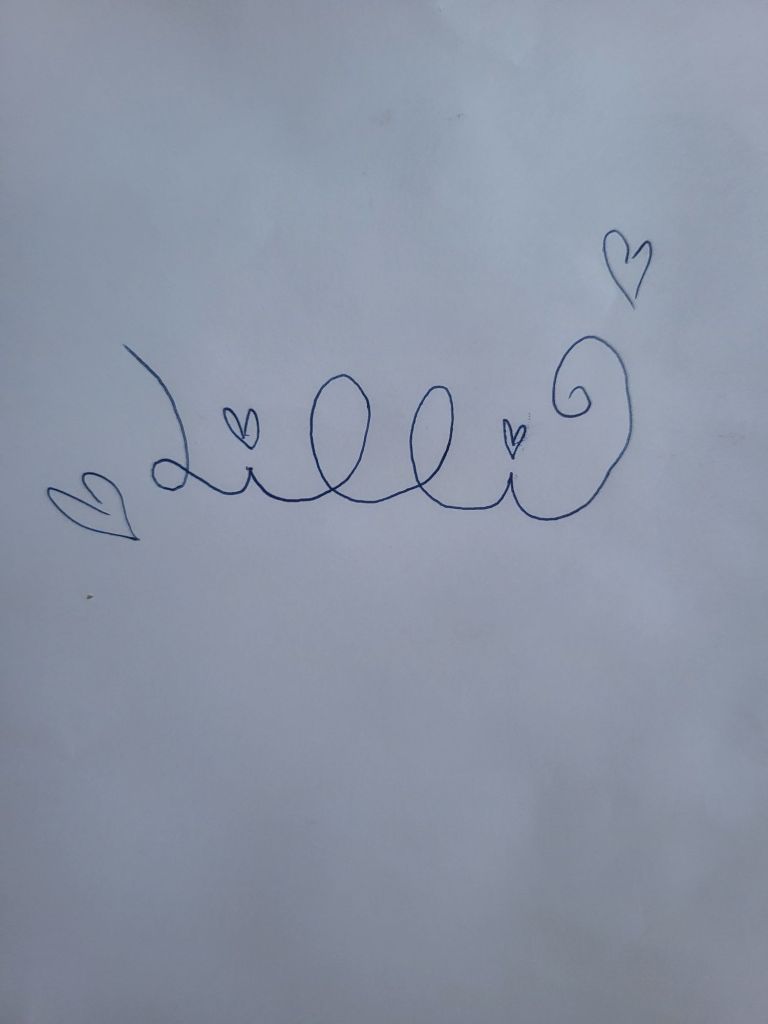
This Lilli that I worked digitally, writing with my computer mouse (though this writing is imperfect) is actually the work of a veteran with years of cursive practice. I should actually be better at it.

Regardless of my perfectionism, my goal is not perfection with my handwriting.

My handwriting goals:

  • Legibility
  • Getting better always
  • Unique letters
  • Feminine designs: swirls, hearts, dots, and fabulous flourishes
  • Artsy letters

Teaching handwriting to my kids

I do not tell my kids come and practice your handwriting for an hour. Instead, I will seat down for 2 hours and practice my own calligraphy. They will wonder what I am doing, come see over and over again, and they will decide that they can do better.

20240922_1733577841505387701653253

Lilli, my artist child (they all show artistic capability, yet Lilli calls herself an artist and seems to be the one who is more willing to be exactly like mommy (I was the same way with my mom and her crafts, not cooking).

Vivi also started decorating her letters, yet she has to work on her legibility. I keep on telling her legibility over beauty. Unless you have a secret something you are writing: I write secret notes in illegible cursive…

And just yesterday, while I worked on this publication, my oldest daughter, Lizzie came up to me to daclare she wants better handwriting. She has however, worked on her handwriting evvery time I did. Lizzie is very strong minded and chooses when she will work on what. She did not want to work on her handwriting when I started, howevver, she saw our handwriting, compared hers to ours, and naturally started writing more legible, her letters were more evenly sized, etc. Of course, now that she requested it, I am going to bring out all my efforts to give her as good a foundation as she will allow.

Samples of Lilli’s font. Her font turned out better than my font, becasue I tried to make mine complex and it was too much, Lilli’s letters also turned out more even than mine.

Thank you for reading,

Please tell us your insights about handwriting, cursive, or calligraphy,

With Love,

Eve

Duolingo Language Learning: I use it for easy home education

Dear reader,

(Spanish learning/ teaching? Scrool to the end for my fun lesson)

It is true that I love language study and learning and I love Duolingo, even though I am not happy they do not have a level two once you finish you language course. I finished my Latin course and got bored, picked up 2 more languages…

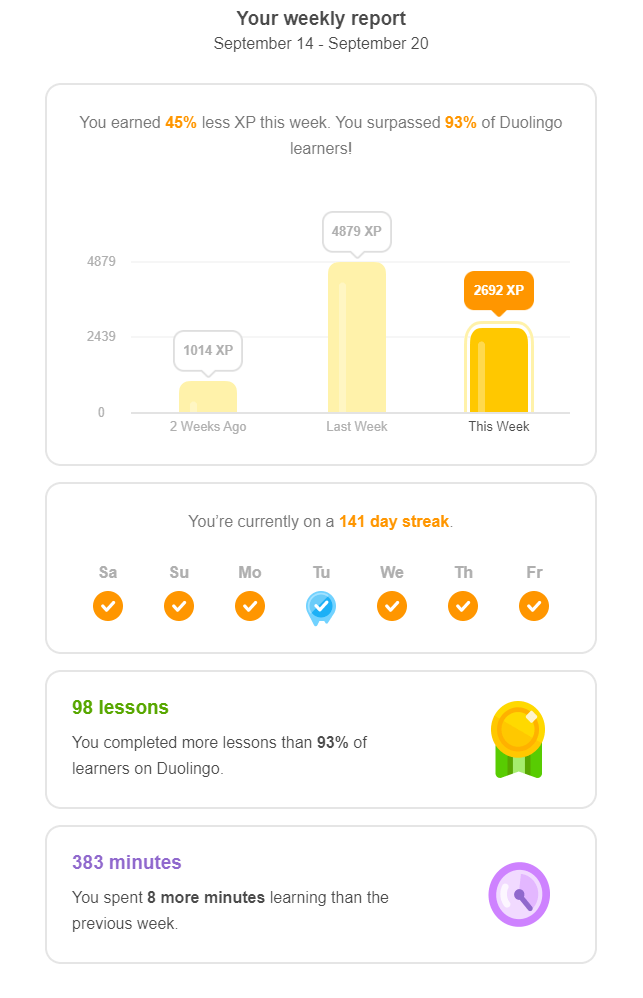
This is my Duolingo report this week:

I guess I have a need to prove I am a real person. Why?

With the modern trend of everything we find being AI, I do have a need to prove that I am a real person who really studies language and teaches her children.

Just today we did Halloween arts and crafts…

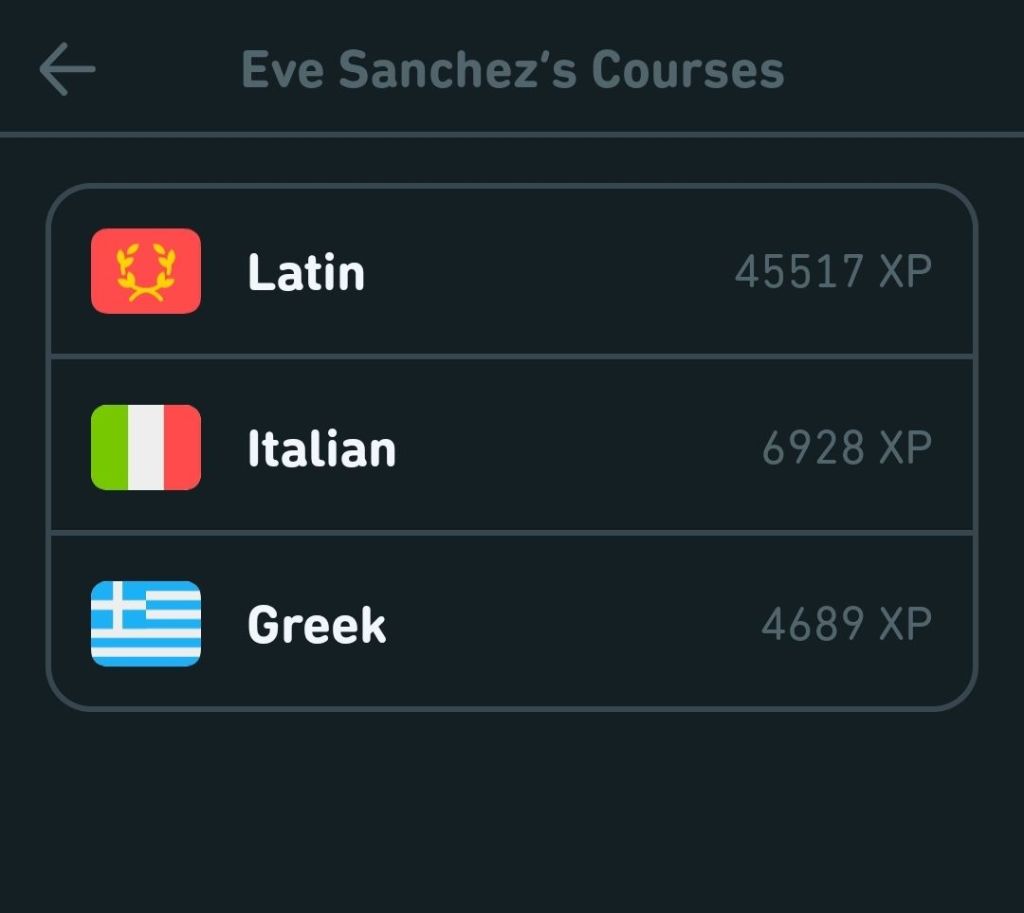
Anyway, let us connect on Duolingo if you use it, find me as Eve Sanchez.

Why Duolingo

screenshot_20240920_193751_duolingo1642364965774451837
I am currently trying to have more XP on Greek, also struggling with my Greek.

I do not need to learn a language, but I attempted to get my kids interested in Spanish, my first language, and they do not want to be told what to learn, they have their own opinions and ideas, which is really cute…

I joined Duolingo to inspire my kids to learn languages because they imitate anything I do: no pressure.

It worked because they started learning languages too. They are not organized and quit their own Duolingo, yet, Lilli does my Latin lessons at times, Vivi is learning the Greek alphabet with me, they have a Dinolingo Spanish course, Lilli took a Latin class, Lilli and I have Latin jokes, Alex does the Greek lessons with me and repeats the Greek words, Lilli and Vivi took Spanish classes: it worked, but my inspiration effort is ongoing.

Part of my effort is to have them observe my own learning, as well as to experience my learning methods which are varied and colorful, on top of that to expose them to different languages: music in Spanish and Italian; Italian, Latin, Greek words, phrases, and entire videos or podcasts being broadcasted in our house; and more.

And you,

Are you learning or teaching a language? Which? Do you have tips?

Do you listen to music in your target language?

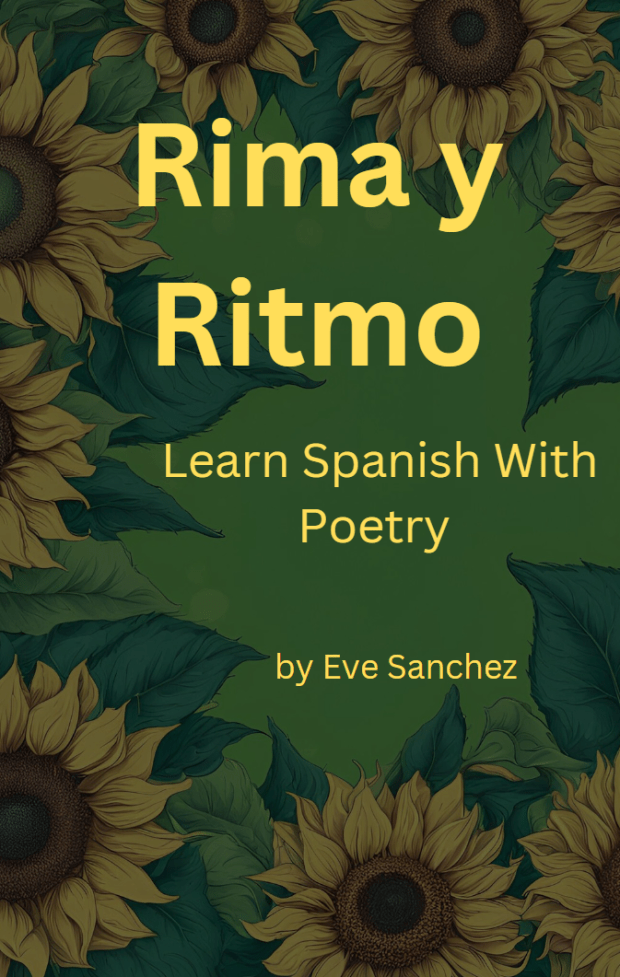
Learning Spanish?

Check out my cool Spanish with poetry clas:

Purchase the class through this link which includes a children’s printable workbook, a test, and more:

https://payhip.com/b/NLMdU

But first, take the free lesson on this blog:

With love,

Eve

Understanding Home Education: Exploring the Misconceptions and Realities

Dear reader,

I home educate my 5 children, and today I will expose some of the misconceptions and realities of homeschooling.

Home education, often referred to as homeschooling, is a practice that has gained considerable attention and popularity in recent years. While it offers flexibility and personalized learning experiences, it is also surrounded by numerous misconceptions that shape public perception. In this article, we delve into the intricacies of home education, shedding light on both the myths and the realities.

Misconception 1: Limited Socialization Opportunities

One of the most common misconceptions about home education is that it isolates children from their peers, leading to inadequate socialization. However, contrary to this belief, homeschooling allows for diverse social interactions. Families engage in community activities, co-ops, sports teams, and extracurricular classes, fostering meaningful relationships with peers of different ages and backgrounds.

Misconception 2: Lower Academic Standards

Critics often argue that homeschooling lacks rigorous academic standards compared to traditional schooling. Yet, many homeschooling families follow structured curricula aligned with national or state educational standards. Furthermore, the personalized nature of home education enables tailored approaches to learning, often resulting in academic achievements that surpass those of traditional school settings.

Misconception 3: Parental Qualifications and Time Commitment

There is a misconception that parents who homeschool must be highly educated or have teaching credentials. While some states or countries have specific requirements, many jurisdictions do not mandate formal qualifications for parents. Moreover, homeschooling families can leverage a variety of resources, including online courses and community support, to supplement their teaching efforts.

Reality 1: Customized Learning Experiences

One of the greatest strengths of home education lies in its ability to cater to the individual needs and interests of each child. Parents can adapt teaching methods and curriculum to accommodate different learning styles, allowing students to progress at their own pace and explore subjects in depth.

Reality 2: Flexibility in Scheduling and Curriculum

Unlike traditional schooling, homeschooling offers flexibility in scheduling. Families can structure their days to optimize learning based on individual rhythms and interests. Furthermore, they have the freedom to choose curricula that align with their educational goals, religious beliefs, or philosophical convictions.

Reality 3: Positive Outcomes and Success Stories

Research indicates that homeschooled students often excel academically and socially. They typically perform above average on standardized tests and exhibit high levels of self-esteem and motivation. Many colleges and universities actively recruit homeschool graduates for their diverse backgrounds and strong academic preparation.

Conclusion

In conclusion, home education is a viable educational alternative that continues to grow in popularity worldwide. While misconceptions persist regarding socialization, academic standards, and parental qualifications, the reality reveals a dynamic and enriching educational experience. By understanding and appreciating the complexities of homeschooling, we can foster informed discussions and support for families who choose this path for their children’s education.

Through ongoing research and dialogue, we can continue to explore ways to enhance educational options and outcomes for all students, whether they learn in traditional classrooms or at home.

Is home education something that interests you?

Do you or have you home educated?

Tips for learning a second language

Dear reader,

I speak two languages, and I’m learning 3 new languages right now. My study of these three new languages will be for life.

I’m going to offer tips that helped me learn English, which is my second language, and I will be using these tips to learn my three new languages (Latin, Ancient Greek, and Italian).

Tips for learning a second language

Here’s a list of effective tips for learning a second language:

1. **Immerse Yourself**: Surround yourself with the language as much as possible through media, conversations, and cultural activities.

2. **Practice Regularly**: Consistency is key. Practice speaking, listening, reading, and writing every day.

3. **Start with the Basics**: Master the fundamentals of grammar, vocabulary, and pronunciation early on.

4. **Set Realistic Goals**: Break down your learning into achievable milestones to stay motivated.

5. **Use Language Learning Apps**: Apps like Duolingo can provide structured lessons and practice.

6. **Find a Language Partner**: Practice speaking with native speakers or fellow learners to improve fluency and confidence. Or follow native speakers on YouTube, Twitter, etc.

7. **Listen and Repeat**: Mimic native speakers to improve your accent and intonation.

8. **Learn from Context**: Understand phrases and expressions within their cultural and situational context.

9. **Keep a Vocabulary Notebook**: Write down new words and review them regularly.

10. **Watch Movies and TV Shows, listen to music**: Listen to dialogue and immerse yourself in the language.

11. **Read Books and Articles**: Start with simpler texts and gradually move to more complex ones.

12. **Join Language Classes or Groups**: Formal classes or online communities can provide structure and support.

13. **Travel to a Country Where the Language Is Spoken**: Immerse yourself in the culture and practice speaking with locals.

14. **Don’t Be Afraid to Make Mistakes**: Learning from errors is an essential part of the language acquisition process.

15. **Stay Motivated**: Remind yourself why you want to learn the language and celebrate your progress along the way.

By incorporating these tips into your language learning routine, you can enhance your skills and proficiency more effectively.

Which ones have you used?

Which ones are most helpful?


Which languages do you speak or are learning?

Eve

Empowering Parents: The Case for Homeschooling

Dear reader,

Let’s discuss the benefits of home education focusing on specific research that is promising.

My daughter Lilli is very proud of this art she learned to create on Outschool, our tutoring service of choice

In recent years, the landscape of education has evolved dramatically, with an increasing number of families opting for homeschooling as an alternative to traditional schooling. This shift is driven by various factors, including the desire for greater parental involvement in a child’s education and the flexibility to tailor learning experiences to individual needs. As debates continue on the effectiveness of homeschooling, several studies highlight compelling reasons why empowering parents with more control over their children’s education can be beneficial.

**1. Personalized Learning**

One of the primary advantages of homeschooling is the ability to customize the educational experience to suit the unique learning style and pace of each child. Research by Dr. Brian Ray, founder of the National Home Education Research Institute (NHERI), suggests that personalized instruction leads to better academic outcomes and higher levels of student engagement. Parents can adapt curriculum materials, teaching methods, and schedules to match their child’s strengths, interests, and developmental stage, fostering a more effective learning environment.

**2. Stronger Family Bonds**

Homeschooling often strengthens familial relationships by providing more opportunities for meaningful interaction and shared learning experiences. A study published in the Journal of Research in Childhood Education found that homeschooling families reported closer parent-child relationships and increased communication compared to families with children in traditional schools. The collaborative nature of homeschooling encourages parents to actively participate in their child’s intellectual and emotional growth, creating a supportive and nurturing environment.

**3. Enhanced Academic Performance**

Contrary to misconceptions, research indicates that homeschooled students perform well academically and excel in standardized tests. According to a longitudinal study by Dr. Lawrence Rudner, homeschool students consistently scored above the national average on standardized achievement tests across all subjects and grade levels. This academic success is attributed to individualized attention, focused instruction, and the ability to explore subjects in greater depth based on the child’s interests and abilities.

**4. Flexible Learning Opportunities**

Homeschooling offers flexibility in terms of curriculum, scheduling, and learning environments. Parents can incorporate real-world experiences, field trips, and hands-on activities into daily lessons, enhancing practical skills and critical thinking abilities. This flexibility also accommodates diverse family lifestyles, such as travel, religious observances, or accommodating special needs, ensuring that education remains accessible and relevant to each child’s circumstances.

**5. Socialization and Community Engagement**

Concerns about socialization are often raised regarding homeschooling, but studies show that homeschooled children actively participate in community activities, sports, and social groups. Research published in the Peabody Journal of Education found that homeschool students develop strong interpersonal skills, exhibit higher levels of self-esteem, and engage positively with peers and adults in various settings. Additionally, digital platforms and homeschool co-ops provide opportunities for collaborative learning and social interaction, fostering a well-rounded educational experience.

**Conclusion**

As the landscape of education continues to evolve, homeschooling emerges as a viable option for families seeking greater autonomy and control over their children’s educational journey. Empowered by research and supported by educational resources, parents can effectively tailor learning experiences that promote academic excellence, foster strong family bonds, and nurture holistic development. While homeschooling requires commitment, dedication, and ongoing support, its potential to empower parents and enrich children’s lives remains a compelling argument in favor of parental control over education.

Do you have any interest in home education?

Eve