Spanish Reading & Coloring – Poesía Infantil del poeta bilingüe Profe Steve y páginas para colorear

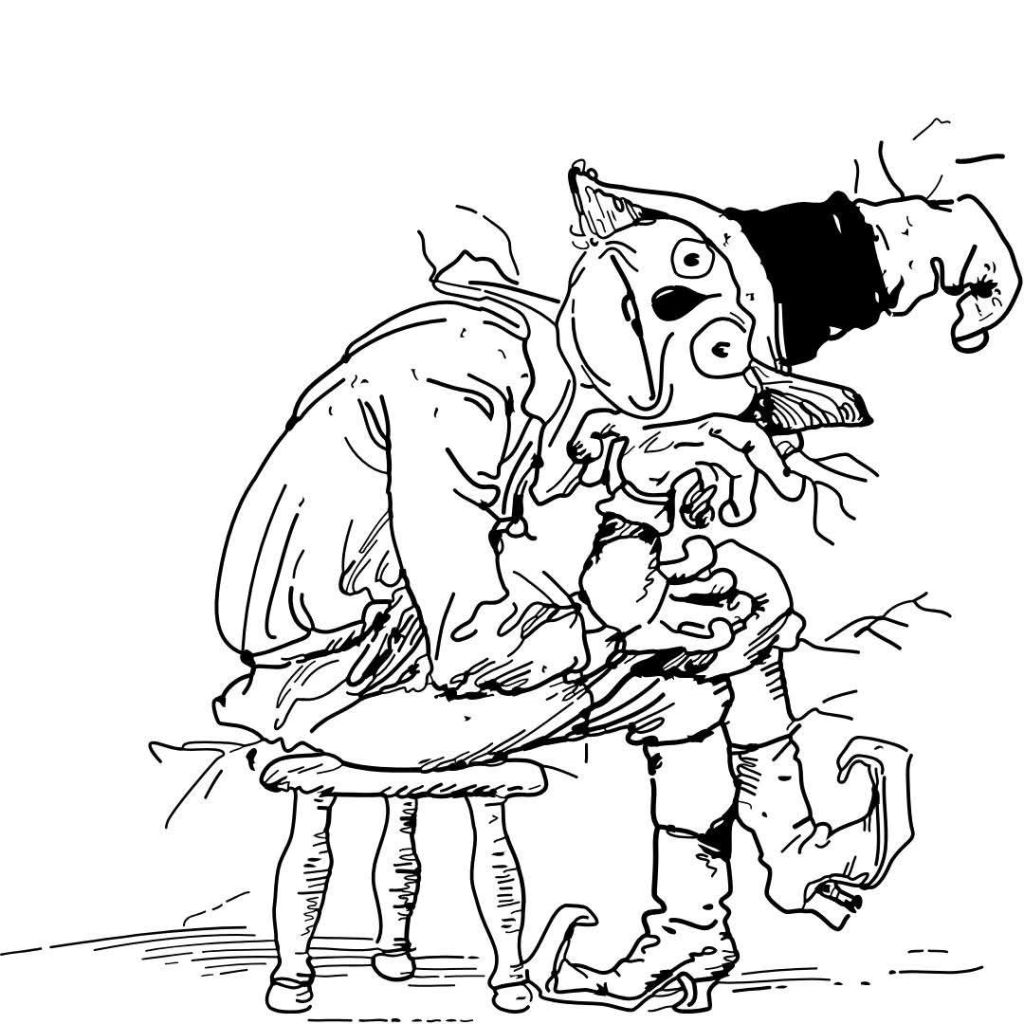
Coloring page used for the poem – página para colorear del poema

Dear reader, I use coloring pages to trick my kids into reading poetry, and it works. I have been doing this for a few months, and now I have inspired a bilingual poet to do the same. In this post, I share 2 of his Spanish poems.

Queridos lectores, uso las páginas para colorear para conseguir que mis niños lean poesía. A ellos les gusta y siempre leen el poema al menos dos veces. Agora he inspirado a un poeta bilingüe a hacer lo mismo y aquí conparto dos de sus poemas infantiles.
Página para colorear usada por Steve en su poema – coloring page used by Steve for his poem below.

Poema “El Espantapájaros” de Profe Steve (poeta bilingüe) bájalo mediante el enlace y comparte con niños para que coloreen.

https://www.facebook.com/share/165j2FnR21/

Poema Mi Reina del poeta Profe Steve

Poesía para Colorear

https://www.facebook.com/share/1E96sBnc4o/

Follow this poet. He will inspire, and you will upgrade your language skillsinfantile. In English and Spanish

Poetry by Profe Steve, find him on X through this link:

https://twitter.com/ProfeSteve1701?t=QDWfyFdXeoGZcY3Tx0XOTw&s=09

English

Dear parent of a child who is bilingual or studying Spanish, help your child read and introduce them to Spanish poetry with these amazing children poems with coloring pages.

I tried this trick with my kids, and they love it, and they read the poems at least twice when on a coloring page.

More children poetry and coloring pages in our Facebook group. However, this group is not for children content. It’s a poetry group where we share all kinds of poetry, including children poems.

Spanish

Querido padre de un niño bilingüe o que estudia Español, ayuda a tu niño a descubrir la poesía en Español con estas páginas para colorear. Imprímelas y compártelas con todos los niños que conozcas.

Gracias por compartir la poesía e inspirar a las futuras generaciones.

Más poesía infantil y páginas para colorear en el grupo de poesía de Facebook Alma Poeta, pero el grupo no es de contenido infantil, es un grupo de poesía donde todo tema está incluído, incluso la poesía infantil.

Eve
Spanish Reading & Coloring – Poesía Infantil del poeta bilingüe Profe Steve y páginas para colorear

Coloring page used for the poem – página para colorear del poema

Dear reader, I use coloring pages to trick my kids into reading poetry, and it works. I have been doing this for a few months, and now I have inspired a bilingual poet to do the same. In this post, I share 2 of his Spanish poems.

Queridos lectores, uso las páginas para colorear para conseguir que mis niños lean poesía. A ellos les gusta y siempre leen el poema al menos dos veces. Agora he inspirado a un poeta bilingüe a hacer lo mismo y aquí conparto dos de sus poemas infantiles.

Página para colorear usada por Steve en su poema – coloring page used by Steve for his poem below.

Poema “El Espantapájaros” de Profe Steve (poeta bilingüe) bájalo mediante el enlace y comparte con niños para que coloreen.

https://www.facebook.com/share/165j2FnR21/

Poema Mi Reina del poeta Profe Steve

Poesía para Colorear

https://www.facebook.com/share/1E96sBnc4o/

Follow this poet. He will inspire, and you will upgrade your language skillsinfantile. In English and Spanish

Poetry by Profe Steve, find him on X through this link:

https://twitter.com/ProfeSteve1701?t=QDWfyFdXeoGZcY3Tx0XOTw&s=09

English

Dear parent of a child who is bilingual or studying Spanish, help your child read and introduce them to Spanish poetry with these amazing children poems with coloring pages.

I tried this trick with my kids, and they love it, and they read the poems at least twice when on a coloring page.

More children poetry and coloring pages in our Facebook group. However, this group is not for children content. It’s a poetry group where we share all kinds of poetry, including children poems.

Spanish

Querido padre de un niño bilingüe o que estudia Español, ayuda a tu niño a descubrir la poesía en Español con estas páginas para colorear. Imprímelas y compártelas con todos los niños que conozcas.

Gracias por compartir la poesía e inspirar a las futuras generaciones.

Más poesía infantil y páginas para colorear en el grupo de poesía de Facebook Alma Poeta, pero el grupo no es de contenido infantil, es un grupo de poesía donde todo tema está incluído, incluso la poesía infantil.

Eve
Sonatina – Poema de Rubén Darío – Spanish literature

La princesa está triste... ¿qué  tendrá la princesa? 
Los suspiros se escapan de su boca de fresa,
Que ha perdido la risa, que ha perdido el color
La princesa está pálida en su silla de oro,
Está mudo el teclado de su clave sonoro;
Y en un vaso olvidada se desmaya una flor.

El jardín puebla el triunfo de los pavos-reales.
Parlanchina, la dueña dice cosas banales,
Y, vestido de rojo piruetea el bufón.
La princesa no ríe, la princesa no siente;
La princesa persigue por el cielo de Oriente
La libélula vaga de una vaga ilusión.

¿Piensa acaso en el príncipe de Golconda ó de China,
Ó en el que ha detenido su carroza argentina
Para ver de sus ojos la dulzura de luz?
Ó en el rey de las Islas de las Rosas fragantes,
Ó en el que es soberano de los claros diamantes,
Ó en el dueño orgulloso de las perlas de Ormuz?

¡Ay! la pobre princesa de la boca de rosa,
Quiere ser golondrina, quiere ser mariposa,
Tener alas ligeras, bajo el cielo volar,
Ir al sol por la escala luminosa de un rayo,
Saludar á los lirios con los versos de Mayo,
Ó perderse en el viento sobre el trueno del mar.

Ya no quiere el palacio, ni la rueca de plata,
Ni el halcón encantado, ni el bufón escarlata,
Ni los cisnes unánimes en el lago de azur.
Y están tristes las flores por la flor de la corte;
Los jazmines de Oriente, los nelumbos del Norte,
De Occidente las dalias y las rosas del Sur.

¡Pobrecita princesa de los ojos azules!
Está presa en sus oros, está presa en sus tules,
En la jaula de mármol del palacio real;
El palacio soberbio que vigilan los guardas,
Que custodian cien negros con sus cien alabardas,
Un lebrel que no duerme y un dragón colosal.

iOh quién fuera hipsipila que dejó la crisálida!
(La princesa está triste. La princesa está pálida)
¡Oh visión adorada de oro, rosa y marfil!
¡Quién volara á la tierra donde un príncipe existe
(La princesa está pálida. La princesa está triste)
Más brillante que el alba, mas hermoso que Abril!

Calla, calla, princesa, — dice el hada madrina —
En caballo con alas, hacia acá se encamina,
En el cinto la espada y en la mano el azor,
El feliz caballero que te adora sin verte,
Y que llega de lejos, vencedor de la Muerte,
Á encenderte los labios con su beso de amor!

Poema de Rubén Darío

Regresa para mas poemas hispanos clásicos

Eve

Spanish lesson 1. Rima y Ritmo: Poetry with a native poet (1)

Dear reader,

Edit: My children loved the class and printable worksheet and requested more classes like this. Follow for the next classes coming up in the same fun but in-depth manner.

I have been pitching the idea everywhere that poetry is an excellent tool for language learning as reading materials. And now I will prove by creating the most creative Spanish lesson ever.

The full lesson, including a printable worksheet and test for children is available if you need additional help with this material:

Here’s why poetry is amazing for language learning:

Culture

Deep learning through complexity of poetry

Fun content that is memorable

Rhyming and rhythm helps with memorization

Spanish: 1st level. Lesson 1

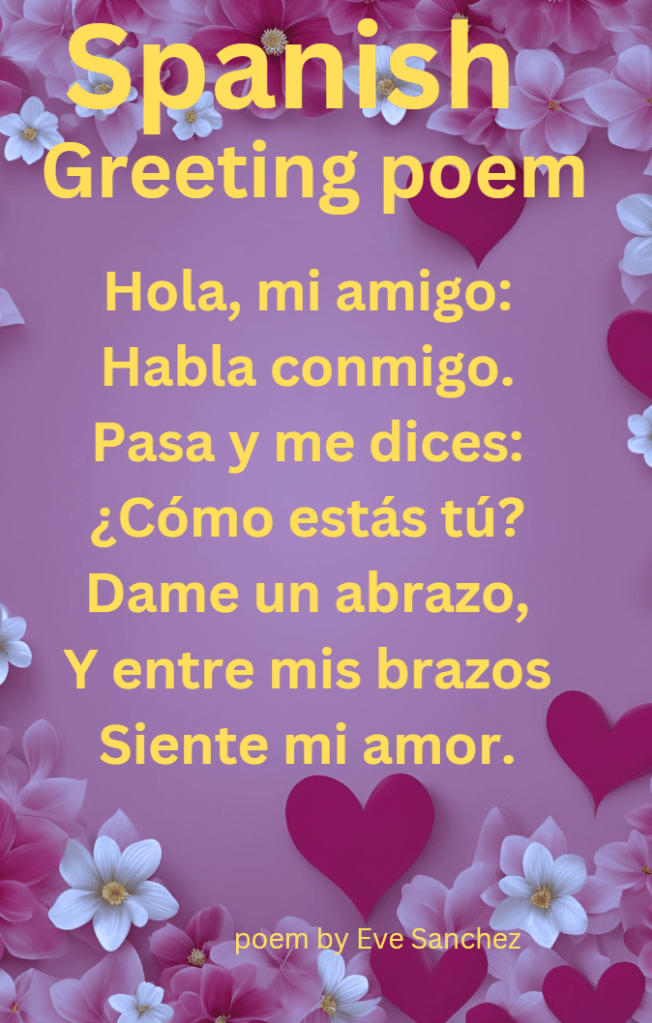
Hola mi amigo (Hello my friend) poem by Eve. Read further, and I’ll explain every word and phrase.

This poem is appropriate for a level 1 learning. It uses simple language and common phrases, making it accessible for beginners. This is a little more intense than the usual level 1 dialog, but it is also much more memorable, and I bet you can engage with this content more than with the usual language class dialog.

The main points for teaching are:

  • Basic Vocabulary: The words and expressions are straightforward and familiar, suitable for early learners.
  • Simple Sentence Structure: The poem’s structure is uncomplicated, which helps learners grasp basic sentence formation and concepts.
  • Easy to memorize: I do not attempt to memorize vocabulary anymore. That is the “boring” learning style that many of us reject. I like to engage with the reading content. However, poetry is naturally easier to memorize than prose or conversations. You will find yourself remembering without trying, especially if you do it with fun in mind and without judging your learning speed.

Lesson Plan. Feel free to use this for personal use/ homeschooling

(For more learning, I’m collecting all this into an ebook, return, and you will see additional lesson posts totally free)

If you’re a teacher and wish to use this material, let me know.

Welcome to my unique language lesson, where we explore the beauty of poetry as a tool for learning. Poetry is more than just a form of artistic expression; it’s a gateway to deep emotional understanding and linguistic mastery. By delving into poetry, you’ll not only enhance your language skills but also gain insight into the cultural and emotional nuances of Spanish.

Why poetry? It offers a fun and engaging way to learn, transforming the study of vocabulary and grammar into a creative and immersive experience. Poetry often includes complex structures and rich imagery, which challenges learners to think critically and understand the language on a deeper level. Many native speakers might not fully grasp the subtleties of poetry, but by engaging with it, you’ll achieve a profound and sophisticated understanding of the language.

In this class, we’ll use carefully selected poems to guide our learning journey. You’ll explore themes, emotions, and linguistic intricacies that will elevate your understanding of the language. Let’s embark on this poetic adventure together and discover the power of language through the art of verse.

Poem translation

Hello my friend,
Talk to me,
Come in, and tell me,
How are you?
Give me a hug
And between my arms
Feel my love.

Continue reading “Spanish lesson 1. Rima y Ritmo: Poetry with a native poet (1)”

Poemas de José Martí. Lo más bello escrito por el hombre

Queries lector, Hoy te presento mi poesía favorita, la poesía de José Martí el poeta Cubano (1953 – 1995). Yo soy Cubana, Martí es un ídolo para mi y mi primera influencia poética (gracias a mi papá, un maestro de Español cubano) Cultivo una rosa blancaEn Julio como en eneroPara el amigo sinceroQue me da […]

Poemas de José Martí. Lo más bello escrito por el hombre

If you are searching for reading materials in Spanish that are beautiful and deep, look no further than the poetry of José Martí.

In my Spanish blog, I just shared one of his best poems with a translation for your understanding and study.

Poetry is great for language study because you don’t have to understand every word to get the message.

With love,

Eve