Benefits of cursive and Lilli’s handwriting

Dear reader,

I was born and educated in communist Cuba and that means that I had to learn cursive handwriting.

I remember that for not connecting 2 letters on a test, a point would be removed, that is how strict that education system is. On top of that, I remember end of year notebook reviews to review the legibility and good practice of our notetaking and if we kept our notebooks neat for the entire year, we would get up to 5 additional points.

Being educated in Cuba alone was not enough for me to have legible cursive (not cute, legible, there are many levels of cursive).

However, my father was a Spanish teacher and he has amazing cursive and calligraphy. He critiziced my clumsy cursive, and I had to compete with him, he was never impressed. He was the type who would paint signs by hand.

On top of that, my childhood poet, Jose Marti, talked of handwriting. I like the old literature of the 1800s when handwriting was supreme and remember seeing lots of it.

Benefits of legible cursive writing ( my experience)

  • People assume you are more educated
  • People assume you are smart
  • People assume you are classy
  • People look at you like you are unique
  • You have better handwriting than most other people you know
  • You have a creative side, at least you can do letter art
  • You can create signs, some arts, and crafts
  • You can pivot into calligraphy which is beautiful, creative handwriting
  • You can work on legible handwriting: PS, I have earned money on my legible handwriting
  • You will probably have the best handwriting at your job and be chosen to take meeting notes
  • People will comment on your handwriting, even when you are not present
  • Some might ask you to write certain things for them
  • If you are really good, you can earn money from your calligraphy
  • People might assume you are teacher material
  • You can teach children handwriting
  • People might keep notes you wrote for them
  • Any handwriting you post online will get lots of attention because most people can’t do what you can

I have been practicing my calligraphy and I started trying digital calligraphy: It is not easy at all. But, why not: I think life is about choosing what to learn and lerning a little bit more every day.
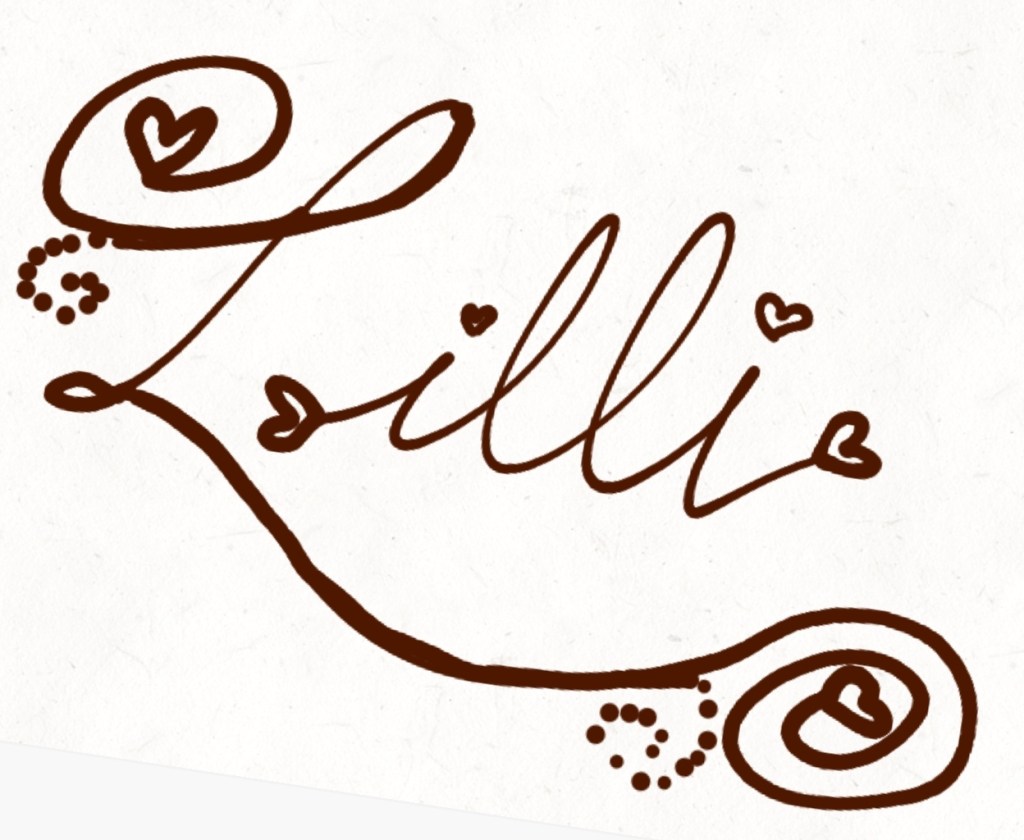
With handwriting and calligraphy, practice is key.

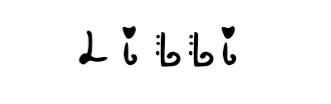
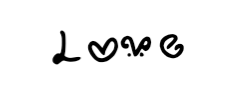
This Lilli that I worked digitally, writing with my computer mouse (though this writing is imperfect) is actually the work of a veteran with years of cursive practice. I should actually be better at it.

Regardless of my perfectionism, my goal is not perfection with my handwriting.

My handwriting goals:

  • Legibility
  • Getting better always
  • Unique letters
  • Feminine designs: swirls, hearts, dots, and fabulous flourishes
  • Artsy letters

Teaching handwriting to my kids

I do not tell my kids come and practice your handwriting for an hour. Instead, I will seat down for 2 hours and practice my own calligraphy. They will wonder what I am doing, come see over and over again, and they will decide that they can do better.
20240922_1733577841505387701653253

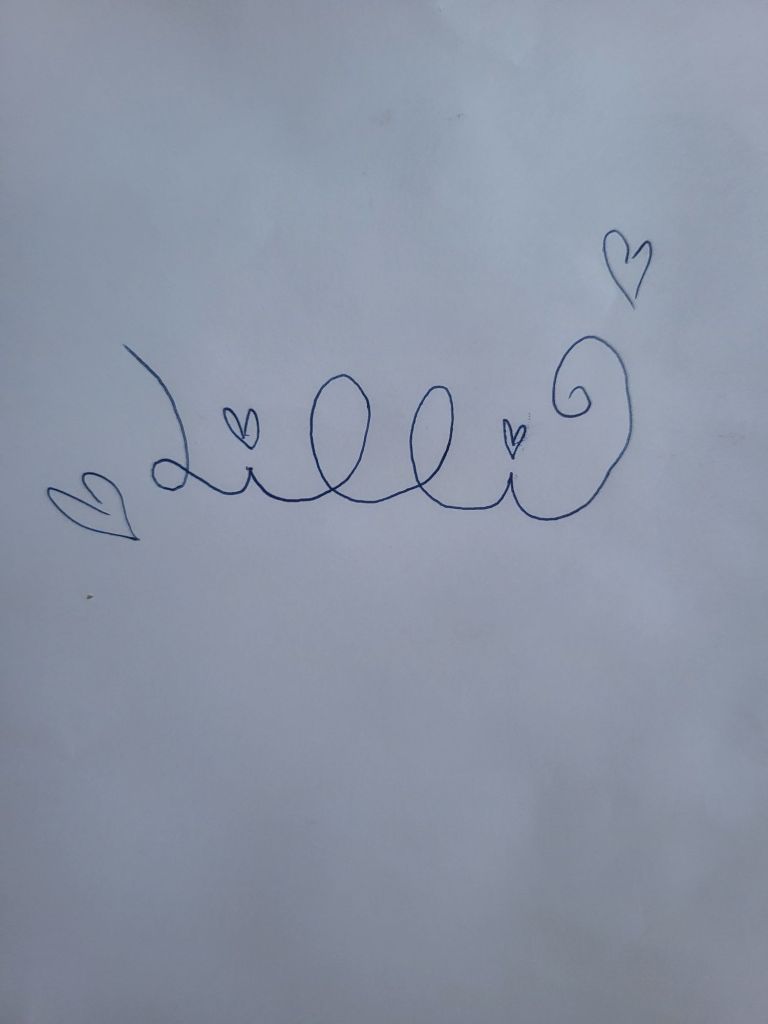
Lilli, my artist child (they all show artistic capability, yet Lilli calls herself an artist and seems to be the one who is more willing to be exactly like mommy (I was the same way with my mom and her crafts, not cooking).

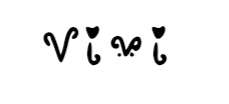
Vivi also started decorating her letters, yet she has to work on her legibility. I keep on telling her legibility over beauty. Unless you have a secret something you are writing: I write secret notes in illegible cursive…

And just yesterday, while I worked on this publication, my oldest daughter, Lizzie came up to me to daclare she wants better handwriting. She has however, worked on her handwriting evvery time I did. Lizzie is very strong minded and chooses when she will work on what. She did not want to work on her handwriting when I started, howevver, she saw our handwriting, compared hers to ours, and naturally started writing more legible, her letters were more evenly sized, etc. Of course, now that she requested it, I am going to bring out all my efforts to give her as good a foundation as she will allow.

Samples of Lilli’s font. Her font turned out better than my font, becasue I tried to make mine complex and it was too much, Lilli’s letters also turned out more even than mine.
Thank you for reading,

Please tell us your insights about handwriting, cursive, or calligraphy,

With Love,

Eve
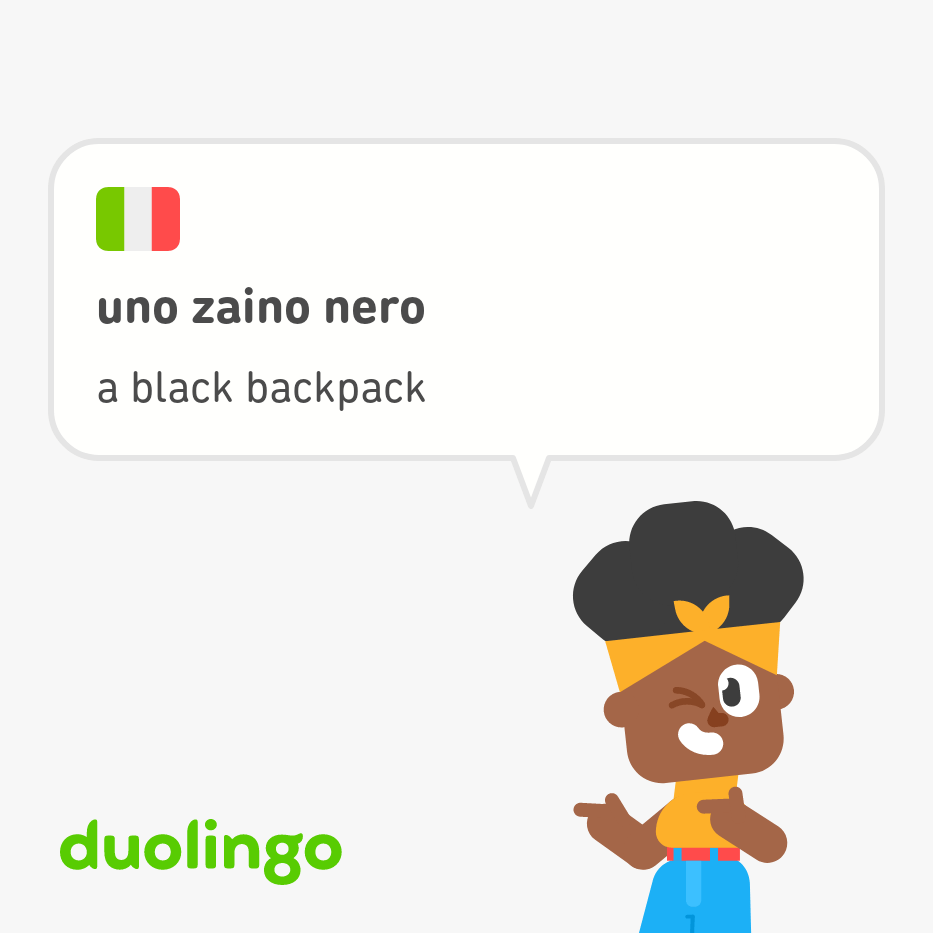
Learning Italian with Music: Phrases I understood

Dear reader,

(If you are learning/ teaching Spanish, scroll all the way to the end of this post for my Spanish lesson)

Learning a foreign language by listening to music is both enjoyable and effective. By regularly exposing your ears to the sounds and rhythms of the language, you train yourself to recognize its unique patterns. Start by focusing on familiar words and phrases—this helps you connect the lyrics to meanings you already know. As you listen, you’ll naturally pick up new vocabulary, and recognizing recurring phrases can build your fluency. Music also helps with pronunciation and intonation, as you hear native speakers or singers using the language in a fluid, natural way. Repeating this process deepens your understanding and brings the language to life in a fun and engaging way.

17268870436756450260713478198

Note: I already knew a little, tiny bit of Italian when I started this, also Spanish is my first language:

Continue reading “Learning Italian with Music: Phrases I understood”

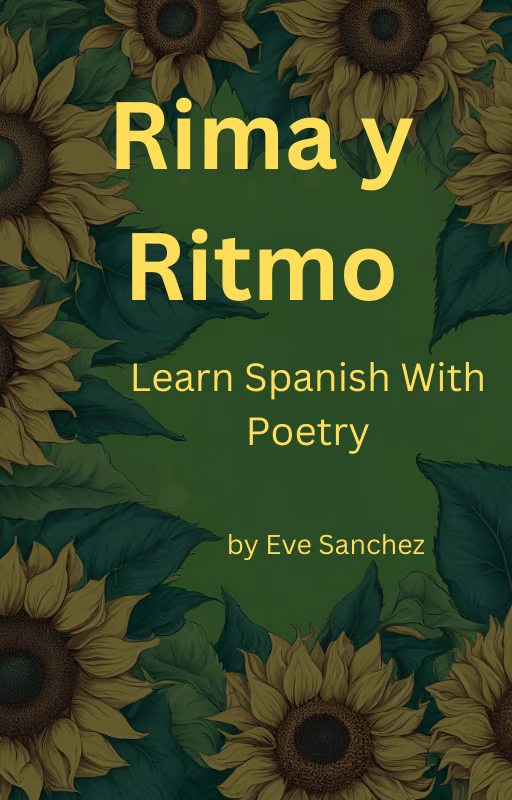
Learn Spanish: Rima y Ritmo: Greeting Poem Printables and test for children

Dear Reader,

The free Spanish lesson plan is on this blog through this link:

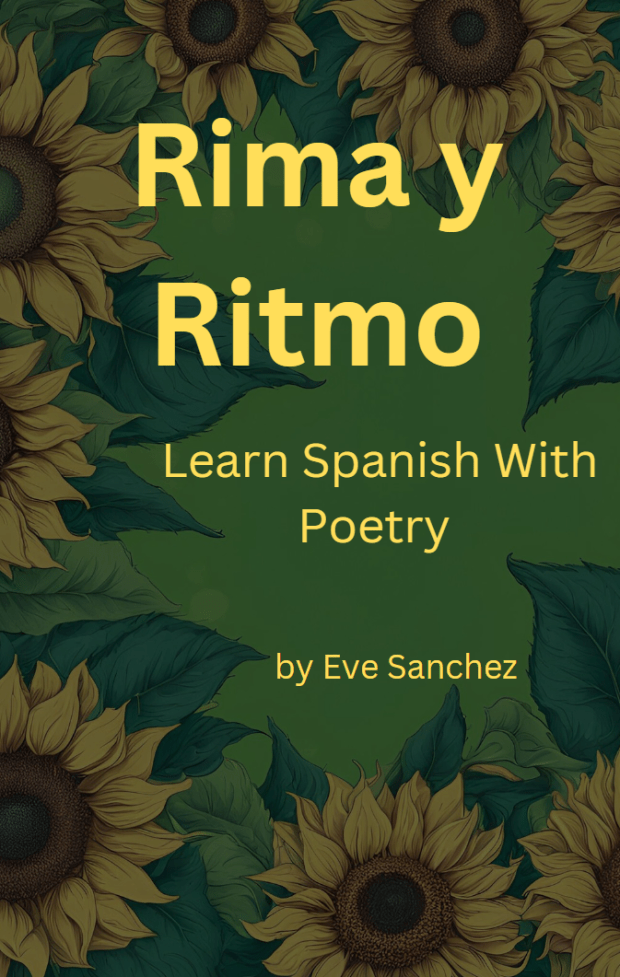
Purchase the ebook through this link:

https://payhip.com/b/NLMdU: Learn Spanish: Rima y Ritmo: Greeting Poem Printables and test for children

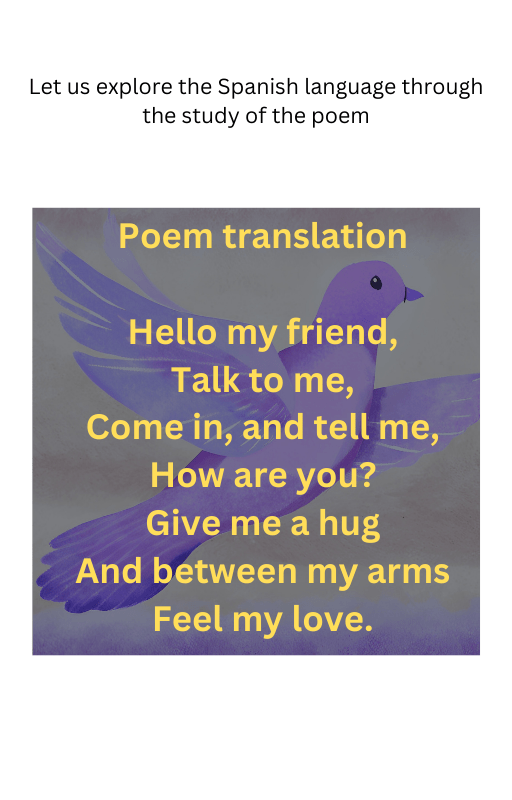
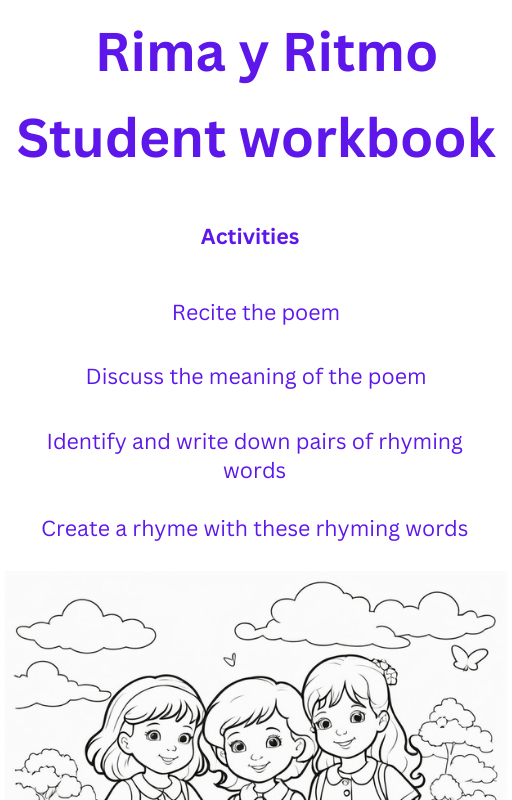
Rima y Ritmo is my cool Spanish class where I use poetry to teach my kids my native language. I already taught this lesson to my children, and they loved it. I am currently designing lesson 2: the poem is about a butterfly.

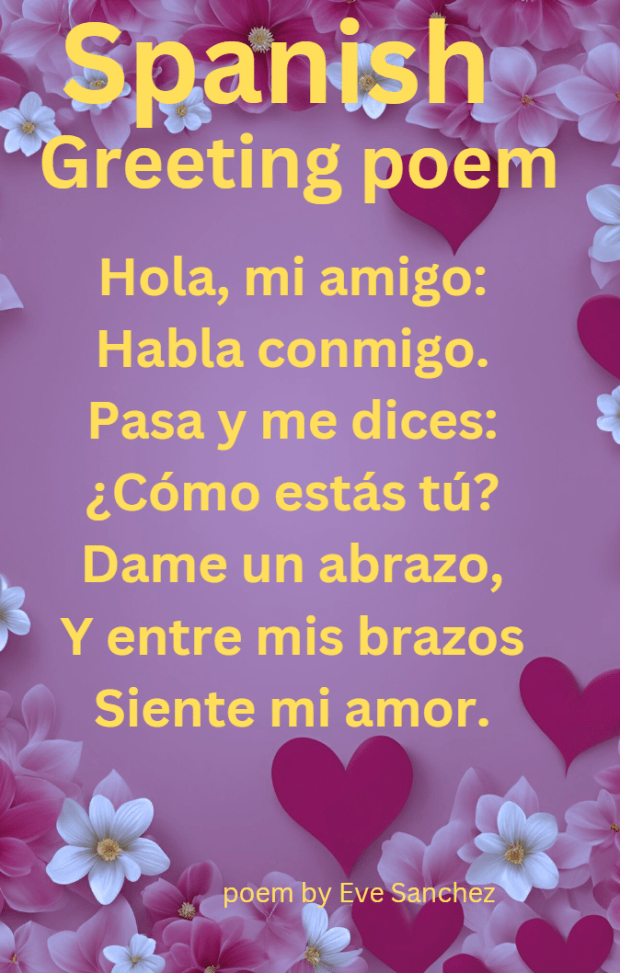
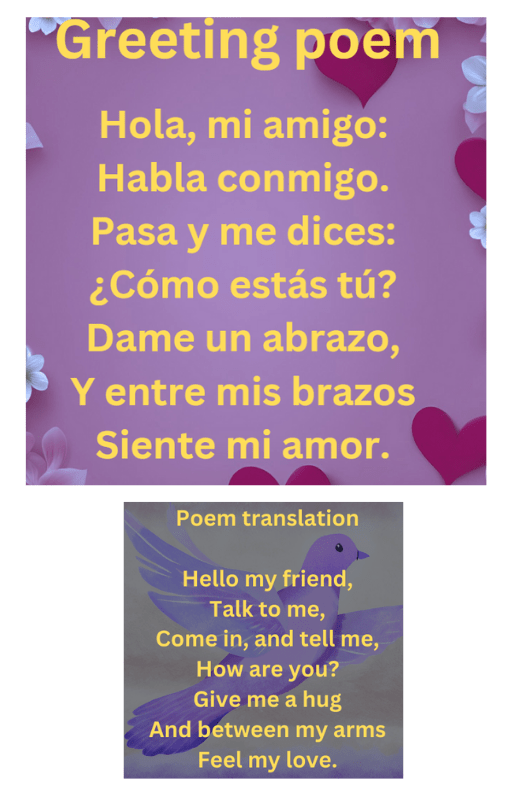
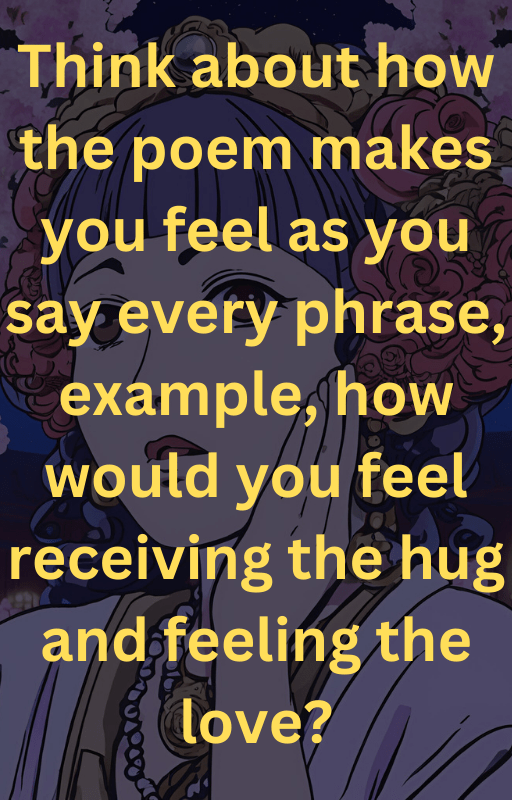
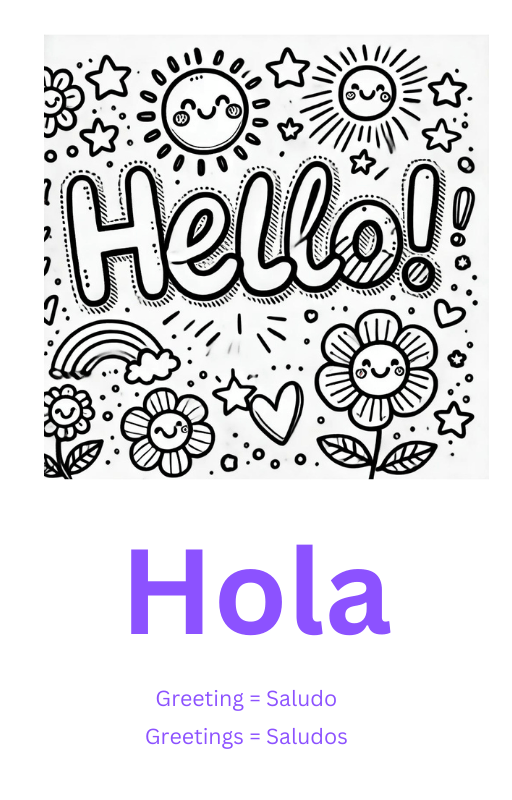
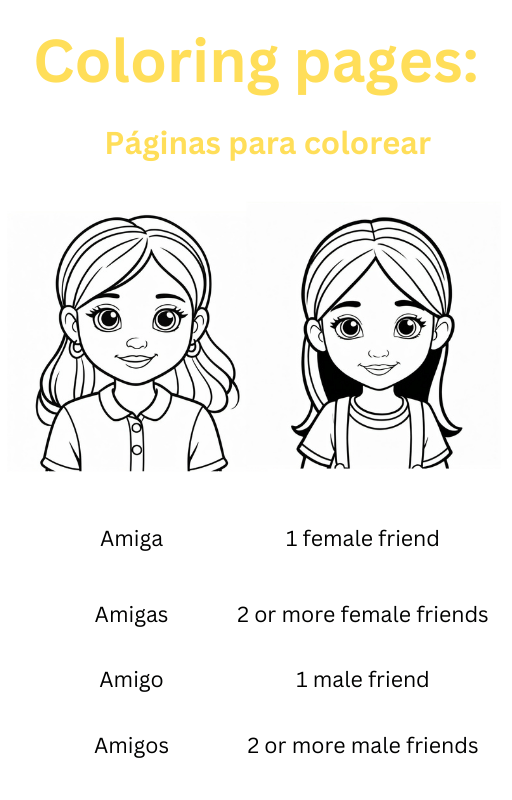
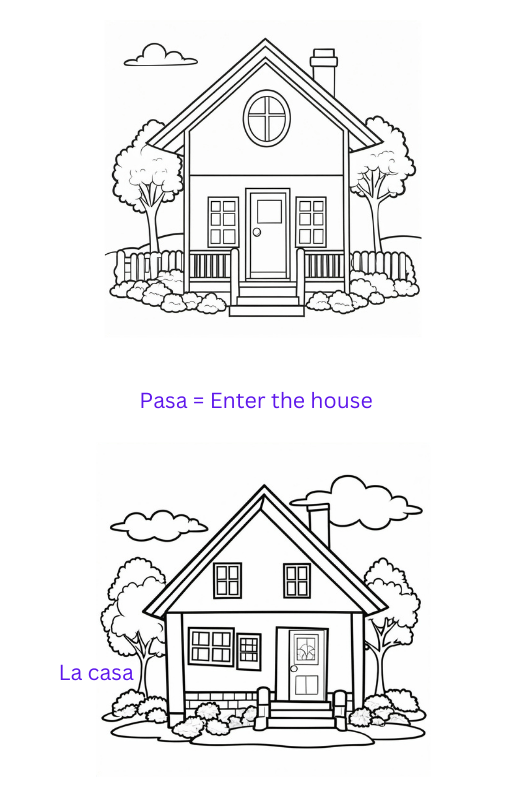
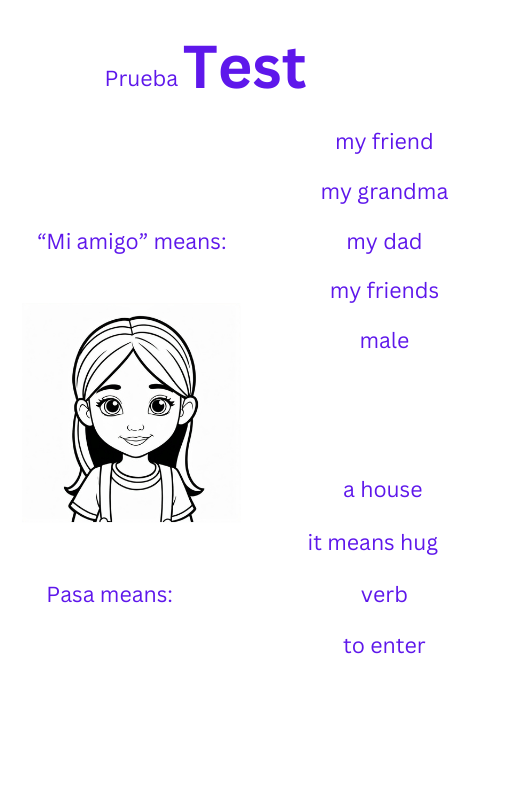
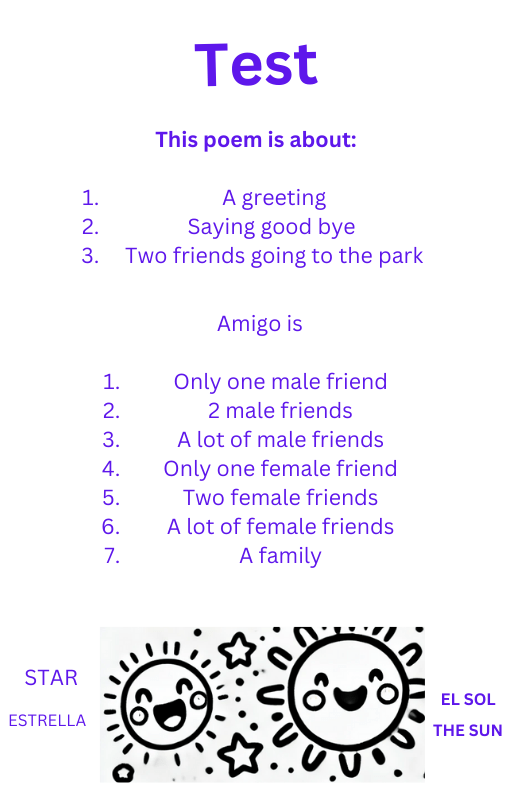
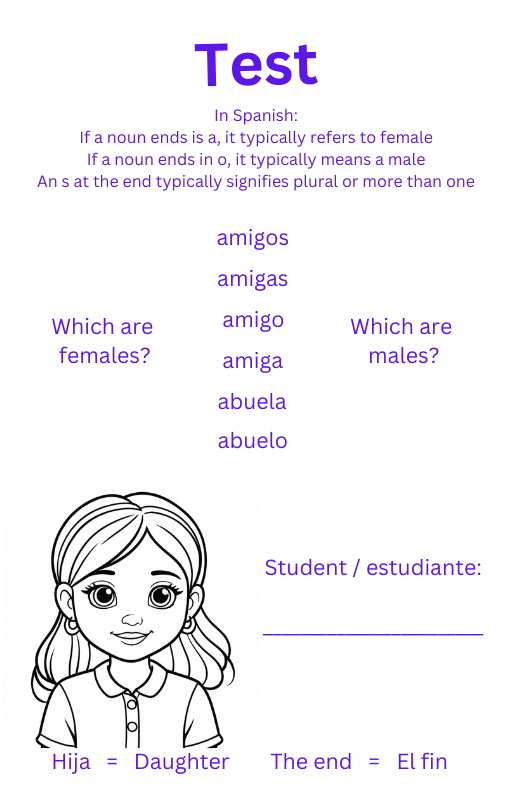
Below are the printable worksheets from my Rima y Ritmo class 1 ebook.

Print the printables, including the poem and read the lesson plan I linked above and using the poem and translation, work through these exercises. My children found them non easy.

Let me know if you need the answers.

Let me know if this helped and if you want to see more like this.

Would you benefit from video lessons?

With love,

Eve

Exploring poetry as a tool for language learning. Part 2

Dear reader,

I currently use poetry as a tool for my language study, and I feel it’s the most fascinating way to study a new language. Let me tell you about my strategy.

My language study

I took to Duolingo for language learning and quickly realized that I needed more input. I chose Latin and quickly started watching YouTube videos about it, and (this is strange, but I felt it was a sign from the universe) I realized what I’d be doing with my Latin learning on my second day of learning it.

I immediately recognized that poets were huge in Ancient Rome, and of course, I should have already known that, as a poet…

The message I received from the universe was that I was going to read and translate the ancient Roman poetry (I did already translate one).

Then, I decided to learn the Ancient Greek alphabet and found gorgeous Greek romantic poetry, which I’m already working on just for fun. It is extremely complex, which makes everything else seem easy.

Then, I started following poets on Twitter and followed an Italian guy. I interacted with the guy, and he shared an Italian poem with me, so I have a soft goal of learning Italian. I am taking an Italian course and doing well as a total newbie.

So, me, a poet… learning languages with poetry is simply natural.

However, I believe it’s the most fun way to practice, which is why I want to tell you all about it.

Tips to use poetry for language study from a poet

  1. Start with Simple Poems: Begin with shorter poems or poems with straightforward language. This helps in understanding basic poetic structures and building confidence.
  2. If you don’t already read poetry: start with poetry in your language. Then, move on to bilingual poetry.
  3. Focus on Themes of Interest: Choose poems that resonate with your personal interests or topics you are passionate about. This makes the learning process more enjoyable and meaningful.
  4. Read Aloud and Listen: Poetry is meant to be heard. Read poems aloud to practice pronunciation, intonation, and rhythm. Listening to recordings of native speakers reciting poems helps in understanding cultural nuances and natural cadence.
  5. Analyze and Discuss: Break down poems line by line to grasp their meaning, themes, and literary devices. Discuss interpretations with language partners or teachers to gain different perspectives.
  6. Write Your Own Poems: Use the language you’re learning to compose your own poems. This reinforces vocabulary, grammar, and creativity while allowing for personal expression. Writing your own poetry has the potential to lift your spirits, help you grow, and increase your self steem! 🙏
  7. Explore Different Poetic Forms: Experiment with various forms like haikus, sonnets, or free verse. Each form challenges different aspects of language skills and encourages exploration of cultural differences in poetic expression.
  8. Use Poetry Collections and Anthologies: Explore collections of poems from different cultures and time periods. This broadens exposure to diverse linguistic styles and historical contexts. Note: When you’re advanced, read the very old poetry.
  9. Integrate Technology: Utilize language learning apps, online forums, and social media to share and discuss poetry with native speakers and other learners worldwide.
  10. Attend Poetry Readings and Events: Immerse yourself in the local poetry scene or attend virtual poetry readings. This provides exposure to authentic language use and cultural insights.
  11. Be Patient and Persistent: Learning through poetry requires patience and persistence. Embrace challenges as opportunities for growth and celebrate progress along the way.

By incorporating these tips into your language learning journey, you can effectively harness the power of poetry to enhance your linguistic proficiency and deepen your appreciation for the beauty of language and literature.

Learning Spanish?

Consider my Spanish class:

https://payhip.com/b/NLMdU

Thank you for reading,

Eve